

The high price of a Dyson often makes you pause. Are you just paying for clever marketing? The answer lies in extreme engineering hidden deep inside the machine.
Dyson's high price comes from its revolutionary high-speed digital motor. This motor spins at over 100,000 RPM, requiring aerospace-grade precision and specialized bearings to function. These advanced components are incredibly expensive to research, develop, and manufacture, driving up the final cost.
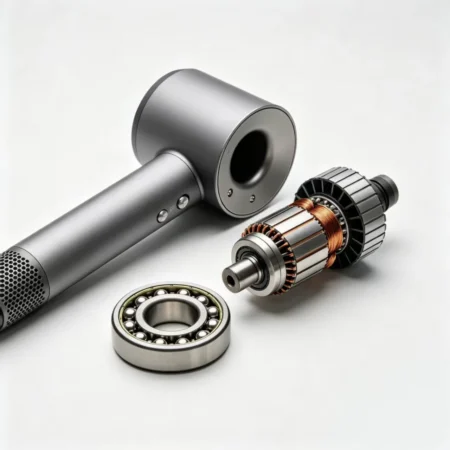
The other day, my wife sent me a link to a Dyson hair dryer, the one that costs over $400. My first thought was, "No way. Can't a regular hair dryer do the job? This has to be all marketing." But my professional curiosity got the better of me. As a guy who has been in the bearing business since 1992, I had to check the specs. I saw one number that made me nearly drop my coffee cup: 110,000 RPM. That's revolutions per minute. To put that in perspective, the engine in your car probably redlines around 6,000 RPM. A Formula 1 race car engine, a peak of mechanical engineering, tops out around 15,000 RPM. This little handheld device spins more than seven times faster than an F1 engine. Today, let's forget about hairstyling and talk about hardcore technology. Let's dive inside this expensive hair dryer and see what kind of bearings can handle those insane speeds.
Why Are Dyson Vacuums And Hair Dryers So Expensive? Breaking Down the Cost?
You see the price tag on a Dyson and can't justify it. Are you just paying for the famous brand name? Let’s break down where the money really goes.
The cost is not just in materials; it's in years of massive research and development. The specialized bearings alone, capable of handling extreme speeds and heat, are a significant cost driver compared to the simple, mass-produced components in conventional appliances.
When you buy a Dyson, you're paying for the incredible amount of engineering that went into it. The company has reportedly spent billions on developing its digital motors. This isn't just about making one good motor; it's about creating a platform of technology that is smaller, lighter, and more powerful than anything else on the market. Think about the team of engineers, the cost of building and testing thousands of prototypes, and the investment in custom manufacturing lines to build these components with microscopic precision. An ordinary appliance motor is simple and cheap to make. Dyson's motor is a piece of high-tech equipment. Let's compare the core components to see the difference.
| Component | Standard Appliance | Dyson High-Speed Appliance |
|---|---|---|
| Motor Type | Brushed AC/DC Motor | Brushless Digital Motor (V-series) |
| Max RPM | ~20,000 RPM | 110,000+ RPM |
| Bearings | Standard Steel Ball Bearings | Custom High-Precision Micro Bearings |
| Manufacturing | Mass-produced, lower tolerance | Precision-engineered, tight tolerance |
| R&D Investment | Low | Billions of dollars |
This table shows that every critical part of the Dyson motor is a major step up in complexity and cost. It’s a completely different class of machine.
It’s Not Just Suction Power: What Really Drives Dyson Performance?
Everyone talks about Dyson's powerful suction. But is that the whole story behind its performance? Discover the core technology that makes that power both possible and efficient.
Dyson's performance comes from its motor's incredible efficiency, not just raw power. The ultra-high RPM creates powerful airflow from a very small and light motor. This is only possible because of the precision bearings that allow it to spin smoothly and reliably at insane speeds.
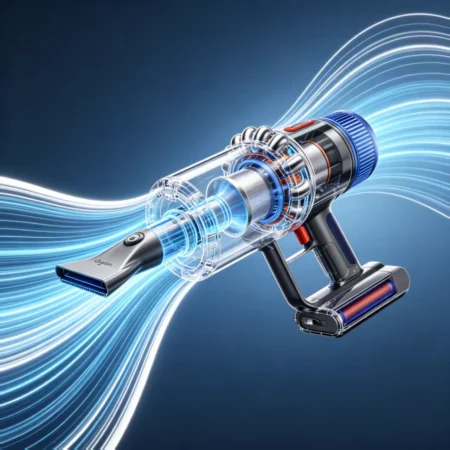
The magic of a Dyson product is its power-to-weight ratio1. Traditional hair dryers or vacuums use big, heavy motors that spin relatively slowly to move air. To get more power, they had to make the motor bigger. Dyson flipped this idea on its head. Their engineers knew that if they could make a motor spin incredibly fast, they could make it much smaller and lighter while moving the same amount, or even more, air. This is why their hair dryer doesn't feel top-heavy and why their stick vacuums are so easy to handle. The 110,000 RPM2 speed is the key. But that speed is impossible without a component that can handle it. The bearing is the critical enabler of this entire concept. It's the unsung hero that allows the motor to spin at the speed of a jet engine turbine without tearing itself apart. Without that perfect, tiny, high-tech bearing, the whole design fails.
Inside the Dyson Motor: High-Speed Engineering Explained?
You hear the term "digital motor" but might not know what it means. It can sound like just another marketing buzzword. Let's look inside and see the incredible engineering at work.
A Dyson digital motor is a brushless DC motor controlled by a tiny computer. It has no physical brushes, which reduces friction and wear. This advanced design allows it to spin at over 110,000 RPM, creating immense power from a very compact and lightweight package.
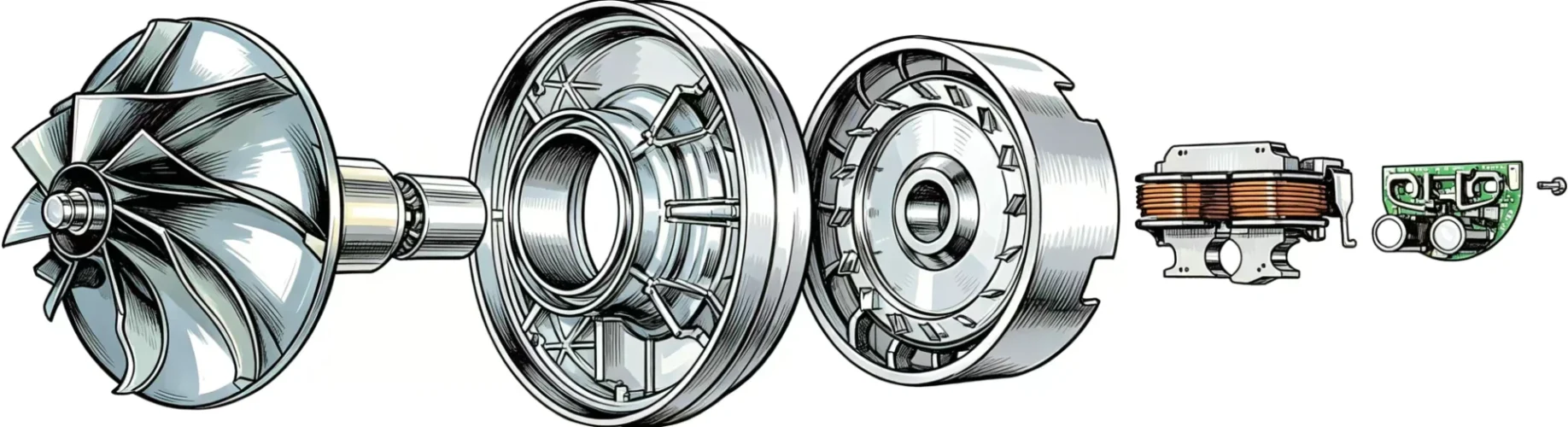
Most conventional electric motors are "brushed" motors. They use small carbon blocks called brushes to make physical contact and deliver electricity to the spinning part of the motor. This contact creates friction, generates heat, and causes the brushes to wear out over time. This friction also puts a hard limit on how fast the motor can spin. Dyson's digital motor is "brushless." Instead of physical brushes, it uses a sophisticated microprocessor that switches a magnetic field thousands of times per second. There are no touching parts to wear out. This lack of friction is what unlocks the potential for ultra-high speeds. It’s a more complex and expensive design, but the benefits are huge. It's more efficient, lasts much longer, and can reach speeds that a brushed motor could only dream of.
| Feature | Brushed Motor (Traditional) | Brushless Motor (Dyson) |
|---|---|---|
| Speed Limit | Lower (~20,000 RPM) | Extremely High (110,000+ RPM) |
| Friction/Wear | High (brushes wear down) | Very Low (no physical contact) |
| Efficiency | Lower | Higher |
| Lifespan | Shorter | Longer |
| Cost to Make | Lower | Higher |
The Hidden Hero: How Precision Bearings Enable Ultra-High Speeds?
The motor gets all the credit for Dyson's power. But what is the secret component that allows the motor to even work? Meet the unsung hero: the high-precision bearing.
In a 110,000 RPM motor, the bearings are the most critical component. These are not ordinary bearings; they are ultra-high-precision micro bearings. They must withstand immense forces and heat while maintaining perfect stability. Without them, the motor would instantly self-destruct.
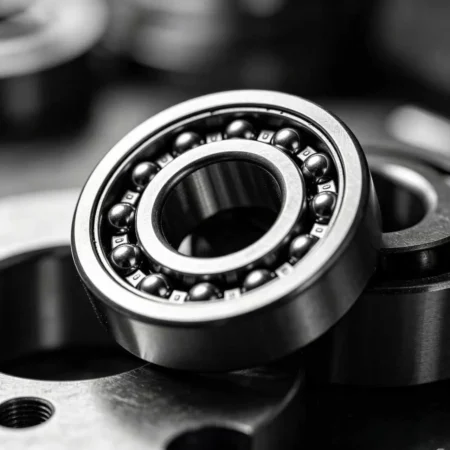
For a bearing, spinning at 110,000 RPM2 is like operating in "hell mode." The physical stresses are almost unbelievable. There are three main challenges that engineers must overcome: First is the centrifugal force3. At these speeds, the steel balls inside the bearing are pulled outwards with incredible force. If a ball has even a tiny imperfection or is slightly out of balance, it will create violent vibrations that can shatter the bearing in an instant. This requires bearing balls with a precision grade of G5 or better, which means they are almost perfectly spherical. Second is the extreme heat4. The high speed creates intense friction, and friction creates heat. Standard lubricating grease would be instantly thrown off or burned away, turning to carbon. Once the lubrication5 fails, the metal parts grind together, and the bearing seizes up in seconds. Third is noise and vibration6. A fast motor is usually a loud motor. But Dyson products are known for being relatively quiet. This is because the bearings are manufactured with micron-level precision to ensure perfect dynamic balance. Any tiny wobble at 110,000 RPM would produce a deafening, high-pitched scream. This is why the bearings are the true foundation of the technology.
Why Ordinary Bearings Fail in High-Speed Applications?
You might think a bearing is just a bearing. Why couldn't designers just use a standard one and save money? Let's see what happens when ordinary parts meet extraordinary stress.
Standard bearings, made from common steel like GCr15 and using standard grease, would fail catastrophically at 110,000 RPM. The immense forces would cause destructive vibration, while friction would generate enough heat to melt the bearing and seize the motor in seconds.
Let's break down exactly how a standard bearing would die in a Dyson motor. First, the material itself would fail. Common bearing steel (known as GCr15 in China) is strong, but it might not be enough. Under the intense centrifugal force3s, the steel balls and the tracks they run on (the raceways) could deform or develop micro-fractures, leading to complete failure. High-speed applications often need purer, stronger stainless steel or even hybrid ceramic bearings7, which use super-hard, lightweight ceramic balls. Second, the lubrication5 would fail instantly. Standard grease cannot handle the combination of high speed and high heat. It would be flung out, leaving the bearing dry. This is called "grease throw-off." The metal-on-metal contact that follows would cause the temperature to skyrocket, welding the bearing's components together. Finally, the cage, the small part that keeps the balls evenly spaced, would likely disintegrate. A standard stamped-steel cage would bend or shatter under the forces. High-speed bearings need special cages made from lightweight, durable materials like polyamide.
Choosing the Right Bearings for High-Speed Motors?
Designing a high-speed device requires choosing the right components. A single wrong choice can lead to total, catastrophic failure. Let's understand the key factors for selecting the perfect high-speed bearing.
For high-speed motors, you need bearings with high precision ratings (ABEC-5/P5 or higher) and advanced materials like special steel or ceramics. The right cage design and a specialized high-temperature, anti-fling lubricant are equally critical for ensuring reliability and performance.

So, what makes a bearing capable of handling these speeds? It comes down to a few key specifications. First is the Precision Class. Bearings are rated on a scale (like ABEC in the US or ISO in Europe) that defines their manufacturing tolerances. For a high-speed motor, you need at least an ABEC-58 (P5) rating, and often higher. This ensures all parts are the right size and shape down to the micron. Second is Material Selection. As we discussed, standard steel isn't enough. The choice is often between a very high-purity stainless steel or a hybrid ceramic bearing. Ceramic balls are lighter than steel, which reduces centrifugal force3 and allows for even higher speeds. Third, and perhaps most critical, is Lubrication. You need a specialized synthetic grease9 designed to stick to the components at high speeds and to withstand high temperatures without breaking down. For years, bearings this advanced were only made by a few international giants. But that is changing. Here in China, bearing companies like ours have been working hard to catch up. Now, many of the more affordable "Dyson alternative" high-speed hair dryers use high-quality motor and bearing solutions developed and produced domestically. This is making high-performance technology more accessible to everyone.
Conclusion
So, is a Dyson expensive? Yes. But that price is rooted in real, groundbreaking engineering. Its value comes from a high-speed motor enabled by incredibly advanced, precision-made bearings.
Learn how power-to-weight ratio affects performance in various applications. ↩
Learn about the implications of 110,000 RPM in motor technology and its impact on efficiency. ↩
Learn about centrifugal force and its implications in engineering and design. ↩
Explore the challenges posed by extreme heat in high-speed machinery and solutions. ↩
Discover the importance of lubrication in maintaining motor efficiency and longevity. ↩
Understand the sources of noise and vibration in motors and how to mitigate them. ↩
Learn about the benefits of hybrid ceramic bearings in high-speed applications. ↩
Understand the significance of ABEC ratings in bearing precision and performance. ↩
Explore the properties of synthetic grease and its role in high-performance machinery. ↩