
Your new bearing just failed again, costing you time and money. You blame poor quality, but the real problem might be your selection method. Let’s fix that.
To select the right bearing and avoid costly mistakes, don't just match the size. You must also consider five key factors: the available space, the type and amount of load, the required speed, the operating environment, and the necessary precision level for your specific application.
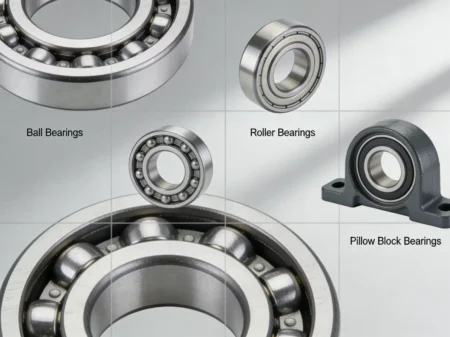
I've seen it happen too many times. A customer calls me, frustrated that a bearing failed after just a few weeks. They're convinced they received a bad batch. But when we dig deeper, we find the issue isn't the bearing's quality. It's like buying shoes. You wear a size 9. But if you're running a marathon, you don't buy size 9 flip-flops. The size is right, but the application is wrong. Bearings are the same. Let's walk through the five steps to make sure you're buying the right "shoes" for your machine.
First, Does the Bearing Physically Fit in the Space?
You measured a broken bearing and ordered a new one. But it won't fit, or it feels too loose. Now your machine is still down, and you have a useless part.
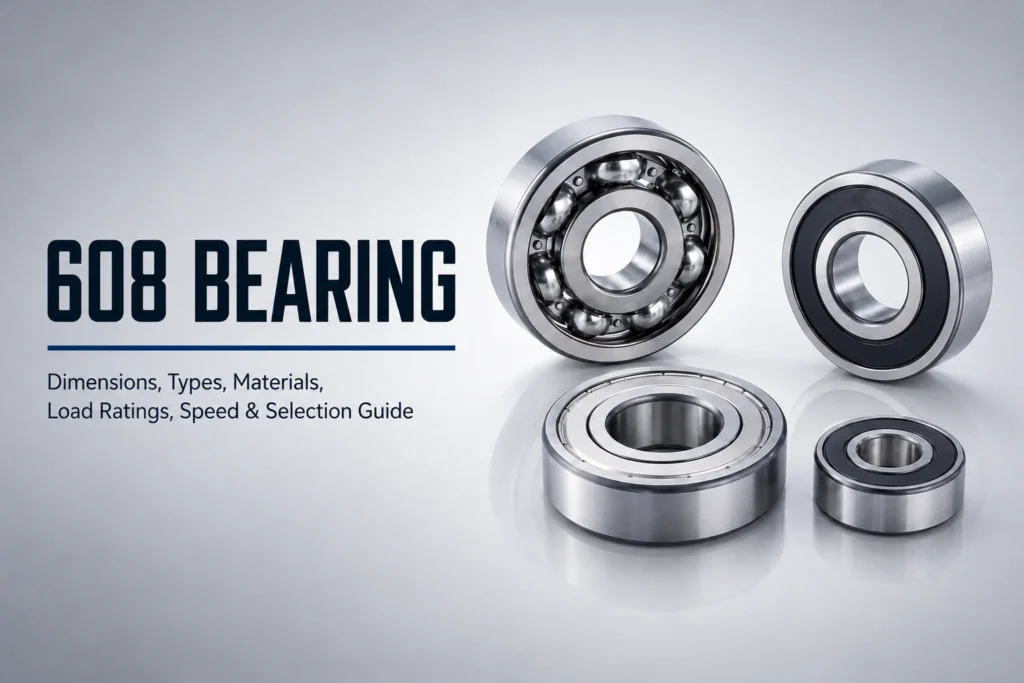
Check the three basic dimensions: inner diameter (d), outer diameter (D), and width (B). Crucially, you must also confirm if the requirement is for metric (mm) or imperial (inch) units. Mismatched units are a common and costly mistake, especially with older or imported equipment.
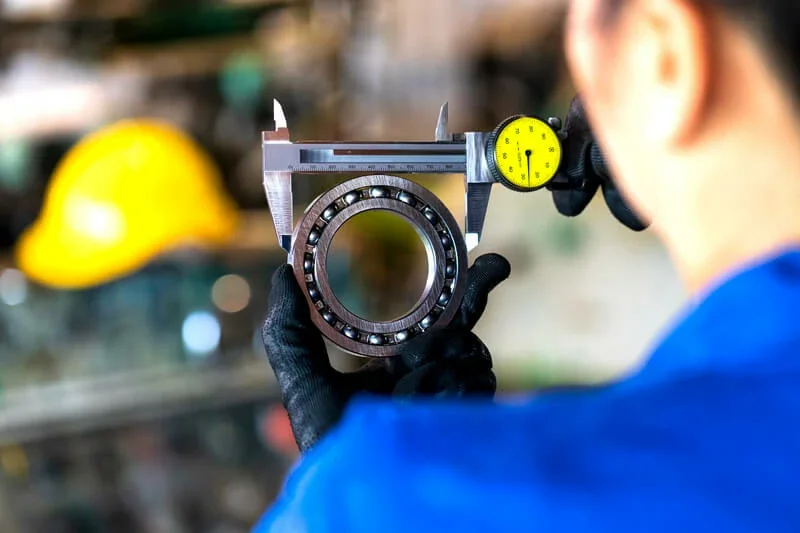
This seems like the most basic step, but it’s a critical gatekeeper. You can't fit a square peg in a round hole. The first thing we always do is measure the housing and the shaft.
Key Dimensions
- Inner Diameter (d): This must match the shaft diameter perfectly.
- Outer Diameter (D): This must fit snugly into the housing.
- Width (B): This determines how the bearing sits and aligns.
But here's a detail many people miss: the unit of measurement. I once had a client with an old American-made conveyor. He measured the shaft and ordered a standard metric bearing that was almost the right size. He tried to force it on with a hammer. The bearing was damaged before it even started working. You must be certain if your machine uses the metric system (millimeters) or the imperial system (inches). A small difference can lead to major internal damage.
| System | Unit | Common Regions |
|---|---|---|
| Metric | Millimeter | Most of the world, modern machinery |
| Imperial | Inch | USA, some older UK and US equipment |
Always double-check the machine's manual or origin if you're unsure. This simple check prevents a world of hurt.
What Kind of Load Will the Bearing Handle?
You installed a new bearing that was the right size, but it wore out in record time. The constant stress was too much, causing premature failure and unexpected downtime.
First, identify the load direction. Is it radial (vertical pressure) or axial (side pressure)? For heavy loads, choose roller bearings. For lighter loads and higher speeds, ball bearings are better. For combined loads from multiple directions, consider angular contact or tapered roller bearings.
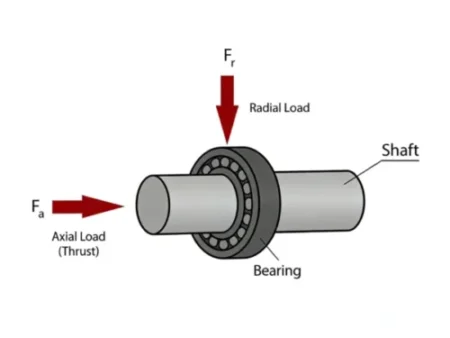
This is where most selection mistakes happen. Thinking all bearings can handle the same stress is a major pitfall. You need to play matchmaker between the load and the bearing type. Let’s break it down.
Load Types
- Radial Load: Think of a heavy backpack pressing straight down on your shoulders. This force is perpendicular to the shaft. Heavy-duty conveyors and crushers exert massive radial loads.
- Axial (Thrust) Load: Imagine someone pushing you from the side. This force is parallel to the shaft. A propeller on a boat creates a strong axial load.
- Combined Load: This is a mix of both radial and axial forces, which is common in many machines like car wheels and gearboxes.
Choosing the right bearing for the load is non-negotiable. Using a standard deep groove ball bearing where a cylindrical roller bearing is needed is a recipe for disaster.
| Load Type | Recommended Bearing Type | Why? | Example Application |
|---|---|---|---|
| Light Radial | Deep Groove Ball Bearing | Low friction, high-speed capability | Electric Motors, Fans |
| Heavy Radial | Cylindrical/Spherical Roller Bearing | Larger contact area handles more pressure | Crushers, Rolling Mills |
| Axial (Thrust) | Thrust Ball/Roller Bearing | Designed specifically for side pressure | Crane Hooks, Turntables |
| Combined | Angular Contact or Tapered Roller Bearing | Angled design handles both forces well | Car Wheels, Gearboxes |
Matching the load correctly is the key to a long service life.
How Fast Does the Bearing Need to Spin?
Your bearing is overheating and making a terrible noise. It’s running so hot that the grease is breaking down, leading to a seize-up and catastrophic failure.
Every bearing has a "limit speed" rating. High-speed applications generate significant heat and require bearings with specific cage materials and lubrication. Low-speed, high-load applications can prioritize strength over speed ratings. Always check the manufacturer's speed limit to prevent overheating and failure.
Speed kills... bearings, that is. A bearing designed for the slow-moving turntable on a crane will not survive in a high-speed dental drill spinning at tens of thousands of RPM. The friction from high-speed rotation generates a lot of heat. If the bearing isn't designed to handle and dissipate that heat, it will "burn out." The grease will liquefy and escape, the metal components will expand and deform, and the whole thing will seize.
Key Speed Considerations
- Limit Speed: This is a value specified by the manufacturer (like us at Yuanguang Bearing) that you should never exceed. It's often listed for both grease and oil lubrication, with oil allowing for higher speeds.
- Cage Material: At high speeds, the cage (which separates the rolling elements) is under a lot of stress. Steel cages are robust, but brass or synthetic resin cages can be better for very high speeds due to their lower friction and weight.
- Lubrication: The right grease or oil is crucial. High-speed greases are designed to not break down under high temperatures.
Forcing a bearing to run faster than its design limit is like trying to drive a family sedan at Formula 1 speeds. It’s not a matter of if it will fail, but when.
What Are the Operating Conditions for the Bearing?
Your bearings keep rusting or getting clogged with debris. You are replacing them constantly in your wet or dusty factory, wasting money and losing production time.
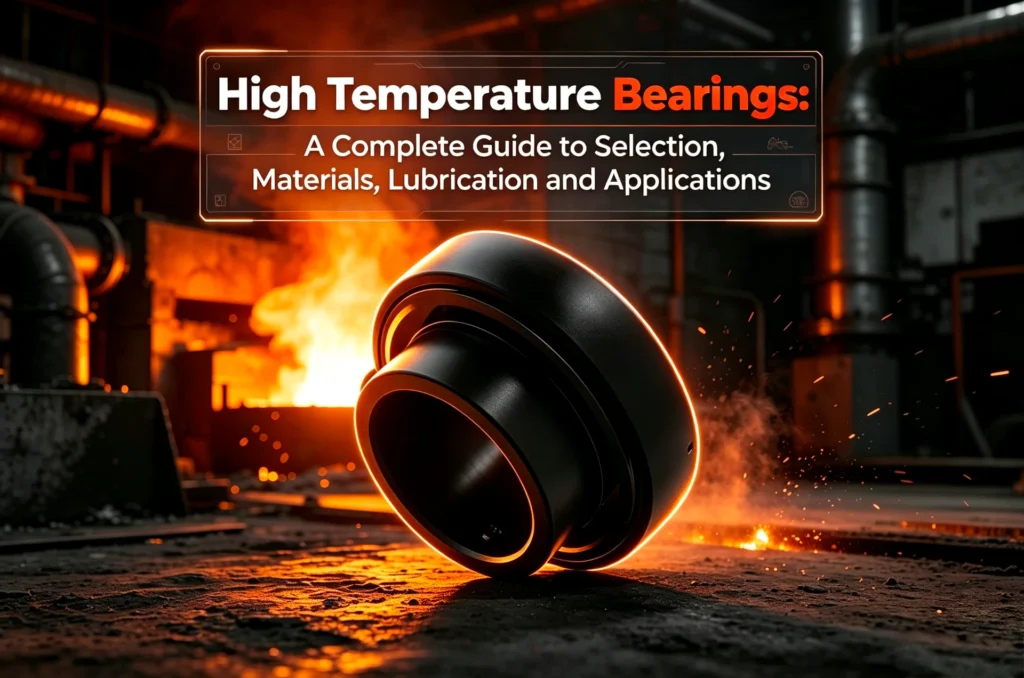
The environment is a silent killer. For high temperatures (>120°C), use special high-temp steel or ceramic bearings. For wet or corrosive areas, use stainless steel or sealed bearings. In dusty places like cement plants, choose bearings with effective seals, like 2RS (rubber) or ZZ (metal).
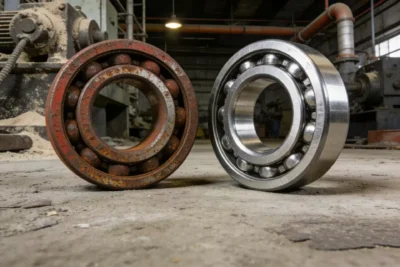
You wouldn't wear a wool coat to the beach. Likewise, you can't put a standard steel bearing in a corrosive or extremely hot environment and expect it to last. The operating conditions are just as important as load or speed. I've seen bearings in sawmills fail in days because sawdust got past the seals and acted like sandpaper, grinding the insides to dust.
Environmental Challenges & Solutions
- Temperature: Standard bearing steel, like GCr15, starts to lose its hardness and dimensional stability above 120°C (250°F). For ovens or furnaces, you need bearings made from special heat-stabilized steel or even full ceramic bearings that can handle extreme temperatures.
- Moisture & Contamination: Water causes rust, and dust causes abrasion. The solution lies in the bearing's sealing.
| Condition | Common Problem | Bearing Solution | Seal/Shield Type |
|---|---|---|---|
| High Temperature | Softening, Failure | High-Temp Steel, Ceramic Bearings | Open or Metal Shields (ZZ) |
| Wet / Humid | Rust, Corrosion | Stainless Steel, Hybrid Ceramic | Double Rubber Seals (2RS) |
| Dusty / Dirty | Abrasion, Clogging | Sealed Bearings | Metal Shields (ZZ) for coarse dust, 2RS for fine dust/moisture |
| Chemicals | Corrosion | Stainless Steel, Ceramic, Special Coatings | Varies; consult with a manufacturer like us |
Choosing the right protection for the environment is like giving your bearing a suit of armor. Without it, it’s going into battle completely exposed.
How Much Precision Do You Actually Need?
You believe "more expensive is better," so you bought a high-precision bearing for your simple conveyor. It failed even faster than the cheap one, leaving you confused and out of pocket.
Bearings have precision classes, from P0 (standard) to P2 (ultra-high precision). Higher precision does not mean more durable. It means tighter tolerances. Using a high-precision bearing in a low-precision application is a waste of money and can lead to premature failure. Match the precision to the machine.
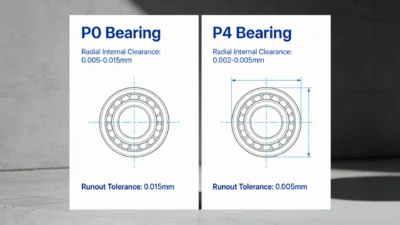
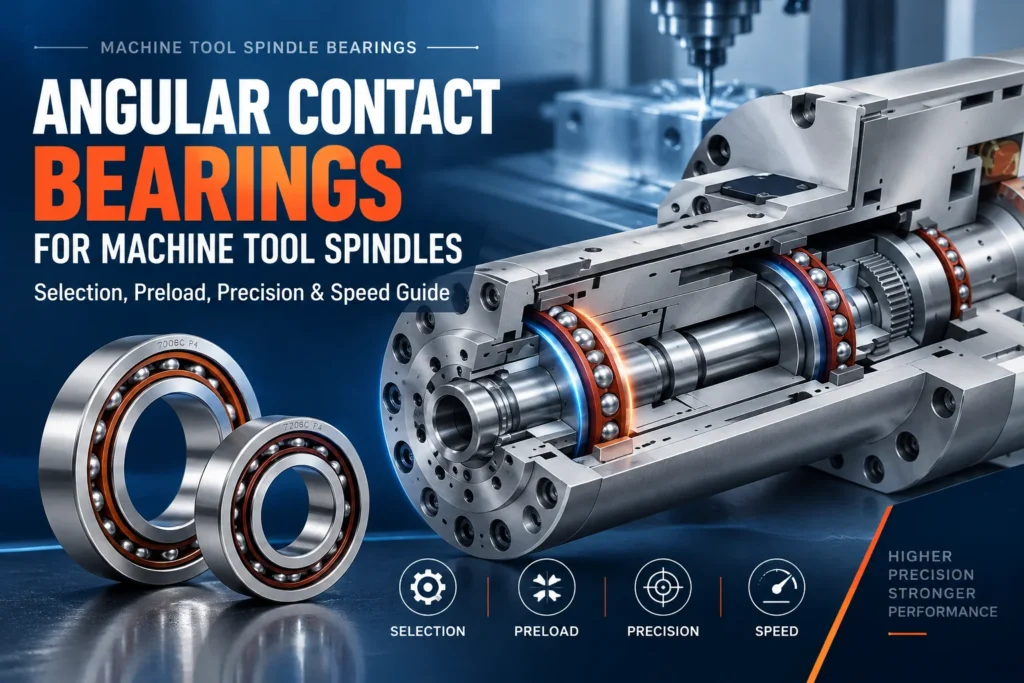
This is a classic case of over-engineering. Many people think that buying the highest precision bearing (like a P4 or P2) is a smart investment that will make it last longer. This is a huge mistake. High-precision bearings are for machines that require extreme accuracy, like the spindles in CNC machines or scientific instruments. They are built with incredibly tight tolerances for runout and dimensional accuracy. The problem is, these bearings are not more "tough." In fact, they can be more "delicate." When you install a P4 bearing into a standard agricultural machine or a simple pump, the machine's own vibrations and shaft imperfections are much larger than the bearing's tiny tolerances. This mismatch creates internal stress points, and the high-precision bearing fails quickly. It’s like putting a race car engine in a tractor—it’s not built for that kind of rough work.
| Precision Class | Tolerance Level | Typical Application | When to Use It |
|---|---|---|---|
| P0 (ABEC 1) | Standard | General Motors, Pumps, Conveyors, Farm Machinery | For 90% of all standard industrial applications. |
| P6 (ABEC 3) | Increased | Quality Electric Motors, some machine tools | When you need a bit less noise and vibration. |
| P5 (ABEC 5) | High | High-Speed Machine Tool Spindles, Instruments | For applications requiring high rotational accuracy. |
| P4 (ABEC 7) | Super High | Ultra-Precision Grinders, Lab Equipment | Only when specified by the machine designer. |
The golden rule is: only buy what you need. A standard P0 bearing from a quality manufacturer like us at Yuanguang Bearing is more than enough for most jobs. Don't pay for precision you can't use.
Conclusion
Follow these five steps—Space, Load, Speed, Environment, and Precision—to choose the right bearing every time. If you're unsure, message me "Selection," and I'll help you find the perfect fit.