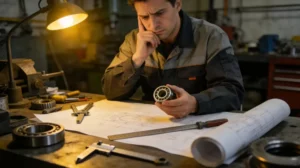
Struggling to tell a good bearing from a bad one? You risk equipment failure and costly downtime. I'll show you how to spot quality and protect your investment.
Forget those spinning tests you see online. Judge bearing quality by material purity, manufacturing precision, load capacity, and sealing effectiveness. These indicators directly impact your equipment's lifespan and reliability. I will explain each one so you can make smarter purchasing decisions.
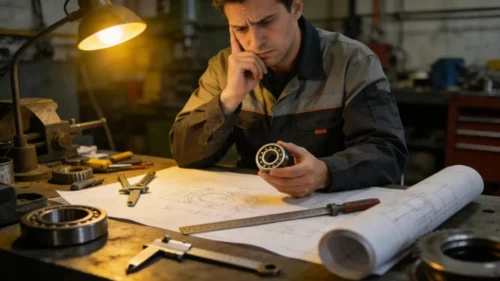
When I scroll through social media, I often see videos of someone using an air gun to spin two bearings. They compete to see which one spins longer. In the comments, you'll find heated arguments between different bearing manufacturers. I have to tell you, these tests are completely worthless. Bearings are not designed to "free-spin." It's like saying a car is great off-road just because its wheels spin fast on a lift. In the real world, bearings must handle loads, withstand impacts, and resist contamination. These are the true tests of quality. Talking about performance without considering the actual working conditions is just misleading. Let's dive into what really matters.
Why Does Bearing Quality Matter in Industrial Applications?
Choosing a cheap bearing seems like a saving. But premature failure leads to unexpected downtime and huge repair bills. There is a better way to think about bearing costs.
High-quality bearings ensure equipment reliability, reduce maintenance costs, and prevent catastrophic failures. They are not just components; they are investments in operational efficiency and safety. Poor quality bearings can cripple your entire production line, costing you far more than the initial savings.
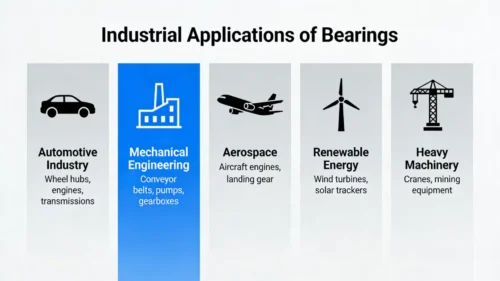
In our 30 years in this business, we’ve seen firsthand the damage a single, low-quality bearing can cause. I remember a client who ran a large quarry. They decided to save a few dollars by using cheaper bearings in one of their main conveyor systems. The savings were tiny, maybe a few hundred dollars. But three months later, one of those bearings failed catastrophically during peak operation. The conveyor belt stopped, halting the entire crushing and sorting line. The failure not only destroyed a gearbox but also caused a production shutdown that cost them tens of thousands of dollars in lost revenue. This is why we must look beyond the initial price tag. The true cost of a bearing is not its purchase price but the total cost of ownership1. This includes maintenance, downtime, and potential damage to other expensive equipment. A quality bearing is an insurance policy against these much larger costs.
Indicator 1: Material Quality and Heat Treatment
You see two identical-looking bearings. One costs half the price. You're tempted, but what's hidden inside? The material could be a ticking time bomb for your machinery.
Yes, it's fundamental. The purity of the bearing steel directly determines its fatigue life. High-purity steel, like vacuum-degassed steel, can increase a bearing's lifespan by three to five times. This is the foundation of a reliable, long-lasting bearing.
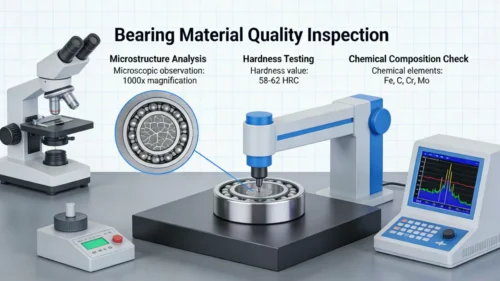
The foundation of any great bearing is the steel it’s made from. According to the ISO 281:2007 standard2, using high-purity bearing steel can dramatically increase a bearing's service life. The key is minimizing non-metallic inclusions, which are microscopic impurities within the steel. These inclusions act as stress points where cracks can begin to form under load, leading to premature failure. A top-tier manufacturer can control these inclusions to be smaller than 10 micrometers. In contrast, a low-quality product might have inclusions of 20-30 micrometers. While this difference is invisible to the naked eye, under high-speed and heavy-load conditions, it results in a massive gap in lifespan.
Equally important is the heat treatment3 process. This process gives the bearing its necessary hardness and dimensional stability. Improper heat treatment3 can leave the bearing too soft, causing it to wear out quickly, or too brittle, making it prone to cracking under shock loads. It's a delicate balance that requires deep expertise.
| Feature | High-Quality Bearing | Low-Quality Bearing |
|---|---|---|
| Steel Purity | High (e.g., Vacuum-degassed) | Low, with more impurities |
| Inclusion Size | < 10 micrometers | 20-30 micrometers or more |
| Heat Treatment | Precisely controlled | Inconsistent or improper |
| Resulting Lifespan | 3-5 times longer | Significantly shorter |
Indicator 2: Manufacturing Precision and Tolerance
Your new bearing causes strange vibrations. The machine runs louder than before. This isn't just annoying; it's a sign of a deeper problem caused by poor manufacturing.
Precision and tolerance are critical for proper fit and smooth operation. Poor precision causes vibration, which, according to ISO 10816-3, can shorten bearing life by 15-20% for every 1mm/s increase. Incorrect tolerances lead to assembly problems, causing premature failure.
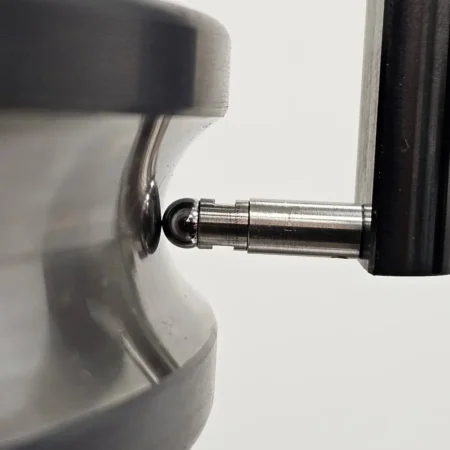
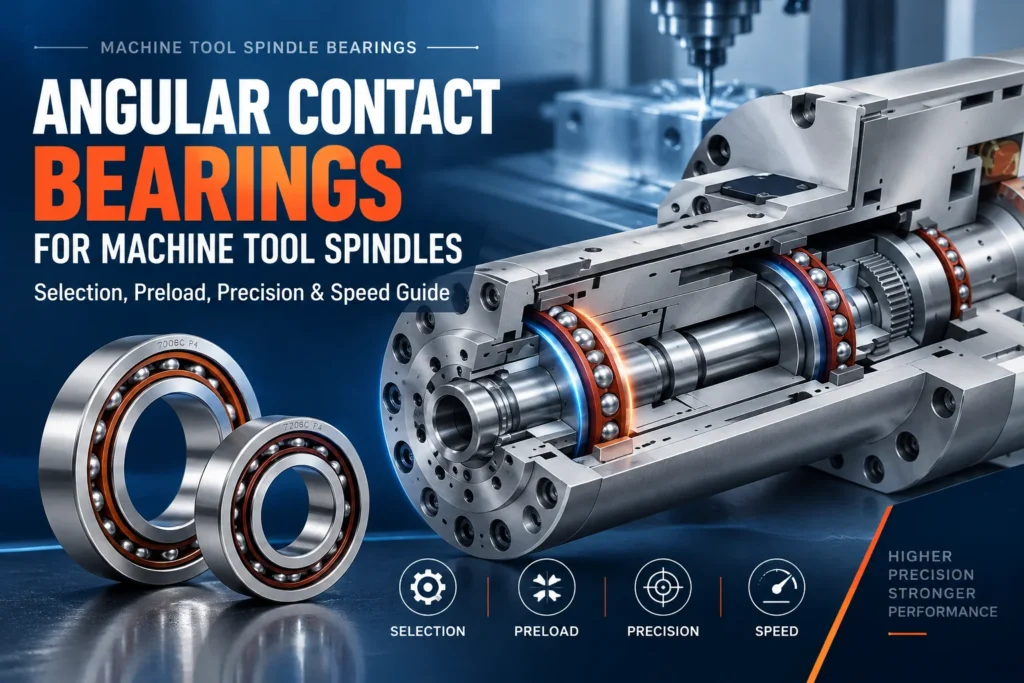
Let's break this down into two parts: precision class and dimensional tolerance4. Precision class, often rated from P0 to P4, defines the bearing's running accuracy. A P0 bearing is standard and suitable for most general applications like electric motors. However, high-speed, high-accuracy applications like machine tool spindles require P4 or higher. A lower precision bearing will have more "wobble" or runout, which translates directly into machine vibration and noise. This vibration isn't just a nuisance; it's a destructive force that accelerates wear on the bearing and other machine components.
Dimensional tolerance refers to how closely the bearing's physical dimensions, like its inner and outer diameters, match the specifications. For example, the standard for a P0 bearing's inner diameter is typically a tolerance of 0 to -10 micrometers. If the tolerance is off and the inner diameter is too large, the bearing can spin on the shaft, causing wear. If it's too small, the fit will be too tight, eliminating the necessary internal clearance. This leads to overheating and rapid failure. Low-quality bearings can have tolerances that are three to five times outside the standard, making a proper installation nearly impossible.
| Precision Class | Typical Application | Key Characteristic |
|---|---|---|
| P0 (Normal) | Electric Motors, Gearboxes | Standard quality for most uses |
| P6 | Instruments, Centrifuges | Higher accuracy, less vibration |
| P5 | High-Speed Motors, Machine Tools | High running accuracy |
| P4 | Precision Machine Tool Spindles | Extremely high accuracy and speed capability |
Indicator 3: Smooth Rotation and Noise Level
You've seen those videos of bearings spinning endlessly. It looks impressive, right? But that's a misleading test. True smoothness is tested under real-world conditions, not in free air.
Smooth rotation and low noise under load indicate high-quality manufacturing. It reflects the quality of the raceways, balls, and cage. A noisy, rough-feeling bearing is a clear sign of poor surface finish or internal defects, signaling a short service life ahead.
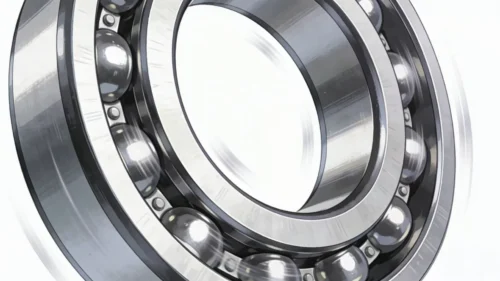
Let’s go back to those free-spinning videos. A bearing that spins for a long time might simply have a very light oil or almost no grease inside. While it looks good on camera, that bearing would fail very quickly in a real industrial application where proper lubrication5 is essential to handle load and dissipate heat. True smoothness comes from the microscopic perfection of the bearing's internal surfaces, especially the raceways where the balls or rollers travel. In a high-quality bearing, these surfaces are super-finished to a mirror-like state. This allows the rolling elements to move with minimal friction, which in turn reduces heat generation and noise.
When you feel a cheap bearing, you can often detect a slight roughness or hear a grinding sound as you turn it by hand. This is the result of poorly finished raceways or imperfections in the rolling elements. Every tiny bump or pit on that surface is a point of impact that creates noise and, more importantly, accelerates wear. I once visited a client whose new machine was making a terrible whining noise. We traced it back to a recently replaced bearing. Under a microscope, its raceway looked like a gravel road. We replaced it with a quality bearing, and the machine ran almost silently.
Indicator 4: Load Capacity and Durability
You need a 6205 bearing. You find two options, same size, different prices. Can you just pick the cheaper one? This assumption can lead to unexpected and costly breakdowns.
No. Internal design, material, and heat treatment can cause load capacity to vary by over 30% for the same size bearing. A higher load rating means a significantly longer calculated life under the same conditions, ensuring greater durability for your application.
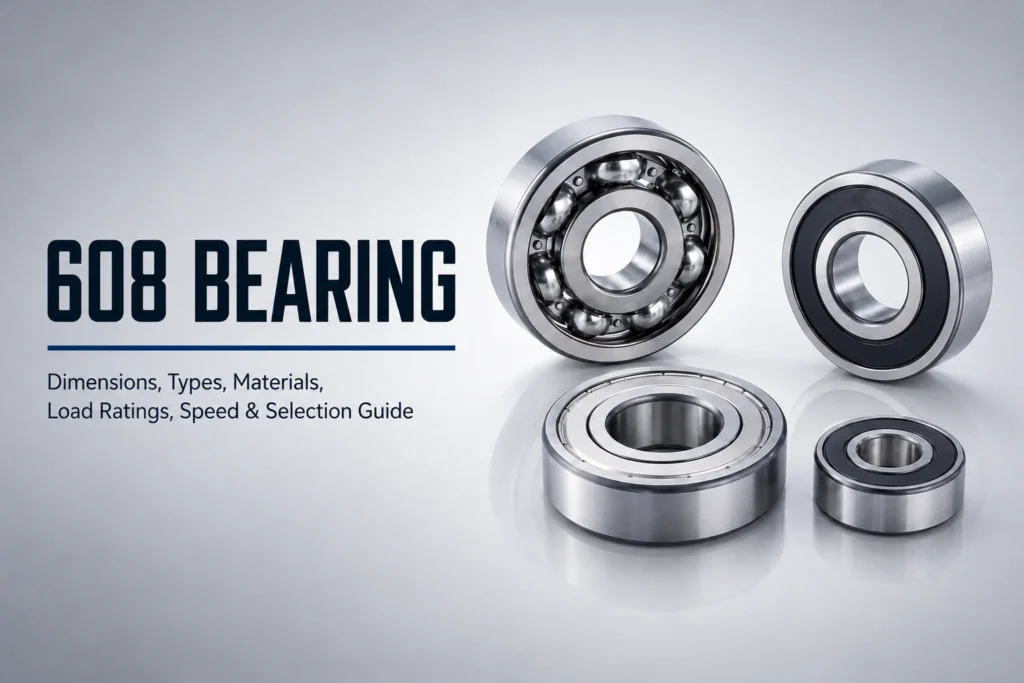
Externally, two bearings of the same size, like a 6205 deep groove ball bearing, might look identical. However, their internal strength can be vastly different. This strength is quantified by the bearing's load ratings, particularly the dynamic load rating6 (C). This value is used to calculate the bearing's theoretical lifespan. A higher-quality manufacturer uses superior steel, optimized internal geometry (like the size and number of balls), and precise manufacturing to maximize this rating. For instance, a premium 6205 bearing might have a dynamic load rating6 of 14.8 kN. A lower-quality version might only be rated for 11.2 kN.
This 30% difference in load rating has a massive impact on service life. The bearing life calculation formula shows that life is proportional to the cube of the load rating ratio ((C/P)^3). In this example, the premium bearing would have a calculated life that is over 2.3 times longer than the cheaper alternative under the same operating load. This means fewer replacements, less downtime, and better overall reliability for your machine. When you choose a bearing, you're not just buying a set of dimensions; you're buying a specific load-carrying capability.
Indicator 5: Sealing, Lubrication, and Corrosion Resistance
Your bearings keep failing in a dusty or wet environment. You replace them, and they fail again. The problem might not be the bearing itself, but its lack of protection.
These are your bearing's first line of defense. Effective seals keep contaminants out and lubricant in, which can triple the bearing's life in harsh environments. Proper lubrication is vital, and corrosion resistance protects the bearing from environmental attack, ensuring its longevity.
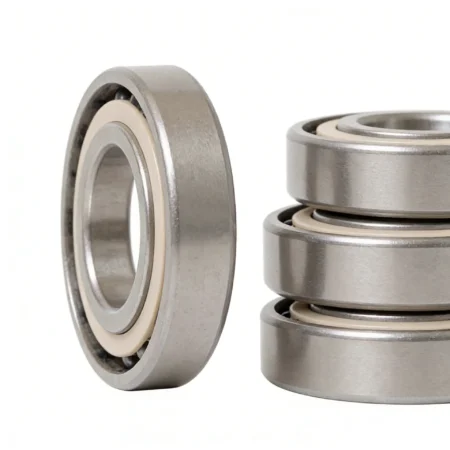
A bearing is a precision component. Even tiny particles of dust, dirt, or moisture can destroy it from the inside out. This is where seals and shields come in. They are the gatekeepers that protect the bearing's internal workings. A simple metal shield (ZZ) is good for keeping out larger debris in relatively clean environments. However, in dusty or wet conditions, a contact rubber seal (2RS) is far more effective. Lab data shows that a quality contact seal can extend bearing life by more than three times in a contaminated environment. Advanced designs, like double-lip seals, can improve grease retention by 40% and reduce contaminant entry by 70%.
Lubrication is the lifeblood of the bearing. The grease or oil film is what separates the metal surfaces, preventing direct contact and reducing friction. The right type and amount of lubricant are crucial for the application's speed, temperature, and load. Finally, for applications exposed to moisture or chemicals, standard steel bearings will rust. In these cases, choosing a bearing made from stainless steel or one with a special protective coating is essential for survival.
| Protection Type | Best For | Main Function |
|---|---|---|
| Metal Shields (ZZ) | High speeds, clean areas | Keeps out large particles |
| Contact Seals (2RS) | Dusty, dirty, or wet areas | Excellent contamination protection |
| Special Lubricants | High temp, high speed, food-grade | Matches specific operating needs |
| Stainless Steel | Washdown, corrosive areas | Prevents rust and corrosion |
How to Choose a Reliable Bearing Supplier
You now know what makes a good bearing. But how do you find a supplier who consistently delivers that quality? Choosing the wrong partner can undo all your careful research.
Choose a supplier with a proven track record and manufacturing expertise. Look for companies that control their entire production process, from casting to final assembly. A reliable supplier offers transparency, technical support, and can provide OEM/ODM services to meet your specific needs.

Finding the right part is only half the battle; you also need the right partner. A reliable supplier does more than just sell you a product. They work with you to find the best solution. Here’s what I recommend looking for. First, clearly define your operating conditions: speed, load, temperature, and environment. A good supplier will always ask for this information first. Second, don't be afraid to ask for proof. Request material reports or precision testing data. A manufacturer who is confident in their quality will be happy to provide it.
Third, look for a supplier with deep manufacturing integration. At my company, Yuanguang Bearing, we have our own foundry, processing plant, and bearing assembly7 factories. This vertical integration gives us complete control over quality at every single step, from the raw cast iron to the finished bearing housing. This is a significant advantage over suppliers who simply assemble parts from various sources. This control allows us to offer consistent quality and flexible OEM/ODM services. Finally, evaluate the overall value. The goal isn't to find the cheapest bearing, but the most cost-effective solution that guarantees reliability for your application. A true partner helps you achieve that.
Conclusion
Choosing the right bearing is not about finding the one that spins the longest. It's about matching quality materials, precision, and design to your application for reliable, long-term performance.
Understanding total cost of ownership helps in making informed purchasing decisions. ↩
This standard outlines critical quality benchmarks for bearings; learn its significance. ↩
Heat treatment is essential for bearing durability; understand its impact on performance. ↩
Dimensional tolerance is crucial for proper fit; discover its role in preventing failures. ↩
Proper lubrication is essential for bearing function; understand its critical role. ↩
Dynamic load rating is key to predicting bearing lifespan; learn how to interpret it. ↩
Understanding the assembly process can help ensure quality; learn what to look for. ↩