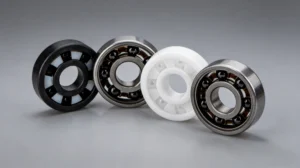
Struggling to choose a bearing for a tough job? The wrong choice can cause major failures. Understanding the difference between full and hybrid ceramic bearing1s is the key to success.
A full ceramic bearing is made entirely of ceramic parts, while a hybrid ceramic bearing combines ceramic balls with steel rings. Full ceramic is for extreme heat and corrosion, while hybrid offers a performance upgrade over steel for general high-speed applications.
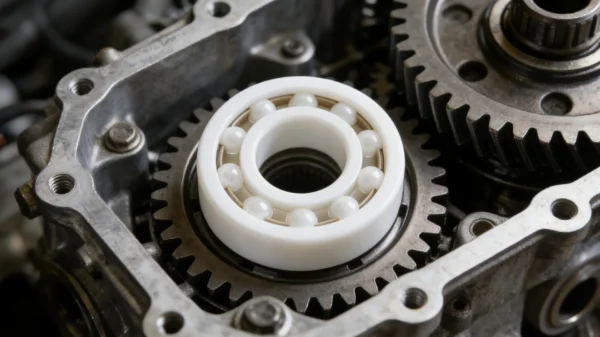
In my years in the bearing industry, I've seen the world of standard steel bearings slowly get challenged by ceramic technology. This is especially true for special jobs involving high heat, corrosion, high speeds, or non-magnetic needs. The choice between full ceramic and hybrid ceramic bearing1s is critical. A mistake here can lead to serious problems. Let's break down these two options so you can choose with confidence.
What Exactly Is a Full Ceramic Bearing?
You hear the term "full ceramic" but aren't sure what it means. This confusion can lead to buying the wrong, often expensive, part. Let's clear it up.
A full ceramic bearing has its inner ring, outer ring, rolling elements (balls), and cage all made from ceramic materials. The most common materials are Silicon Nitride (Si₃N₄) and Zirconia (ZrO₂).
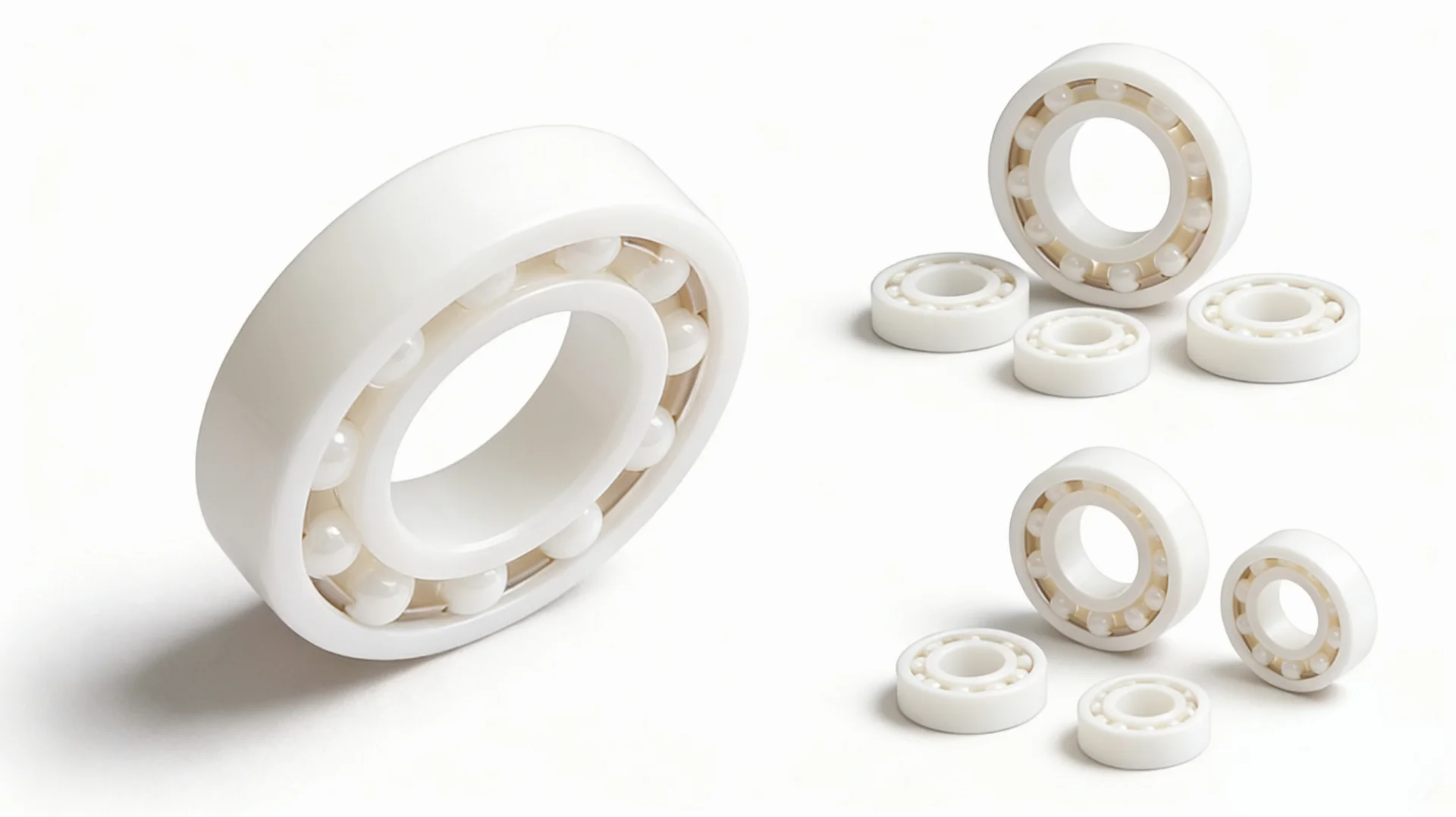
Don't let its simple look fool you. The full ceramic bearing2 has earned its place in high-tech fields like aerospace3, semiconductor manufacturing, medical equipment4, and chemical processing5. I've seen them used in situations where steel bearings would fail in minutes. So, what makes them so special? It comes down to the material.
Key Strengths of Full Ceramic Bearings
- High-Temperature Resistance: They can operate in extreme heat. Depending on the material, they can handle continuous working temperatures from 300°C up to 800°C. A standard steel bearing simply can't compete.
- Excellent Corrosion Resistance: They have incredible chemical stability. They can run smoothly in strong acids, alkalis, and other corrosive environments where metal would quickly degrade.
- Electrical Insulation: Ceramic is a natural insulator. This makes these bearings perfect for applications that need protection from magnetic fields or electrical currents.
- Self-Lubricating Properties: They can run without any oil or grease. This is a huge advantage in vacuums, clean rooms, or food processing where contamination is a major concern.
Here’s a quick look at the common materials:
| Ceramic Material | Key Features |
|---|---|
| Silicon Nitride (Si₃N₄)6 | High hardness (~1500HV), high speed, durable |
| Zirconia (ZrO₂)7 | High toughness, lower hardness than Si₃N₄ |
| Silicon Carbide (SiC) | Extreme hardness, excellent corrosion resistance8 |
Because of these properties, you find them in the most demanding places, like high-temperature furnaces, chemical reactors, and advanced medical devices.
And What About a Hybrid Ceramic Bearing?
You need better performance than steel, but the cost of a full ceramic bearing2 is too high. This middle ground can be confusing. A hybrid bearing is the balanced solution.
A hybrid ceramic bearing1 uses ceramic rolling elements (balls) but keeps the inner and outer rings made of metal. Common ring materials include bearing steel (GCr15) or stainless steel (440C).
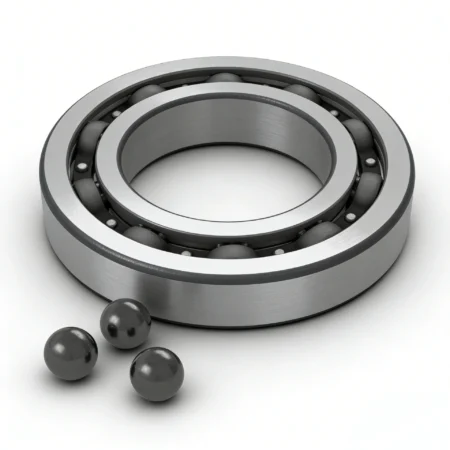
Hybrid ceramic bearings are smart. They combine the best of both worlds. You get the hardness and low friction of ceramic balls with the toughness and impact resistance of steel rings. I often call them the "high-performance-to-price-ratio student" of the bearing world. They offer a significant upgrade without the high price of a full ceramic solution.
Main Advantages of Hybrid Bearings
- High Hardness and Wear Resistance: The ceramic balls are incredibly hard, which means less wear and a longer service life compared to all-steel bearings.
- Increased Load Capacity: They can handle higher dynamic loads. In some cases, up to 1.3 times the capacity of a same-sized all-steel bearing. This is because the ceramic balls are so smooth and uniform.
- Higher Speed Capability: The lighter ceramic balls create less centrifugal force, allowing the bearing to run at higher speeds than its steel counterpart.
- Great Value: The price is much lower than a full ceramic bearing. This makes them a perfect choice for upgrading standard equipment like CNC machines, power tools, and high-speed motors.
However, they do have limitations set by their steel rings. Their temperature resistance is usually capped around 200-300°C, and their corrosion resistance8 depends entirely on whether you choose standard or stainless steel rings.
So, What Are the Key Differences Between Full and Hybrid Bearings?
You know what they are, but how do they really compare? Choosing based on just the name is a gamble. Let's put them side-by-side to see the real differences.
The key differences are in their materials, which directly impacts their performance, environmental resistance, and cost. Full ceramic excels in extreme conditions, while hybrid offers an affordable performance boost for more standard applications.
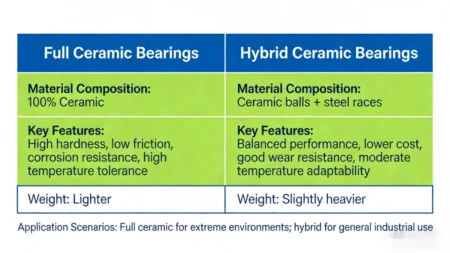
I've spent years helping customers pick the right bearing, and it almost always comes down to a few key trade-offs. You are usually trading extreme performance for cost and toughness. To make it simple, I've put together a table that breaks down the most important distinctions between these two types of bearings. This should help you see clearly which one fits your needs.
Detailed Comparison Table
| Feature | Full Ceramic Bearing | Hybrid Ceramic Bearing |
|---|---|---|
| Materials (Rings/Balls) | Ceramic / Ceramic | Steel / Ceramic |
| Hardness | Very High (e.g., Si₃N₄ ≈1500HV) | High (ceramic balls) + Moderate (steel rings) |
| Impact Toughness | Lower (more brittle) | Higher (steel rings provide toughness) |
| Max Temperature | Very High (300°C to 800°C) | Moderate (≤200-300°C, limited by steel) |
| Corrosion Resistance | Excellent (resists acids, alkalis) | Depends on ring material (stainless steel is better) |
| Electrical Property | Insulating / Non-Magnetic | Conductive / Magnetic (unless using special steel) |
| Friction Coefficient | Very Low (≈0.001-0.002) | Low (lower than all-steel) |
| Max Speed (RPM) | Highest | High (higher than all-steel, lower than full ceramic) |
| Cost | High | Moderate |
Understanding this table is key. For example, if your machine operates in a chemical bath, the "Corrosion Resistance" row tells you a full ceramic bearing2 is the only safe choice. If you just need a motor to run faster and cooler, the "Max Speed" and "Cost" rows point toward a hybrid bearing.
How Do They Compare in Performance?
Technical specs are one thing, but real-world performance is what matters. A wrong choice can lead to equipment failure and downtime. Let's look at how they actually perform.
Full ceramic bearings offer the ultimate performance in speed, temperature, and corrosion resistance8. Hybrid bearings provide a significant boost in speed and life over steel but can't match full ceramic in extreme environments.
When I talk to engineers, their decision often hinges on a few specific performance metrics. It's not just about which one is "better," but which one is better for a specific task. Let's dive deeper into three critical areas: speed, temperature, and the ability to handle loads and impacts.
Speed (RPM)
Full ceramic bearings are the clear winner for maximum speed. The ceramic balls are much lighter than steel balls, which reduces centrifugal force at high RPMs. This, combined with a lower friction coefficient9, allows them to spin much faster without overheating or failing. Hybrid bearings are a great step up from all-steel bearings. The lighter ceramic balls allow them to achieve higher speeds than their steel counterparts, but they are ultimately limited by the heat tolerance and stability of the steel rings.
Temperature Resistance
This is where the difference is most dramatic. Full ceramic bearings, especially those made from Silicon Nitride or Silicon Carbide, can operate in environments up to 800°C. They are designed for furnaces and other high-heat industrial processes. Hybrid bearings are limited by their steel components. Once the temperature gets above 200°C or 300°C, the steel rings can lose their hardness and shape, leading to failure.
Load and Impact
Here, the hybrid bearing has an advantage. The steel rings give it greater toughness and resilience against shock loads. Full ceramic materials are extremely hard, but they are also more brittle. A sudden, sharp impact could potentially fracture a full ceramic ring. This makes hybrid bearings a better choice for applications with variable loads or potential impacts.
What's the Price Difference Between Them?
You need a high-performance bearing but you have a budget. The price tag on some of these advanced bearings can be a shock. Let's break down what you're paying for.
Full ceramic bearings are significantly more expensive than hybrid bearings. This is due to the high cost of raw materials and the complex, energy-intensive manufacturing process required to produce and machine hard ceramics.
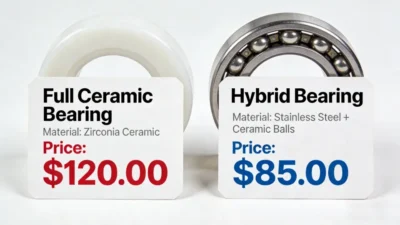
Cost is often the final deciding factor. It's easy to see the high price of a full ceramic bearing2 and immediately dismiss it. However, it's important to understand why it costs so much and to consider the total cost of ownership10 over the life of your equipment.
Why Are Full Ceramic Bearings Expensive?
The process starts with a fine ceramic powder that has to be pressed and then fired at extremely high temperatures in a process called sintering. This requires a lot of energy and precise control. After that, the hardened ceramic is one of the hardest materials on earth, making it very difficult and time-consuming to grind and finish to the tight tolerances required for a bearing. This specialized manufacturing is what drives up the price.
The Value of Hybrid Bearings
Hybrid bearings offer a much more accessible price point. The steel rings are made using standard, high-volume manufacturing processes, which keeps their cost low. The only premium component is the set of ceramic balls. This allows you to get many of the benefits of ceramic technology—higher speed, lower friction, longer life—at a fraction of the cost of a full ceramic solution.
Think about the total cost. A cheap steel bearing that you have to replace every month in a corrosive environment is actually more expensive than a full ceramic bearing2 that lasts for years. The initial investment might be higher, but the savings in maintenance, downtime, and replacement parts can make it the more economical choice in the long run.
Where Are These Bearings Actually Used?
Theory is great, but where do these bearings fit in the real world? Using the wrong type of bearing for your application is a recipe for disaster. Let's look at some common use cases.
Full ceramic bearings are used in extreme, specialized applications like aerospace3 and chemical processing. Hybrid bearings are perfect for upgrading mainstream equipment like high-speed motors11 and machine tools for better performance and longer life.

Over the years, I've supplied bearings for almost every industry imaginable. Seeing where each type of bearing excels has given me a clear picture of their best-fit applications. The choice becomes simple when you match the bearing's strengths to the demands of the job.
Applications for Full Ceramic Bearings
These are for the jobs where nothing else will survive.
- Aerospace: Lightweight, high-speed, and able to operate in extreme temperatures.
- Semiconductor Manufacturing: Used in vacuum and clean-room environments because they don't require lubrication and are non-reactive.
- Medical Equipment: Perfect for devices like MRI machines because they are non-magnetic. Also used in surgical tools that must be sterilized at high temperatures.
- Chemical Processing: Their ability to resist strong acids and alkalis makes them essential for pumps and mixers that handle corrosive materials.
Applications for Hybrid Ceramic Bearings
These are for when you need to push standard equipment to the next level.
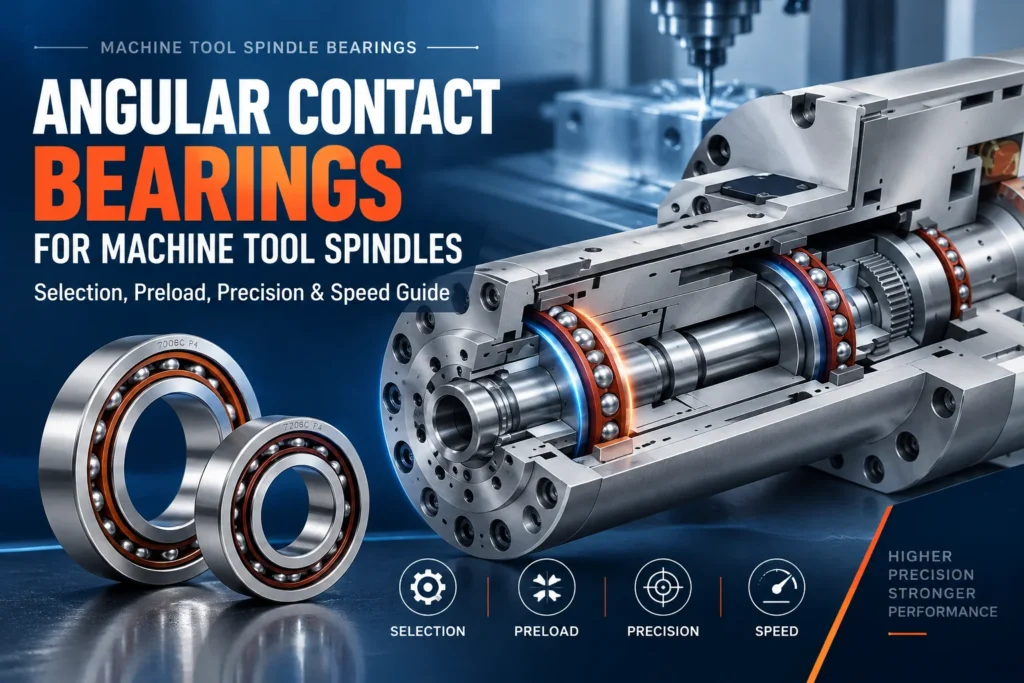
- CNC Machine Spindles: The higher speed and rigidity lead to faster, more precise machining.
- High-Speed Electric Motors: They run cooler and more efficiently, extending the motor's life and performance.
- Power Tools: The durability of ceramic balls means a longer-lasting tool, even under heavy use.
- Bicycle and Skateboard Bearings: In the high-performance sports world, the low friction of hybrid bearings provides a competitive edge.
Here is a simple guide:
| If your main concern is... | The best choice is... |
|---|---|
| Normal conditions, low cost | All-Steel Bearing |
| Higher speed, longer life, value | Hybrid Ceramic Bearing |
| Extreme heat, corrosion, or no-mag | Full Ceramic Bearing |
Conclusion
Choosing between full and hybrid ceramic bearings depends on your specific needs. Match the bearing's strengths to your application's demands for performance, environment, and budget to ensure long equipment life.
Learn how hybrid ceramic bearings combine the best of both worlds for various applications. ↩
Explore the advantages of full ceramic bearings for extreme conditions and high performance. ↩
Discover the specialized bearings that meet the demands of the aerospace industry. ↩
Explore the critical role of bearings in medical devices and equipment. ↩
Learn about the importance of bearings in chemical processing applications. ↩
Discover the properties of Silicon Nitride and its role in high-performance bearings. ↩
Find out how Zirconia enhances the performance of ceramic bearings. ↩
Explore the mechanisms that allow bearings to withstand corrosive environments. ↩
Understand how friction coefficient impacts bearing performance and efficiency. ↩
Learn how to evaluate the long-term costs associated with different bearings. ↩
Find out how hybrid bearings improve the efficiency of high-speed motors. ↩