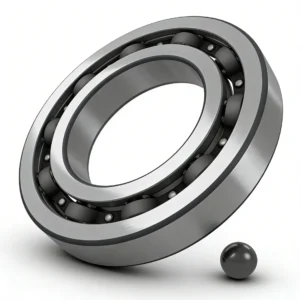
Your machines are failing too soon. You know steel bearings have limits on speed and life. This downtime and replacement cost is hurting your bottom line and reputation.
Hybrid ceramic bearings are a high-performance alternative, combining steel rings with ceramic rolling elements. They run faster, cooler, and last much longer than traditional steel bearings, especially in demanding conditions. This reduces friction, wear, and overall maintenance costs.
When I first heard the word "ceramic" used for bearings, I thought of the same things you probably do: coffee mugs and dinner plates. The idea of using something so fragile inside a high-speed motor seemed crazy. But after decades in the bearing industry here at Yuanguang Bearing, I've seen firsthand how this technology has revolutionized performance. We're not talking about your kitchen ceramic. We are talking about an advanced material that solves problems steel just can't handle. Let's break down exactly what these bearings are and why they might be the solution you've been looking for.
First, What Exactly Are Hybrid Ceramic Bearings?
You hear "ceramic" and immediately think of something that shatters easily. This makes it hard to believe it could be used in a heavy-duty industrial application, right?
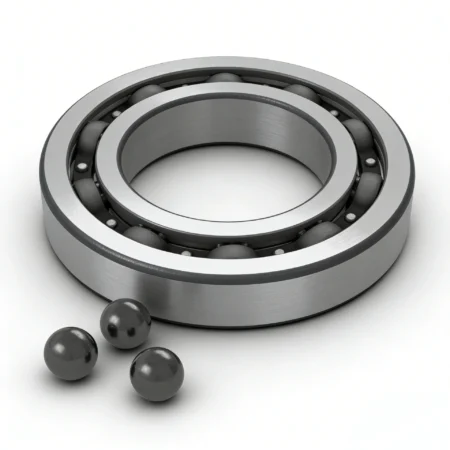
A hybrid ceramic bearing isn't made entirely of ceramic. It uses standard, high-strength bearing steel1 for the inner and outer rings. The key difference is that the rolling elements—the balls—are made from an advanced ceramic material2, usually silicon nitride (Si3N4)3.
At our factory, we've perfected the process of integrating these different materials. The concept is simple but brilliant: combine the proven, cost-effective structure4 of steel rings with the extraordinary properties of ceramic balls. This isn't the white, brittle ceramic you find in your home. This is silicon nitride, a technical ceramic that is dark grey in color and incredibly strong. It’s engineered specifically for extreme performance. This "hybrid" approach allows us to get the best of both worlds. We get the strength and familiar form factor of steel, plus the unique advantages of ceramic where it counts the most—at the point of rolling contact.
Let's look at the components side-by-side:
| Component | Standard Steel Bearing | Hybrid Ceramic Bearing |
|---|---|---|
| Outer Ring | Bearing Steel | Bearing Steel |
| Inner Ring | Bearing Steel | Bearing Steel |
| Rolling Elements | Bearing Steel Balls | Silicon Nitride (Si3N4) Balls |
| Cage | Steel, Brass, or Polymer | Steel, Brass, or Polymer |
As you can see, the only change is the material of the balls. But this one change is what unlocks a whole new level of performance.
How Does Lighter Weight Lead to Higher Speeds?
Pushing for more speed from your equipment? You know that running standard steel bearings faster and faster just generates more heat, leading to premature wear and failure.
Ceramic balls are nearly 60% lighter than steel balls. This drastically reduces the centrifugal force inside the bearing at high speeds. Less force means less friction, less heat, and a much higher maximum speed capability before performance starts to degrade.
=
Let's dive into the physics, but keep it simple. The density of silicon nitride is about 3.2 g/cm³, while bearing steel is around 7.8 g/cm³. The ceramic balls are just so much lighter. When a bearing spins, the balls are constantly pushed outwards against the outer race by centrifugal force. The faster it spins and the heavier the balls are, the stronger this force is. I’ve seen the effects in our test labs for years. This outward force is a major source of friction and heat. By swapping heavy steel balls for lightweight ceramic ones, you reduce this force by more than 40%. This has a massive chain reaction of benefits.
The Benefits of Lower Centrifugal Force
- Reduced Friction: With less force pushing the balls against the outer race, the frictional drag is significantly lower. The bearing simply spins more freely.
- Less Heat Generation: Friction creates heat. Since there's less friction, the bearing runs much cooler. Heat is a primary enemy of bearings because it degrades lubricant and can cause the parts to expand and seize.
- Higher Speed Capability: Because the bearing runs cooler and with less internal stress, it can be operated at much higher revolutions per minute (RPM) without failing. For some applications, we've seen speed increases of 50% or more.
- Longer Lubricant Life: Cooler operating temperatures mean the grease or oil in the bearing doesn't break down as quickly, extending lubrication intervals and overall bearing life.
Can a Bearing Really Crush Debris and Keep Going?
Contamination is the silent killer of bearings. A tiny metal shaving or a grain of sand gets inside, and soon you have a noisy, vibrating bearing that's headed for failure.
Yes, it can. Silicon nitride ceramic is more than twice as hard as bearing steel. If a hard particle enters a hybrid bearing, the super-hard ceramic ball will often pulverize the debris, preventing the dent that would otherwise lead to failure in a steel bearing.
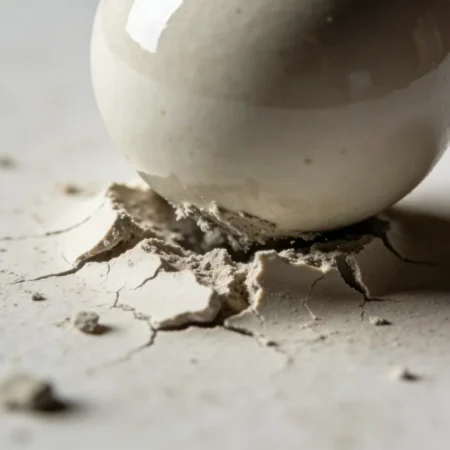
This is one of the most incredible advantages I've witnessed. The hardness of silicon nitride is around HV1700, while hardened bearing steel is only about HV800. This massive difference in hardness fundamentally changes how the bearing responds to contamination. In a standard all-steel bearing, when a hard particle gets between the ball and the race, it creates a small dent or pit in both surfaces. Every time a ball rolls over that dent, it creates a tiny impact, noise, and vibration. This damage, called brinelling, quickly gets worse and leads to spalling and catastrophic failure.
The Superiority of Ceramic Hardness
A hybrid ceramic bearing handles this situation completely differently.
- Pulverizing Effect: When a contaminant particle meets the ultra-hard ceramic ball, the ball is often unscathed. Instead, the particle is crushed into a fine powder, which can then be flushed away by the lubricant without causing significant damage to the steel raceway. The bearing essentially cleans itself.
- Low Adhesion (Anti-Seizure): There's another important property at play. Steel-on-steel components can have a high affinity for each other. In a situation with poor lubrication, the intense friction can cause microscopic welds to form between the steel ball and steel race, leading to the bearing seizing up completely. This is called adhesive wear or galling. Because ceramic and steel are dissimilar materials, they have very little chemical affinity. They don't "stick" to each other. This means that even in a temporary oil-starvation event, a hybrid bearing is far more likely to survive without seizing.
Why Are Corrosion Resistance and Electrical Insulation So Important?
Many machines operate in less-than-ideal environments with moisture. Others, like electric motors, face invisible threats like stray electrical currents that can destroy bearings from the inside out.
Ceramic is a natural insulator and doesn't rust. Silicon nitride balls are immune to corrosion from water and most chemicals. They also do not conduct electricity, preventing stray currents from passing through the bearing and causing electrical arc damage.
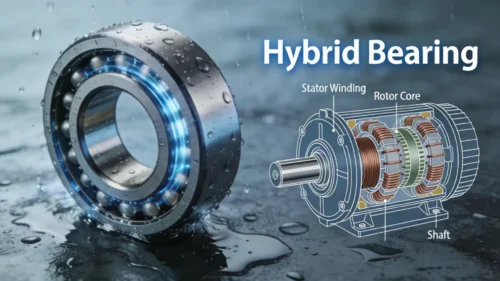
These two properties solve major modern engineering challenges. At Yuanguang Bearing, we supply to many customers whose equipment is exposed to harsh elements or runs on advanced electrical systems, and these features are not just nice-to-have; they are essential.
Deep Dive into Environmental and Electrical Protection
-
Corrosion Resistance: Steel rusts. We use seals and special lubricants to protect it, but in applications like pumps, mixers, or marine equipment, moisture is a constant threat. Rust creates pits on the bearing surfaces, which act just like the dents from contamination, leading to noise and rapid failure. Silicon nitride is chemically inert. It simply does not react with water or many common industrial chemicals. A hybrid bearing can operate in environments that would quickly destroy a standard steel bearing.
-
Electrical Insulation: This is a huge one for electric motors, especially those controlled by Variable Frequency Drives (VFDs). VFDs can create stray voltages on the motor shaft. This electricity looks for the easiest path to ground, which is often through the shaft, into the bearings, and out through the housing. As the current jumps the tiny gap between the bearing race and the ball, it creates a small electrical arc. This process, called Electrical Discharge Machining (EDM), blasts a microscopic crater in the metal. Over millions of repetitions, the bearing races become pitted and frosted, leading to noise, vibration, and failure. Because ceramic is an excellent electrical insulator, the ceramic balls in a hybrid bearing create a barrier. The current cannot pass, completely eliminating EDM damage and dramatically extending motor life.
Hybrid Ceramic vs. Steel Bearings: What Are the Key Differences?
You've heard the advantages, but how do they really compare side-by-side? Is the higher initial cost of a hybrid bearing actually worth it for your application?
Hybrid bearings offer superior performance in speed, durability under harsh conditions, and electrical resistance. All-steel bearings remain the economical choice for standard, less demanding applications. The best choice depends entirely on the specific demands of your machinery.
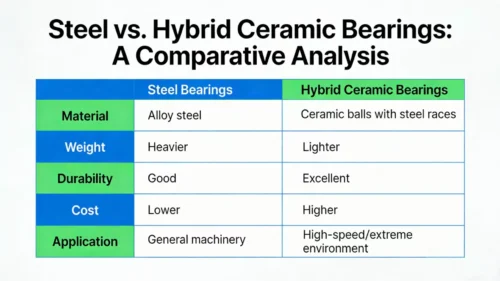
I always advise my clients to look at the Total Cost of Ownership (TCO)5, not just the upfront price. A more expensive hybrid bearing that prevents one instance of costly machine downtime is often the cheaper option in the long run. The initial investment can be higher, sometimes 2 to 5 times the cost of a comparable steel bearing. However, this cost must be weighed against the potential savings from reduced maintenance, longer service intervals, and increased productivity. For a general-purpose application at low speed in a clean environment, a standard steel bearing is perfectly fine and the most cost-effective choice. But the moment you introduce high speeds, contamination risk, moisture, or electrical currents, the value proposition of a hybrid bearing becomes very clear.
| Feature | All-Steel Bearing | Hybrid Ceramic Bearing |
|---|---|---|
| Max Speed | Good | Excellent (30-50%+ Higher) |
| Friction/Heat | Higher | Lower |
| Lifespan (Ideal) | Excellent | Excellent |
| Lifespan (Harsh) | Poor to Fair | Excellent |
| Contamination Resistance | Poor | Excellent |
| Corrosion Resistance | Poor (requires protection) | Excellent (balls are immune) |
| Electrical Properties | Conductive | Insulative |
| Weight | Heavier | Lighter |
| Initial Cost | Low | High |
| Total Cost of Ownership | Can be high due to failure | Often lower in demanding apps |
Where Are Hybrid Ceramic Bearings Actually Used?
It's great to talk about high performance in a lab, but where do these advanced bearings provide a real-world advantage that justifies their use?
You will find hybrid ceramic bearings in the most demanding applications, including high-speed machine tool spindles6, electric vehicle motors7, aerospace turbine engines8, and precision medical devices.
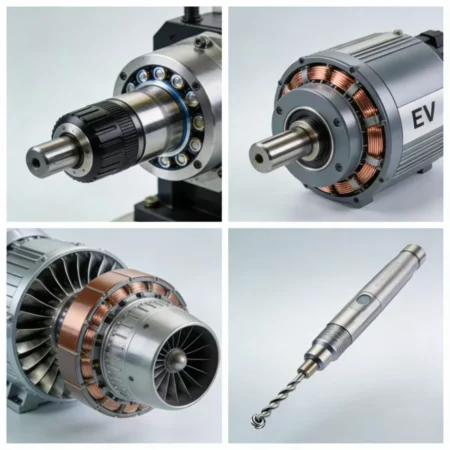
The adoption of these bearings follows a simple rule: they are used where failure is not an option and where performance limits are being pushed. I've seen our bearings go into some truly amazing pieces of technology.
Key High-Performance Applications
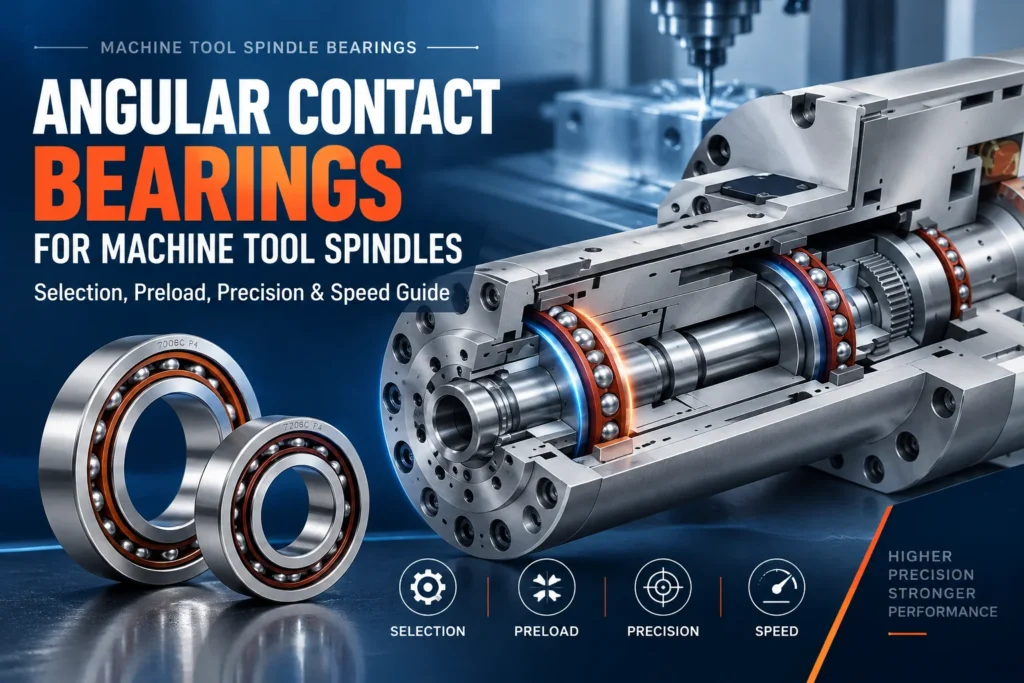
- Machine Tool Spindles: To cut metal quickly and accurately, the spindle must rotate at very high speeds with extreme rigidity and low thermal expansion. Hybrid bearings allow for higher RPMs, cooler operation, and greater precision, resulting in faster production and better surface finishes.
- Electric Motors (EVs, Industrial): This is a huge and growing field. As I mentioned, the electrical insulation9 property is critical for preventing VFD-induced EDM damage. In Electric Vehicles, their light weight and low friction also contribute to slightly better efficiency and range.
- Aerospace & Turbomachinery: In jet engines, turbochargers, and auxiliary power units, bearings must survive extreme temperatures and incredible rotational speeds. The thermal stability and low mass of ceramic balls are essential for reliability and performance in these environments.
- Medical Equipment: Think of a dentist's drill. It spins at hundreds of thousands of RPM. Hybrid bearings provide the speed and long life needed. They are also used in surgical tools and lab equipment where non-corrosive and non-conductive properties are beneficial.
- Racing (F1, MotoGP): In motorsport, every ounce of weight and every bit of friction counts. Hybrid bearings are used in engines, gearboxes, and wheel hubs to reduce parasitic losses and improve acceleration and top speed.
Conclusion
Hybrid ceramic bearings10 offer unmatched performance for extreme applications. They provide higher speed, longer life, and greater reliability where steel bearings fail, justifying their cost through reduced downtime.
Learn about the properties of high-strength bearing steel and its role in hybrid ceramic bearings. ↩
Explore the unique properties of advanced ceramics that make them suitable for high-performance bearings. ↩
Learn about silicon nitride's unique properties and its role in improving bearing performance. ↩
Learn how a cost-effective structure can enhance performance while managing costs in bearing design. ↩
Understand how TCO can guide your decision-making in selecting the right bearings for your application. ↩
Explore how hybrid ceramic bearings enhance performance in high-speed machine tool applications. ↩
Learn about the benefits of hybrid ceramic bearings in enhancing efficiency and performance in EVs. ↩
Discover how hybrid bearings contribute to reliability and performance in aerospace turbine engines. ↩
Discover how electrical insulation in hybrid bearings protects against electrical discharge damage. ↩
Explore the advantages of hybrid ceramic bearings for high-performance applications and how they can enhance your machinery. ↩