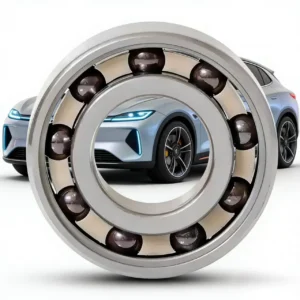
Your EV motor failed unexpectedly? The cause might be a silent killer called electrical erosion1. This invisible force slowly destroys your motor bearings2 from the inside out.
Hybrid ceramic bearings are the solution top EV makers like Tesla and BYD use to stop electrical erosion. The ceramic balls are electrical insulators, so they block the damaging currents from the motor's inverter. This prevents bearing failure3 and ensures the motor lasts a long time.

A fan of our blog recently asked me, "This silicon nitride ceramic4 sounds amazing, but it's expensive. Who is actually using it?" This is a great question. Today, I want to show you two areas where these bearings are not just a luxury, but a necessity. High-end electric vehicles and high-speed industrial spindles5 rely on them. If you've ever dealt with a noisy motor or a premature bearing failure3, you need to keep reading. Let's explore why this technology is a game-changer and how we at Yuanguang Bearing have been helping our clients solve these exact problems since 1992.
What Is Electrical Erosion in Electric Motors?
Hear a strange noise from your motor? It could be electrical erosion1. This invisible damage creates pits and grooves on your bearings, leading to loud noises and eventual failure.
Electrical erosion is damage to a bearing caused by electric currents passing through it. These currents create tiny sparks that jump between the rolling elements and raceways. The sparks melt and pit the metal surfaces, leading to vibration, noise, and bearing failure.
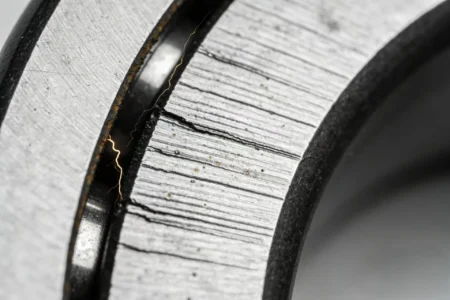
To understand electrical erosion1, you need to think on a very small scale. Imagine a tiny lightning storm happening inside your bearing, thousands of times per second. The motor's control system, called an inverter6 or VFD, can create a voltage on the motor shaft. This electricity needs a path to ground. The easiest path is often right through the bearings.
The problem is, the rolling elements (the balls) and the raceways are separated by a very thin film of oil. This oil film acts as a temporary barrier. But when the voltage gets high enough, it 'punches through' the oil. This creates a tiny electric arc, or spark.
Each spark is incredibly hot. It melts a microscopic spot on the steel ball and the steel raceway. This happens over and over again. Over millions of cycles, these tiny melted spots turn into a series of pits and grooves. We in the bearing industry call this pattern "fluting" or a "washboard" pattern because it looks just like a tiny washboard. This rough surface is what causes the loud noise and vibration, and it's a clear sign that the bearing will soon fail completely.
Why Is Electrical Erosion a Critical Problem in EV Motors?
EV motors are powerful, but they have a weakness. Electrical erosion can cause unexpected breakdowns, leaving a driver stranded. This is a huge reliability problem for car manufacturers.
In EVs, electrical erosion is critical because it leads to motor failure, which affects vehicle reliability and safety. The high-frequency inverters in EVs create shaft voltages that constantly attack the bearings. A failed bearing means a failed motor, which is an expensive and complex repair.
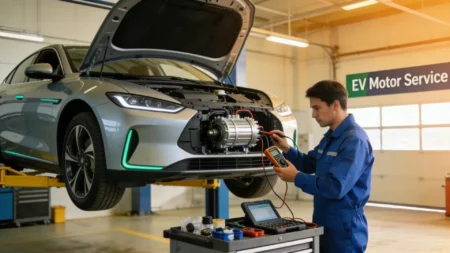
For a company like Tesla or BYD, brand reputation is everything. Their customers expect a smooth, quiet, and reliable car. A motor that starts whining or fails prematurely is a disaster for that reputation. It leads to unhappy customers, bad reviews, and very expensive warranty claims. The traction motor is the heart of an electric vehicle. If it fails, the car stops. It’s not a minor inconvenience.
The technology that makes EVs so efficient is also what creates the problem. Modern inverters switch electricity at very high frequencies to give the driver precise control and a smooth ride. But a side effect of this high-frequency switching is the creation of shaft voltage7. The faster and more efficient the inverters become, the worse the electrical erosion problem can get.
This is why solving electrical erosion is not just an option for EV makers; it's a requirement. They need a solution that is 100% reliable for the life of the vehicle. A simple steel bearing just can't provide that guarantee in this environment. It's a ticking time bomb. This is where we, as bearing experts, can provide a permanent fix.
What Causes Electrical Erosion in Bearings?
Ever wonder where these damaging currents come from? It’s not a short circuit. The very technology that makes your EV motor efficient is also the source of the problem.
Electrical erosion is caused by shaft voltages that are created by the variable frequency drive (VFD) or inverter that controls the motor. This creates a voltage difference between the motor shaft and its housing. The current then tries to find the easiest path to ground, which is through the bearings.
Let me break down the cause in a simple way. Think of it as a three-step process.
1. The Source: The Inverter
The inverter6 (or VFD) is the brain that controls the motor's speed and power. It does this by chopping up DC power from the battery into AC power for the motor, using a method called Pulse Width Modulation (PWM). This process is very efficient, but it's not perfect. It creates stray electrical "noise" and what's known as common-mode voltage8.
2. The Buildup: Shaft Voltage
This common-mode voltage causes a voltage potential to build up on the motor's rotor and shaft. The shaft essentially becomes electrically charged, like a capacitor. It holds this electrical energy and is constantly looking for a place to release it.
3. The Discharge: The Bearing Spark
The motor's housing is grounded. The shaft is not. The bearing sits right in between them. The electricity on the shaft sees the bearing as the path of least resistance to get to the grounded housing. As I mentioned before, the current jumps across the oil film, creating a spark. This discharge event is what damages the bearing.
| Step | What Happens | Result |
|---|---|---|
| Source | The inverter's high-speed switching | Creates stray common-mode voltage |
| Buildup | Voltage accumulates on the motor shaft | Shaft becomes electrically charged |
| Discharge | Current arcs through the bearing to ground | A tiny spark melts the steel surface |
This cycle happens thousands of times per second while the motor is running. Each spark is a tiny wound on the bearing's surface. Over time, these wounds add up to complete failure.
How Do Hybrid Ceramic Bearings Prevent Electrical Erosion?
The solution to electrical erosion1 is surprisingly simple. You don't need complex electronics or grounding kits. You just need to break the circuit with a material that electricity can't pass through.
Hybrid ceramic bearings prevent electrical erosion by acting as an insulator. The ceramic balls, made of silicon nitride, are non-conductive. They replace the steel balls, creating an open circuit. This physically blocks the damaging current from flowing through the bearing.
This is the genius of the hybrid ceramic bearing. The problem is an electrical current. The solution is to block that current. Silicon nitride, the material we use for our ceramic balls9, is an excellent electrical insulator. It does not conduct electricity.
Think of it like this: if you have a river, a steel bearing is like a bridge. The water (current) can flow across it easily. A hybrid ceramic bearing is like blowing up that bridge. The river is still there, but it can no longer cross.
By replacing the conductive steel balls with insulating ceramic balls, we create a permanent break in the electrical path. The voltage may still be on the shaft, but it can no longer pass through the bearing to cause damage. It's a simple, elegant, and permanent fix. This is why it's the preferred method for high-performance applications. It solves the problem at its source, inside the bearing itself.
Here's how the path changes:
- All-Steel Bearing Path: Shaft -> Inner Race -> Steel Ball -> Outer Race -> Housing (Circuit Complete)
- Hybrid Ceramic Bearing Path: Shaft -> Inner Race -> Ceramic Ball -> (Circuit Broken!)
It's that simple. The ceramic ball acts as a wall, protecting the bearing and the entire motor.
Hybrid Ceramic vs. Steel Bearings: What Are the Key Differences?
Steel bearings have been the standard for over a century. But for modern challenges like EVs, a new material is needed. What makes ceramic so different and so much better?
The key difference is the material of the rolling elements. Hybrid bearings use non-conductive, lightweight ceramic balls. Standard bearings use conductive steel balls. This makes hybrid bearings insulators, lighter, harder, and better for high speeds with less heat.
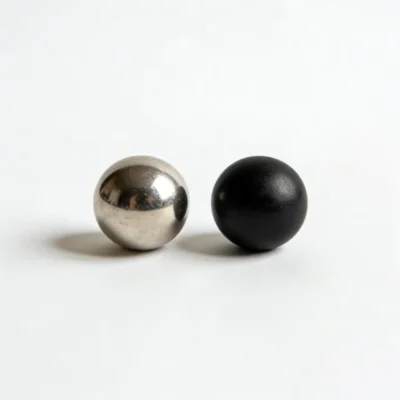
I've worked with bearings my whole life, and the introduction of ceramics was a huge leap forward. While they look similar from the outside, their internal properties are worlds apart. It's not just about stopping electricity. Hybrid ceramic bearings have other amazing advantages, especially for high-speed applications10.
One of the biggest is weight. A silicon nitride ceramic4 ball is about 60% lighter than a steel ball of the same size. This might not sound like much, but when a bearing is spinning at 20,000 RPM, it makes a massive difference. The lighter balls create much less centrifugal force. This means less friction, less heat, and less wear on the bearing's outer race. This "low-temperature rise" is critical for precision machinery11.
Ceramic is also much harder than steel and has a lower coefficient of friction12. This means it's more durable and runs more smoothly. Let's put it all in a table to make it clear.
| Feature | All-Steel Bearing | Hybrid Ceramic Bearing |
|---|---|---|
| Electrical Conductivity | Conductive (The Problem) | Insulating (The Solution) |
| Density / Weight | High | Low (40% of steel) |
| Hardness | Good | Excellent |
| Centrifugal Force (at high speed) | High | Low |
| Max Operating Speed | Good | Excellent (Higher) |
| Heat Generation | Higher | Lower |
| Lifespan with VFD | Short | Very Long |
| Cost | Low | High |
As you can see, for demanding jobs, the hybrid ceramic bearing wins in almost every category except for initial cost. But when you consider the cost of downtime13 and motor replacement, the hybrid bearing often pays for itself many times over.
How Do You Choose Bearings for EV and High-Speed Motors?
Choosing the right bearing isn't just about size. For high-performance motors, you must consider electrical risks and speed. Making the wrong choice can lead to costly and premature failures.
For EV and high-speed motors, first assess the electrical risk. If a VFD or inverter is used, a hybrid ceramic bearing is the safest choice. For very high RPMs, the lightweight ceramic balls reduce heat and wear, making them the superior option.
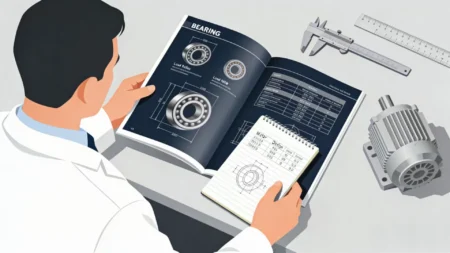
As a manufacturer, we help customers make this choice every day. Here is the simple framework we use.
Step 1: Assess the Electrical Risk
The first question is always: Is the motor controlled by a Variable Frequency Drive (VFD) or an inverter?
- If YES: You have a high risk of electrical erosion. You need an insulated solution. A hybrid ceramic bearing is the most direct and reliable fix. It eliminates the problem completely. Other options exist, like insulated coatings on the bearing rings, which we also provide, but the hybrid design is often the most robust.
- If NO: Electrical erosion is not a concern. You can move to the next step.
Step 2: Evaluate the Speed Requirement
The second question is: What is the maximum operating speed (RPM) of the motor?
- If it's a high-speed application (e.g., over 15,000 RPM): Centrifugal force and heat are your main enemies. A hybrid ceramic bearing is the best choice. Its lightweight balls create less force and heat, allowing the motor to run faster, cooler, and with greater precision.
- If it's a standard speed application: A traditional all-steel bearing is likely sufficient and more cost-effective.
Step 3: Consider the Overall Cost
Finally, you must balance performance and budget. A hybrid ceramic bearing has a higher upfront cost. But you must ask: What is the cost of failure? In a critical application like an EV motor or an expensive CNC machine, a single failure can cost thousands in repairs and lost productivity. In these cases, the higher initial investment in a hybrid bearing is smart insurance.
What Are Other Applications of Hybrid Ceramic Bearings?
It's not just Tesla and BYD. Hybrid ceramic bearings are becoming the go-to solution in many advanced industries. Where else are these high-tech components making a difference?
Besides EV motors, hybrid ceramic bearings are used in high-speed machine tool spindles, industrial pumps, and any electric motor controlled by a VFD. They solve critical problems related to speed, heat, and electrical damage in demanding industries.
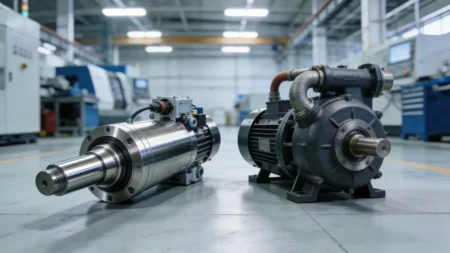
At Yuanguang Bearing, we supply these advanced bearings to a wide range of customers. The principles are the same: solve problems related to electricity or speed.
Here are some of the most common applications we see:
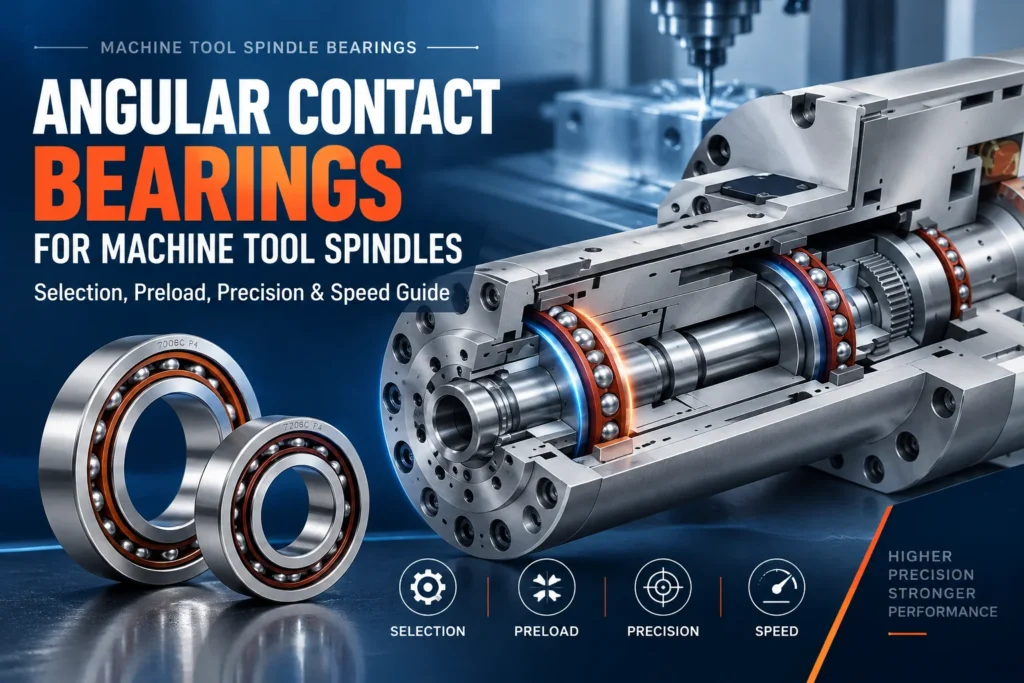
- High-Speed Machine Tool Spindles: In a CNC machine that cuts metal, the spindle must be incredibly precise. These spindles often spin at 20,000 or 30,000 RPM. A hybrid ceramic bearing keeps the spindle cool. A cooler spindle means less thermal expansion, which means the machine can cut with much higher accuracy. This is a huge advantage in precision manufacturing.
- Industrial Motors with VFDs: Many factories use VFDs to control motors for pumps, fans, and conveyor belts to save energy. But just like in EVs, this creates electrical erosion. We often help factories upgrade their critical motors to hybrid bearings to improve reliability and reduce maintenance costs.
- Aerospace: In airplanes, weight and reliability are everything. Hybrid bearings are used in generators and auxiliary power units because they are lighter and have a longer service life.
- Robotics: High-speed, high-precision robots also benefit from the low friction and high stiffness of hybrid ceramic bearings.
Anywhere you have a combination of high speeds, a need for high precision, or a VFD, a hybrid ceramic bearing is likely the best engineering choice.
What Are Signs of Electrical Erosion and How Do You Detect It?
Is your motor making a strange whining or roaring sound? Don't ignore it. It could be the sound of your bearings being slowly destroyed by electrical erosion.
The main signs are increased noise and vibration. On inspection, the bearing raceway will look dull or frosted. A microscope reveals tiny pits and a unique "washboard" or "fluting" pattern. These are the classic fingerprints of electrical erosion damage.
Catching bearing failure early can save you a lot of money. Here’s what to look and listen for.
I remember a client who ran a large manufacturing plant. They had a critical ventilation fan motor, and they were replacing its bearings every six months. The noise was getting worse with each replacement. They called us in to consult. When we disassembled the failed bearing, the problem was obvious. The raceway didn't have the normal smooth, polished look. It was a dull, matte grey. And when we looked closely, we could see the clear, evenly-spaced lines of the "washboard" pattern. It was a classic case of electrical erosion from their VFD.
Here are the detection methods:
- Listen: The first sign is often noise. Electrical fluting creates a distinct roaring or whining sound. If a motor that was once quiet is now noisy, you should suspect the bearings.
- Vibration Analysis: This is a more scientific method. Maintenance professionals can use a sensor to measure the motor's vibration. Electrical fluting creates a very specific vibration frequency. Specialised equipment can easily spot this signature, predicting failure long before it happens.
- Visual Inspection: If you have a failed bearing, you can diagnose the problem yourself.
- Fluting: Look for the "washboard" pattern running across the raceway, perpendicular to the direction of travel.
- Frosted Appearance: The normally shiny raceway will have a dull, sandblasted look.
- Pitting: Under magnification, you will see thousands of tiny craters where the sparks occurred.
If you see these signs, you know that a standard steel bearing will just fail again. The only permanent solution is to break the electrical circuit with an insulated bearing, like a hybrid ceramic.
Conclusion
To protect motors from electrical erosion and to reach higher speeds, hybrid ceramic bearings are the clear solution. They offer a simple, effective fix for modern engineering challenges.
Understanding electrical erosion is crucial for maintaining motor health and preventing costly failures. ↩
Get insights into different motor bearings and their applications in various industries. ↩
Learn about the common causes of bearing failure to prevent costly repairs. ↩
Discover the industries leveraging silicon nitride ceramic for superior performance. ↩
Find out how high-speed spindles enhance precision in manufacturing processes. ↩
Explore how inverters control motor speed and performance in electric vehicles. ↩
Understanding shaft voltage is key to preventing electrical erosion in motors. ↩
Discover the impact of common-mode voltage on motor performance and reliability. ↩
Explore the benefits of ceramic balls for improved bearing performance. ↩
Discover the unique challenges faced in high-speed applications and their solutions. ↩
Explore the role of precision machinery in modern manufacturing processes. ↩
Learn how the coefficient of friction affects bearing performance and lifespan. ↩
Understanding the cost of downtime can help prioritize maintenance and upgrades. ↩