
Choosing the wrong bearing leads to costly downtime and equipment failure. Understanding the right type of pillow block bearing for the job is the key to preventing this expensive problem.
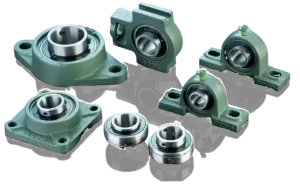
Pillow block bearings are mounted bearing units used to provide support for a rotating shaft. They consist of a self-aligning insert bearing and a housing. Their main benefit is easy installation and the ability to compensate for shaft misalignment, making them essential in many industries.
But not all pillow block bearings are the same. In my 30 years running Yuanguang Bearing, I've seen firsthand how the right housing can make all the difference. Compared to traditional bearings, these mounted units can increase installation speed by 60%, triple the equipment's lifespan, and slash maintenance costs by 70%. They are the "joints" of industrial equipment, providing flexible installation and stable support. So, let's break down the most common types to help you give your customers the best advice.
What are UCP Pillow Block Bearings and where are they used?
Do you need a simple, strong bearing for a horizontal shaft? Using the wrong mount can cause instability and make installation a headache, but the UCP series offers a robust, straightforward solution.
UCP series pillow block bearings have a solid base designed for mounting on a flat surface. They are installed vertically with two bolts. This design provides strong, reliable support, making them ideal for conveyor belts, agricultural machinery, and industrial fans requiring horizontal shaft support.
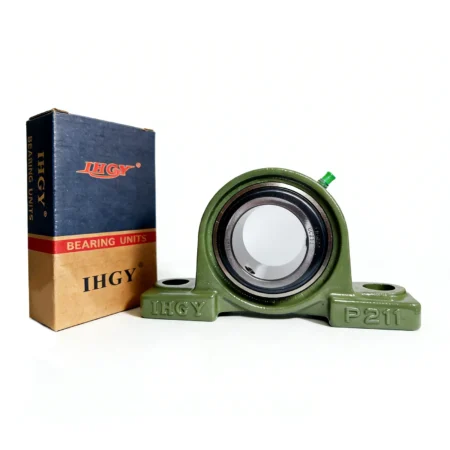
The "P" in UCP stands for "Pillow Block," and it's the most common type you'll encounter. Its design is beautifully simple. The housing is typically made from solid cast iron, giving it the strength to handle significant loads. The base is flat with two bolt holes, allowing it to be mounted directly onto a machine frame. Inside this housing sits a UC insert bearing, which is essentially a modified deep groove ball bearing. The key feature is the spherical outer surface of the insert bearing, which matches the spherical inner surface of the housing. This clever design allows the bearing to pivot within the housing, automatically correcting for any initial misalignment of the shaft. This self-aligning capability is a lifesaver during installation and helps prevent premature wear. At our factory, we produce thousands of these every month because they are the workhorse for so many applications.
UCP Series: Key Features and Applications
| 🧩 Feature | 🎯 Benefit Description | 🚜 Common Applications |
|---|---|---|
| ◽ Solid Base | Provides strong, stable, and vibration-resistant support | Checkout conveyor systems |
| ◽ Two-Bolt Mounting | Fast and simple installation on flat mounting surfaces | Agricultural machinery (e.g., tillers, small drives) |
| ◽ Self-Aligning Design | Automatically compensates for shaft misalignment, reducing wear and failure risk | Industrial fans, blowers, ventilation systems |
| ◽ Robust Construction | High structural strength and load-carrying capacity under harsh conditions | General industrial machinery and heavy-duty equipment |
Why choose a UCF square flange bearing?
Is space a major constraint in your machine design? Bulky bearing mounts can compromise your entire setup, but UCF square flange units mount directly to machine walls, saving valuable space.
UCF series bearings feature a square flange with four mounting bolts. This design allows them to be mounted directly onto the side or end of a machine frame. The four-bolt pattern provides excellent stability, making them perfect for gearboxes, food processing equipment, and motors.
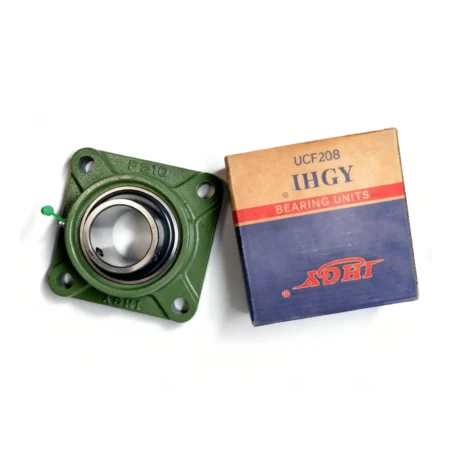
When you see "F" in the model number, think "Flange." Unlike the UCP series which mounts on a horizontal base, the UCF series is designed to be bolted to a vertical surface. The square-shaped housing with a bolt hole in each of the four corners is its defining feature. This four-bolt configuration distributes the load evenly and provides a very rigid and stable mounting. It's the go-to choice when the shaft is perpendicular to the machine frame or when you need maximum stability against high radial loads. I often recommend UCF units to our OEM clients who are building compact machinery. The ability to bolt the bearing directly onto the side of a gearbox or motor housing is a huge advantage, as it eliminates the need for extra brackets and saves a tremendous amount of space. This design is incredibly popular in applications where vibration and stability are critical concerns.
UCF Series: Stability and Space-Saving
| 🧩 Feature | 🎯 Benefit Description | 🚜 Common Applications |
|---|---|---|
| ◽ Square Flange | Enables direct mounting on vertical or flat machine surfaces | Motor mounting systems |
| ◽ Four-Bolt Mounting | Provides strong stability with even load distribution | Gearboxes, drive units |
| ◽ Space-Saving Design | Compact structure eliminates need for additional brackets | Food processing machinery |
| ◽ High Rigidity | Enhances resistance to vibration and high radial loads | Harvesters, combines, agricultural equipment |
When is a UCFL two-bolt flange bearing the right choice?
Are you trying to fit a bearing into a tight or awkward space? A standard square flange might not fit, stopping your project, but the UCFL's diamond shape is designed specifically for these narrow spaces.
UCFL series bearings have a two-bolt, diamond-shaped (rhombic) flange. This compact design is perfect for mounting in tight spaces where a four-bolt square flange won't fit. They are commonly used in food production lines, mixers, and washing machine drums.
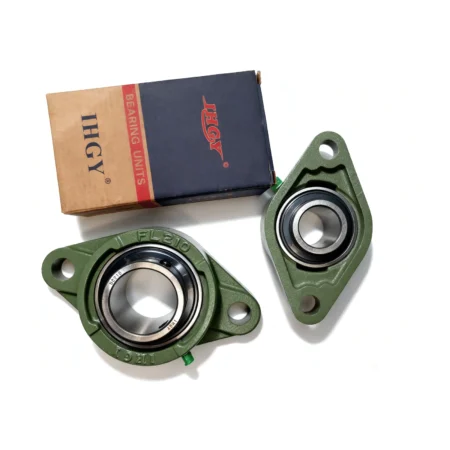
The UCFL series is a brilliant problem-solver. It takes the same self-aligning UC insert bearing and places it in a housing with a distinctive diamond or rhombic shape. This housing only has two bolt holes, which makes its profile much narrower than the UCF series. This is its primary advantage: it can be squeezed into places where other bearings simply won't go. I remember a client who was designing a custom mixing machine for a bakery. A UCF bearing was too wide to fit between the parallel frame rails, but the UCFL slid in perfectly. It's a perfect example of why having different housing options is so important. While it has fewer mounting points than a UCF, it still provides excellent support for light to medium-duty applications and offers the same critical self-aligning feature. The double-sealed design also helps protect it in environments like food processing where cleanliness and protection from contaminants are vital.
UCFL Series: The Advantage of the Diamond Shape
| 🧩 Feature | 🎯 Benefit Description | 🚜 Common Applications |
|---|---|---|
| ◽ Diamond-Shaped Flange | Designed for installation in narrow or space-constrained areas | Light-duty conveyor systems |
| ◽ Two-Bolt Mounting | Flexible and easy installation in tight mounting positions | Food production line mixers |
| ◽ Compact Profile | Space-saving design suitable for compact machinery layouts | Washing machine drums |
| ◽ Self-Aligning Design | Compensates for shaft misalignment while maintaining reliability | Textile machinery and auxiliary equipment |
How do UCT take-up units handle tension and adjustment?
Does your machine's belt or chain need frequent tensioning? Misaligned tension causes premature wear and system failure, but UCT take-up units are designed for easy, precise linear adjustment.
UCT series take-up units feature a housing designed to slide within a guide frame. This allows the bearing's position to be adjusted linearly. They are essential for tensioning conveyor belts or chains and accommodating thermal expansion, commonly found in conveyor systems and textile machinery.
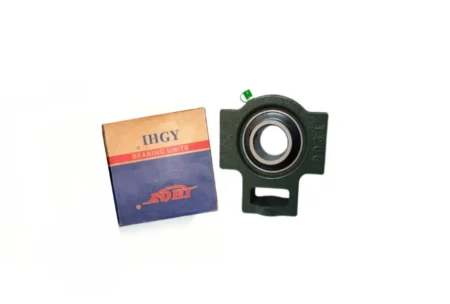
The "T" in UCT stands for "Take-up," and this unit is all about adjustment. The bearing itself is the standard UC insert, but the housing is completely different. It's a solid block with a groove on each side, designed to slide back and forth in a take-up frame or track. Its primary job is to maintain proper tension. Think of a long conveyor belt. Over time, that belt will naturally stretch and loosen. A fixed bearing would lead to slippage and inefficiency. With a UCT unit, an operator can simply adjust the position of the bearing to "take up" the slack, re-tensioning the belt. This feature is also critical for systems that experience thermal expansion. As metal components heat up and expand, the UCT unit can move slightly to accommodate that change, preventing stress on the shaft and bearings. For any system that needs adjustable shaft positioning, UCT units are not just an option—they are a necessity.
UCT Series: Mastering Tension and Adjustment
| 🧩 Feature | 🎯 Benefit Description | 🚜 Common Applications |
|---|---|---|
| ◽ Sliding Housing | Enables linear adjustment of shaft position for precise setup | Conveyor belt tensioning systems |
| ◽ Tensioning Capability | Maintains optimal belt or chain tension during operation | Chain drive systems |
| ◽ Thermal Accommodation | Compensates for shaft expansion and contraction caused by temperature changes | Ski lifts, cableways |
| ◽ Precision Adjustment | Allows fine-tuning of alignment for improved machine performance | Textile machinery (e.g., looms) |
Conclusion
Choosing the right pillow block bearing increases equipment life and efficiency. As a wholesaler or retailer, knowing these types helps you provide better, more precise service to your customers.