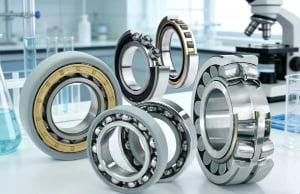
Choosing the wrong bearing material causes quick failure. This leads to costly downtime. This guide helps you select the right material to keep your machines running smoothly.
To choose the right bearing material, match it to your needs. Use bearing steel for general purposes, ceramic for high speeds, engineering plastic for quiet and clean environments, and copper-based alloys for heavy-load, low-speed applications. Each has unique strengths.
For a machine, the bearing is its "joint." The bearing material is the "bone and sinew" of that joint. I've been in this business for over 30 years, and I've seen it time and again. If you choose the right material, your machine can run for a decade. If you choose wrong, it might fail in three months. So, let's look closer at the options to make sure you get it right.
When Should You Choose Bearing Steel for Your Application?
Do you need a reliable and affordable bearing? Choosing a fancy, expensive one can hurt your budget. Bearing steel is often the perfect, cost-effective choice for many jobs.
You should choose bearing steel, like GCr15 or SUJ2, for most general applications. It is the king of cost-performance. It offers great hardness, wear resistance, and toughness for motors, gearboxes, and standard machinery without breaking your budget.
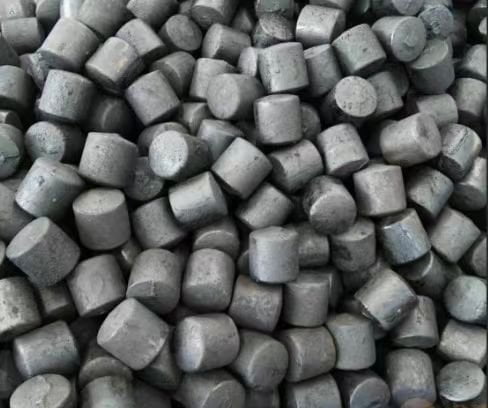
In my factory, we produce tons of bearings from bearing steel. It's the workhorse of the industry for a good reason. This material is an absolute champion of cost-performance. It's tough, it's wear-resistant, and it has good fatigue life. Most importantly, it's affordable. For about 80% of common applications, bearing steel is the answer. When customers come to us for bearings for electric motors, fans, gearboxes, or general industrial equipment, we almost always start with bearing steel. It just makes sense.
There are a few main types you'll see.
- GCr15: This is the standard in China. It's a high-carbon chromium bearing steel that we've perfected over decades.
- SUJ2: This is the Japanese standard, very similar to the American 52100. It's recognized worldwide.
Here is a simple breakdown:
| Property | Bearing Steel (GCr15/SUJ2) Performance |
|---|---|
| Hardness | Excellent |
| Wear Resistance | Excellent |
| Load Capacity | Good to Excellent |
| Corrosion Resistance | Poor (requires oil/grease) |
| Cost | Low |
You get a solid, dependable performer that can handle significant loads and stresses. The only real downside is its poor corrosion resistance, but that's easily managed with proper lubrication and sealing. It’s the reliable, no-frills choice.
Is a Ceramic Bearing Worth the Higher Cost for Your Machine?
Is your high-speed machine failing too soon? Standard bearings can't always handle the extreme speed and heat. Ceramic bearings are designed specifically for these tough conditions.
Yes, ceramic bearings are worth it for high-speed and precision needs. Materials like Silicon Nitride (Si₃N₄) handle much higher speeds and temperature changes. They are perfect for electric spindles, drone motors, and semiconductor equipment where performance is critical.
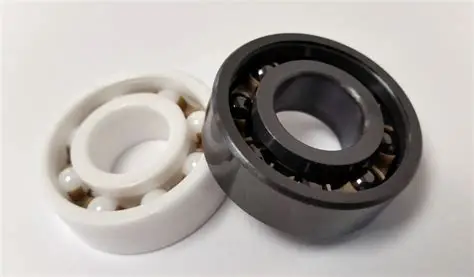
I call ceramic bearings the "top students" of the bearing world. They excel where others fail. When a standard steel bearing reaches its speed limit, it generates a lot of centrifugal force and heat. This can lead to rapid wear and failure. Ceramic balls are much lighter than steel balls. This means less centrifugal force, so the bearing can run 30-50% faster without overheating. They also don't expand much with heat, so your machine stays precise even when the temperature changes.
You have two main options:
- Full Ceramic Bearings: Both the rings and balls are ceramic. These offer the ultimate performance but are very expensive.
- Hybrid Ceramic Bearings: These have steel rings and ceramic balls. This is the best of both worlds. You get most of the high-speed benefits at a much more reasonable cost. This is what we recommend for most high-speed applications.
| Material | Key Feature | Best For |
|---|---|---|
| Silicon Nitride (Si₃N₄) | Black color, excellent high-speed performance | Electric spindles, precision instruments |
| Zirconia (ZrO₂) | White color, very tough and corrosion-resistant | Chemical pumps, medical devices |
Because they are non-magnetic and non-conductive, they are also essential in equipment like MRI machines or semiconductor manufacturing tools. If speed and precision are your top priorities, investing in ceramic is a smart choice.
Could a Plastic Bearing Be the Secret to a Quieter, Cleaner Machine?
Does your machine need to be quiet and free of oil? Grease and noise are not allowed in some industries. Engineering plastic bearings solve both of these problems easily.
Absolutely. Engineering plastic bearings, made from materials like PTFE or PEEK, are the champions in light-load, quiet environments. They are self-lubricating, corrosion-resistant, and reduce noise. This makes them ideal for food machinery, printers, and chemical pumps.
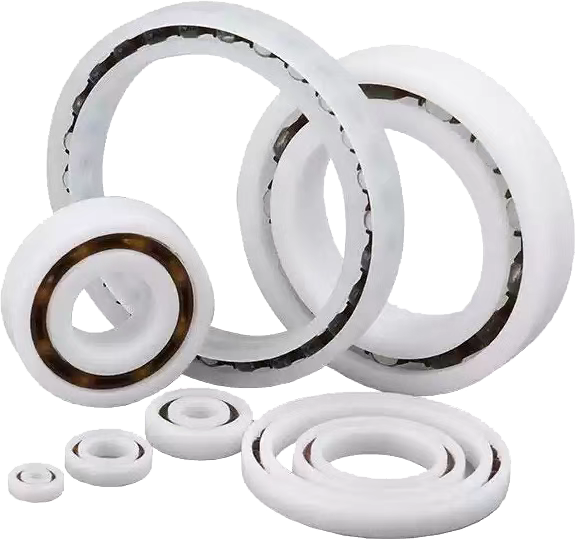
Plastic bearings are the "invisible champions." You might not notice them, but they are working hard in many devices you use every day. Their biggest advantage is that they don't need any oil or grease. They are self-lubricating. This is a huge deal in industries like food processing, where any contamination from lubricants is a major problem. They are also very quiet, which is why you find them in office printers and home appliances. Another great feature is their excellent corrosion resistance. They can operate in water or even harsh chemicals where a steel bearing would rust and seize up in no time.
Different plastics have different strengths.
- PTFE (Teflon): Extremely low friction and amazing chemical resistance. Not great for heavy loads.
- PEEK: A high-performance plastic that can handle higher loads and temperatures than other plastics. It's more expensive but very capable.
| Material | Key Feature | Best For |
|---|---|---|
| PTFE | Self-lubricating, chemical-proof | Food processing, chemical pumps, wet areas |
| PEEK | High strength, heat resistant | Medical devices, aerospace, demanding tasks |
| POM | Good balance of properties | Automotive parts, consumer goods |
Of course, they can't handle the heavy loads that steel bearings can. But for light-load applications where you need a clean, quiet, and corrosion-proof solution, plastic bearings are the perfect choice.
Why Choose a Sleeve Bearing for Heavy-Load, Low-Speed Jobs?
Does your equipment handle massive loads at very slow speeds? Standard rolling bearings can get crushed under the pressure. Sleeve bearings are built for this kind of heavy lifting.
Sleeve bearings are the "old veterans" for heavy-load, low-speed work. They have no rolling parts, which means their load capacity can be 30-50% higher than rolling bearings. They are perfect for metallurgical equipment, large water pumps, and ship propellers.
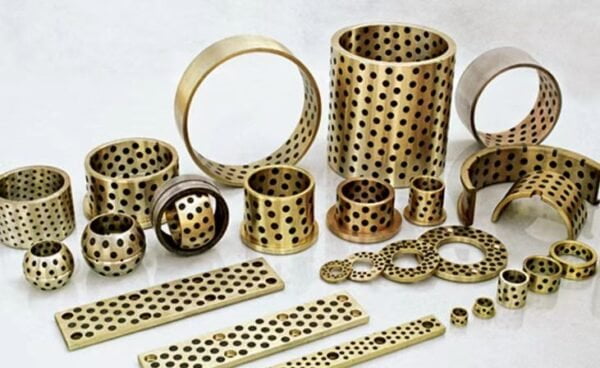
These are a different kind of bearing altogether. We call them sleeve bearings or plain bearings. They don't have any balls or rollers. Instead, a shaft simply slides inside the sleeve, usually on a thin film of oil or grease. Because there are no rolling elements, the contact area is much larger. This allows them to handle enormous loads that would crush a standard ball bearing. I've seen them used in steel mills, where they support massive rollers under intense heat and pressure. They are also not as sensitive to misalignment, which is a big plus in large, heavy machinery.
The material is key here. We typically use bronze alloys.
- Tin Bronze: A classic choice, great wear resistance.
- Aluminum Bronze: Stronger and more corrosion-resistant, good for marine applications.
- Sintered Bronze (Oil-impregnated): This type is porous and holds oil like a sponge, providing self-lubrication for a long time.
| Material | Key Feature | Best For |
|---|---|---|
| Tin Bronze | Good wear and anti-friction | General heavy machinery, crushers |
| Aluminum Bronze | High strength, anti-corrosion | Ship propellers, mining equipment, water pumps |
| Sintered Bronze | Self-lubricating | Low-speed motors, hard-to-reach locations |
They aren't for high-speed applications. But when you have a job that involves huge weight and slow, powerful movement, nothing beats the simple, brute strength of a copper-based sleeve bearing. They are the reliable old soldiers of the bearing world.
Conclusion
Remember, there is no single "best" bearing material, only the most suitable for your job. Choosing the right one saves you from costly downtime and repairs later on.