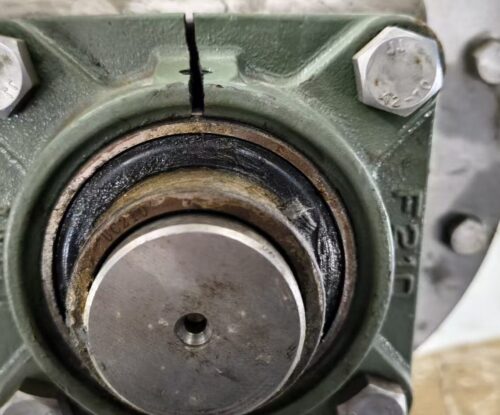
Your pillow block bearing1 is showing signs of premature wear and failure. You're facing unexpected downtime and repair costs. Could overloading2 be the hidden culprit damaging your equipment?
Overloading a pillow block bearing can lead to accelerated fatigue damage, deformation, increased wear, temperature rise, and sudden failure. This significantly reduces bearing life and risks catastrophic equipment breakdown. Proper load calculation and bearing selection are essential for preventing overload issues.
I've seen countless cases where overlooking proper load calculation3s led to costly bearing failures. Let me share what I've learned about preventing overload issues and choosing the right pillow block bearing for your application.
What Does Overloading Mean in Pillow Block Bearings? (And Why Buyers Should Care)
Every day, I talk to customers who don't realize their bearings are running beyond their rated capacity. The signs are there - unusual noise, excessive heat, premature wear - but the root cause goes unnoticed.
Overloading occurs when a pillow block bearing is subjected to loads exceeding its rated dynamic or static capacity. This includes both excessive radial/axial forces and impact load4s that the bearing wasn't designed to handle.
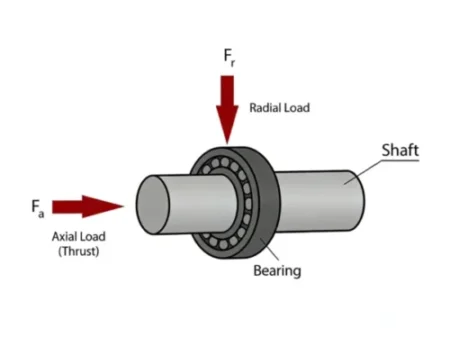
Understanding bearing loads is crucial for proper selection and operation. Here's what you need to know:
Types of Bearing Loads
- Radial loads: Forces perpendicular to the shaft axis
- Axial loads: Forces parallel to the shaft axis
- Combined loads: Combination of radial and axial forces
Key Load Considerations
| Factor | Impact on Bearing |
|---|---|
| Static Load | Maximum load when not rotating |
| Dynamic Load | Load capacity during operation |
| Impact Load | Sudden force spikes |
| Speed | Affects load carrying capacity |
| Temperature | Influences load rating |
5 Major Consequences of Overloading a Pillow Block Bearing Unit
Every time I inspect a failed bearing, the damage pattern tells a story. More often than not, that story involves overloading.
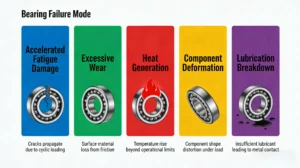
Overloading leads to five primary failure modes: accelerated fatigue damage, excessive wear, heat generation, deformation of components, and lubrication breakdown5. Any one of these can cause catastrophic bearing failure.
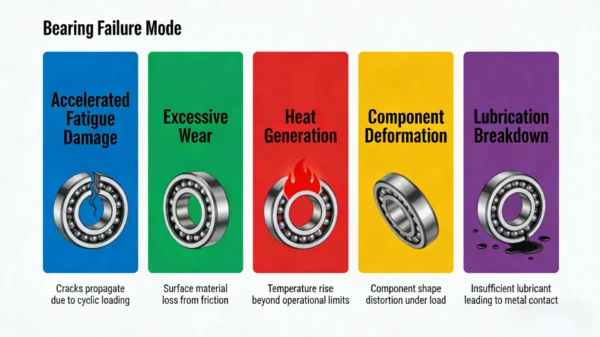
The consequences of overloading cascade through the entire bearing system:
Immediate Effects
- Material fatigue and surface damage
- Microcracks in rolling elements
- Spalling of raceways
- Surface deterioration
Progressive Damage
-
Deformation and increased friction
- Plastic deformation of races
- Higher rolling resistance
- Increased power consumption
-
Thermal issues
- Temperature spikes
- Lubricant breakdown
- Material property changes
-
Structural integrity
- Component misalignment
- Seal damage
- Housing stress
-
Performance degradation
- Increased vibration
- Noise generation
- Reduced accuracy
The Real Cost of Bearing Overload: Downtime vs. Correct Selection
Throughout my years in bearing manufacturing, I've witnessed how a small investment in proper bearing selection6 can prevent massive downstream costs.
The true cost of bearing overload extends far beyond the price of replacement parts. Unplanned downtime, emergency maintenance, damaged adjacent components, and lost production time can multiply the actual cost by 5-10 times.
Let's break down the real costs of bearing overload:
Direct Costs
| Cost Category | Impact Factor |
|---|---|
| Replacement Parts | 1x |
| Labor | 2-3x |
| Emergency Service | 2-4x |
| Production Loss | 5-10x |
Hidden Costs
- Quality issues
- Safety risks
- Customer dissatisfaction
- Reputation damage
- Energy inefficiency
How to Select the Right Pillow Block Bearing to Avoid Overload Failure
Based on my experience helping customers solve bearing problems, proper selection is the key to preventing overload issues.
To select the right pillow block bearing, calculate both static and dynamic load7 requirements, consider operating conditions, and include a safety factor. Use manufacturer guidelines and technical support for accurate sizing.
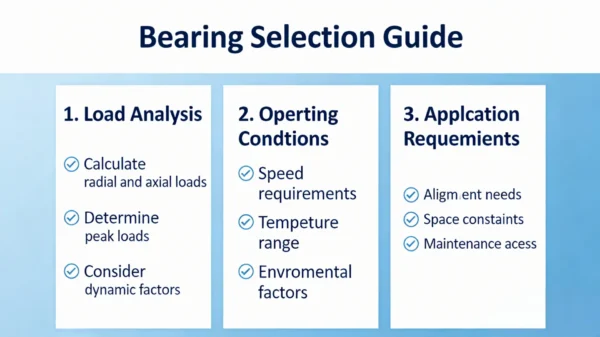
Selection Process Checklist
-
Load Analysis
- Calculate radial and axial loads
- Determine peak loads
- Consider dynamic factors
-
Operating Conditions
- Speed requirements
- Temperature range
- Environmental factors
-
Application Requirements
- Alignment needs
- Space constraints
- Maintenance access
Why Working with a Reliable Bearing Manufacturer Matters
After three decades in bearing manufacturing, We've learned that the manufacturer's expertise is as important as the product itself.
A reliable bearing manufacturer8 provides not just quality products but also technical support, proper documentation, and application expertise to ensure correct bearing selection6 and installation.
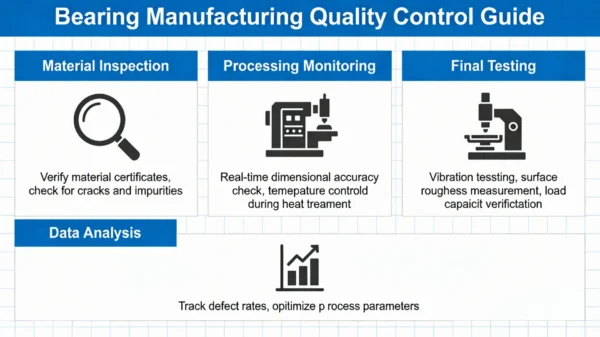
Value of Manufacturing Partnership
- Technical expertise
- Quality assurance
- Custom solutions
- Support services
- Warranty protection
Conclusion
Proper load calculation3 and bearing selection6 are crucial for preventing costly failures. Work with experienced manufacturers, understand your application requirements, and invest in quality bearings to ensure reliable operation.
<span data-mce-type="bookmark" style="display: inline-block; width: 0px; overflow: hidden; line-height: 0;" class="mce_SELRES_start"></span>
Understanding the function of pillow block bearings can help you make informed decisions about their use and maintenance. ↩
Exploring the effects of overloading can help you prevent costly failures and extend the life of your bearings. ↩
Learning proper load calculation techniques is essential for ensuring the longevity and reliability of your bearings. ↩
Learning about impact load can help you design systems that minimize sudden forces on your bearings. ↩
Exploring the causes of lubrication breakdown can help you maintain optimal bearing performance and prevent failures. ↩
Understanding the key factors in bearing selection can help you choose the right bearing for your specific application. ↩
Gaining insight into dynamic load can enhance your understanding of bearing performance during operation. ↩
Choosing a reliable manufacturer is key to ensuring quality and support for your bearing needs. ↩