Food and beverage manufacturers face a critical challenge: choosing bearing housings1 that maintain hygiene standards2 while surviving harsh washdown environments. The wrong choice can lead to contamination risks and frequent replacements.
For food & beverage applications, bearing housing material selection comes down to two main options: thermoplastic3 and stainless steel4. Each has distinct advantages, with stainless steel4 typically offering superior long-term performance in demanding washdown environments despite higher initial costs.
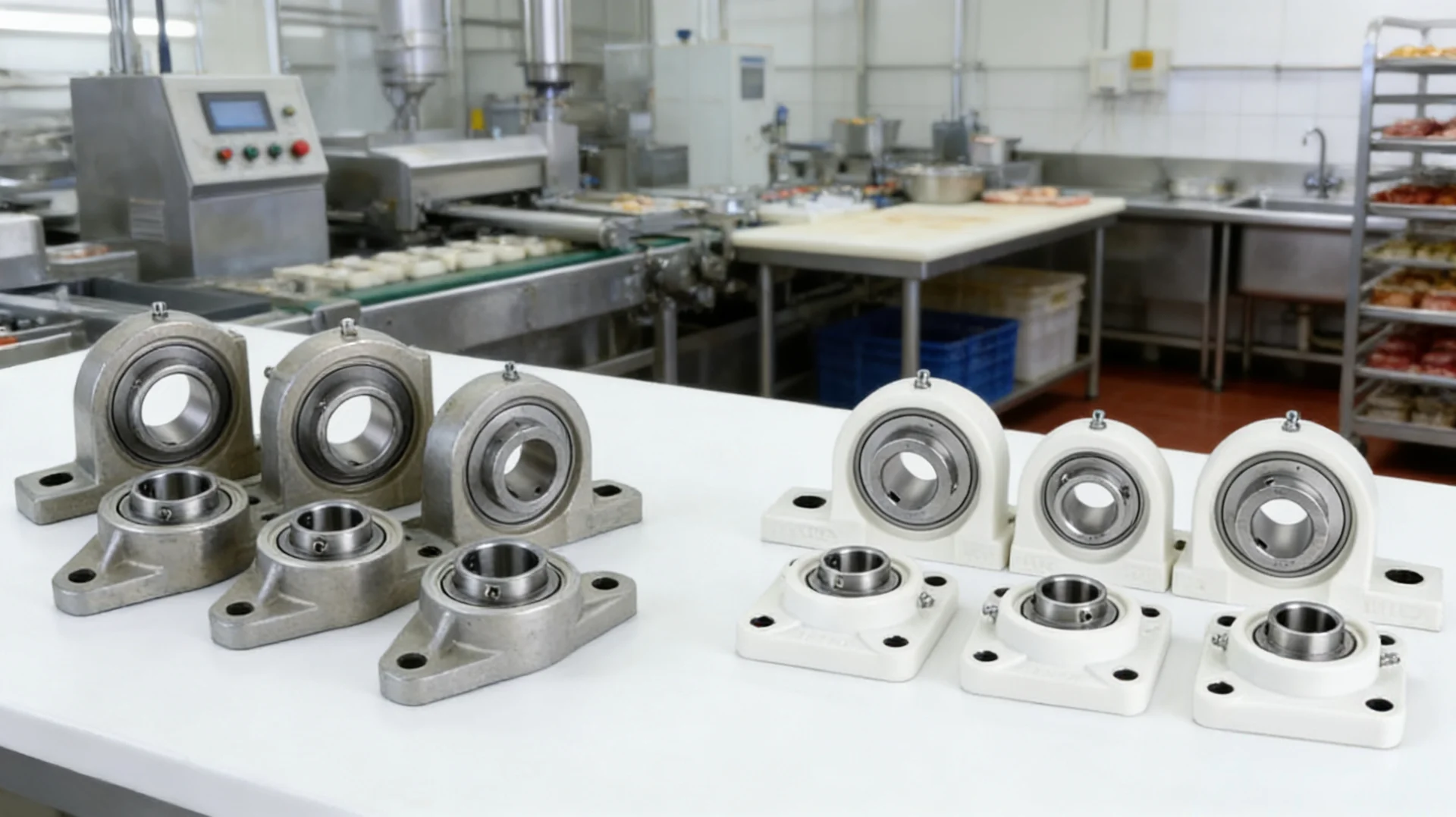
Having supplied bearing solutions to food processors for over 30 years, We've seen firsthand how material choice impacts performance and maintenance costs. Let me share what you need to know to make the right decision for your application.
What Food & Beverage Equipment Really Demands from a Bearing Housing?
Every food plant manager I talk to faces the same challenge - finding bearing housings1 that can handle constant cleaning while maintaining food safety standards. One contamination incident can shut down production for days.
Food & beverage bearing housings1 must resist corrosion from cleaning chemicals, withstand high-pressure washdown, maintain dimensional stability under temperature fluctuations, and prevent bacterial growth in crevices. They also need FDA-compliant materials5 and smooth surfaces for easy cleaning.

The requirements for bearing housings1 in food processing go far beyond basic load handling. Here's what matters most:
Critical Performance Factors
-
Chemical Resistance
- Must withstand acidic/alkaline cleaners
- No material degradation from sanitizers
- Resistance to oxidation
-
Cleanability
- Smooth surface finish (Ra ≤0.8μm)
- No hidden corners or crevices
- Self-draining design
-
Temperature Stability
- Operating range: -30°C to 120°C
- Steam cleaning resistance
- No deformation under heat
-
Mechanical Properties
- Impact resistance
- Load capacity
- Dimensional stability
Thermoplastic Bearing Housings: Where They Work — and Where They Don't
Plant managers often ask me about plastic housings, attracted by their lower cost. But there's more to consider than just the price tag when it comes to food safety and longevity.
Thermoplastic bearing housings1, typically made from glass-fiber reinforced PBT, offer good chemical resistance6 and light weight at a lower cost. However, they have limitations in load capacity7, impact resistance8, and maximum temperature exposure that restrict their use in demanding applications.
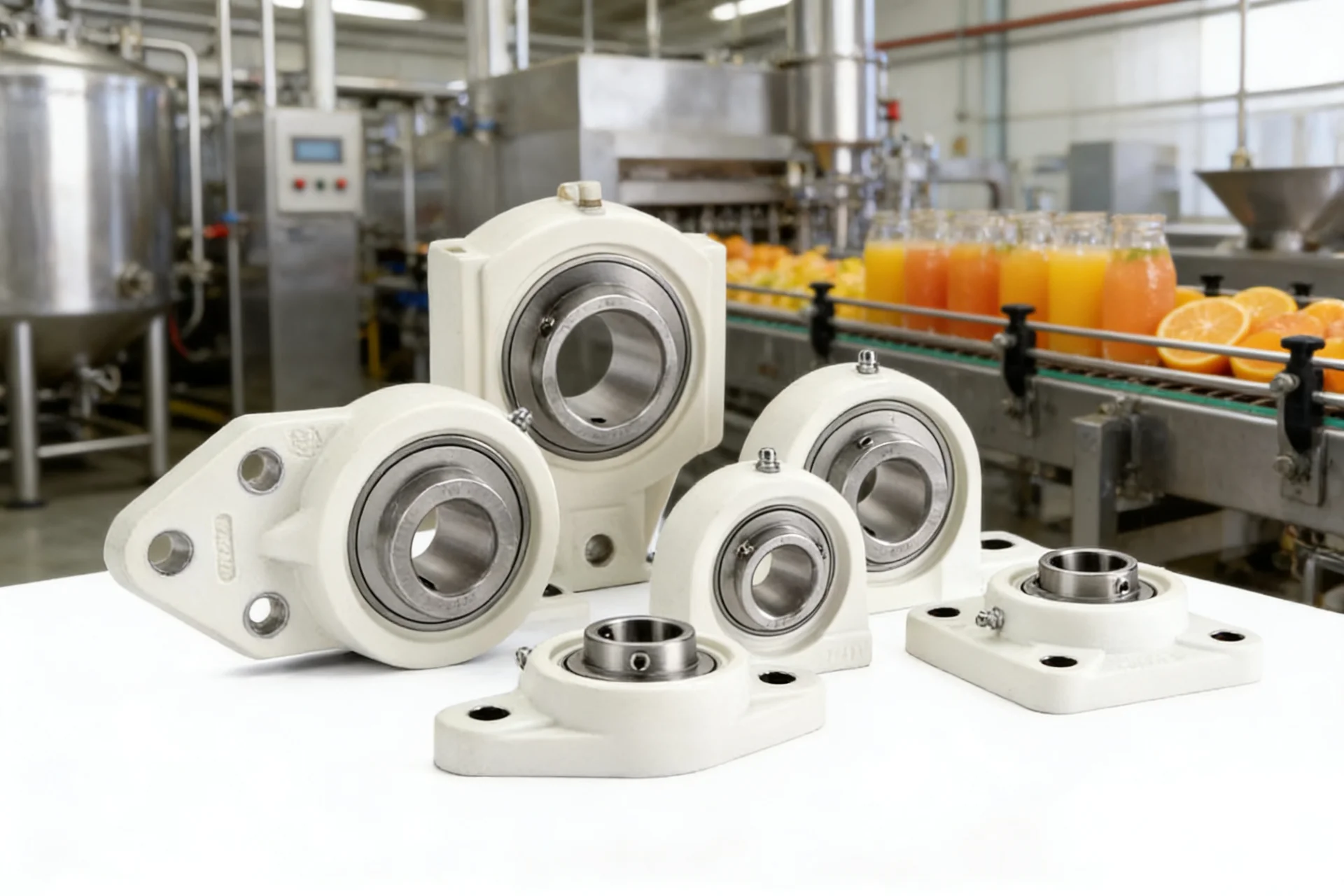
The decision to use thermoplastic3 housings requires careful evaluation of the operating environment. Here's my detailed analysis based on years of field experience:
Advantages of Thermoplastic Housings
- 50% lighter than metal alternatives
- Natural corrosion resistance
- Lower initial cost (30-50% savings)
- Good electrical insulation
- Easy installation and handling
Application Limitations
-
Temperature Constraints
- Maximum continuous: 80°C
- Brief exposure: 120°C
- Risk of deformation above limits
-
Load Restrictions
- Lower dynamic load capacity7
- Limited shock resistance
- Reduced life under heavy loads
-
Environmental Factors
- UV sensitivity
- Potential degradation from some chemicals
- Limited steam cleaning resistance
Stainless Steel Bearing Housings: Built for Hygiene, Durability, and Washdown
In my experience consulting with dairy and meat processing plants, stainless steel4 housings consistently outperform in harsh washdown environments. They're the gold standard for a reason.
Stainless steel bearing housings1, particularly those made from 316L grade steel, provide superior durability, corrosion resistance, and hygiene properties. Their smooth surface finish prevents bacterial harborage, while their robust construction handles heavy loads and high-pressure cleaning.
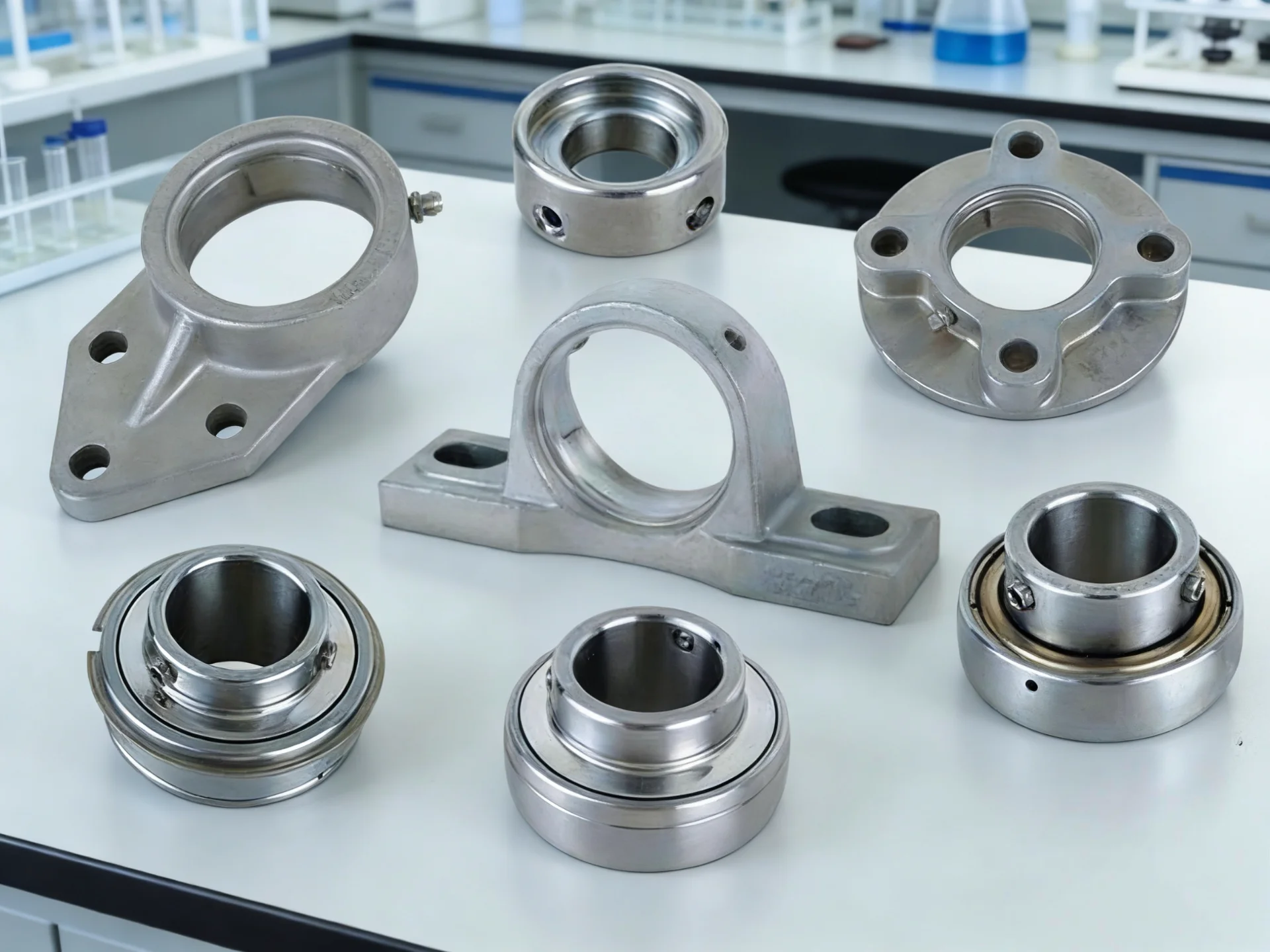
The investment in stainless steel4 pays off through:
Superior Performance Characteristics
-
Mechanical Strength
- 5-8x stronger than thermoplastic3
- Excellent impact resistance8
- High load capacity7
-
Hygiene Design
- Mirror-polished surface (Ra ≤0.8μm)
- EHEDG/3-A compliant designs
- No material degradation
-
Environmental Resistance
- Temperature range: -40°C to 150°C
- Full washdown compatibility9
- Chemical cleaning resistant
Washdown, Chemicals, and Temperature: Why Material Choice Matters More Than Cost
After decades in the industry, I've seen too many operations learn the hard way that initial savings on bearing housings1 can lead to higher long-term costs through increased maintenance and downtime.
The total cost of ownership for bearing housings1 must consider washdown frequency, chemical exposure, operating temperatures, and maintenance requirements. Stainless steel typically offers lower lifetime costs in wet processing environments despite higher upfront investment.
Let's break down the factors that influence long-term costs:
Cost Impact Factors
-
Maintenance Frequency
- Replacement intervals
- Labor costs
- Production downtime
-
Risk Management
- Contamination prevention
- Compliance requirements
- Quality assurance
-
Performance Longevity
- Expected service life
- Reliability factors
- Environmental resistance
Application Scenarios Where Stainless Steel Mounted Bearings Clearly Perform Better
Through countless installations, I've identified clear patterns where stainless steel4 is the only viable option for long-term reliability and food safety compliance.
Stainless steel mounted bearings are essential in high-washdown areas, wet processing zones, and anywhere exposed to aggressive cleaning chemicals or temperature extremes. This includes meat processing, dairy production, and beverage filling operations.

Based on real-world implementations, here are the key applications where stainless steel4 excels:
Critical Applications
-
Wet Processing Areas
- Meat/poultry processing
- Dairy operations
- Seafood handling
-
High-Risk Zones
- Direct food contact areas
- Clean-in-place systems
- Sterile processing
-
Harsh Environment Operations
- High-pressure washdown
- Chemical cleaning cycles
- Steam sterilization
Why Our Stainless Steel Mounted Bearings Are Designed for Food & Beverage Environments
Our 30 years of manufacturing experience has taught us exactly what food processors need in their bearing housings1. We've refined our designs to meet these demands.
Our stainless steel4 mounted bearings feature FDA-compliant materials5, IP69K protection, and surfaces polished to Ra ≤0.8μm. They're specifically engineered for food processing with features like sealed-for-life lubrication10 and advanced sealing systems.
Here's what sets our products apart:
Design Advantages
-
Material Quality
- 316L stainless steel4 construction
- Premium grade components
- Certified material compliance
-
Engineering Features
- Advanced sealing technology
- Optimized surface finish
- Hygienic design principles
-
Performance Benefits
- Extended service life
- Reduced maintenance needs
- Superior contamination protection
Conclusion
Choose stainless steel4 bearing housings1 for demanding food & beverage applications where reliability and hygiene are crucial. While thermoplastic3 options work for lighter duty scenarios, stainless steel4 provides the best long-term value in harsh environments.
Explore this link to understand the best options for bearing housings that ensure hygiene and durability in food processing. ↩
Learn about the importance of hygiene standards in food processing and how they impact equipment choices. ↩
Discover the pros and cons of thermoplastic materials in bearing housings for food applications. ↩
Find out why stainless steel is the go-to material for food processing equipment, ensuring safety and durability. ↩
Explore the importance of FDA-compliant materials in ensuring safety and compliance in food processing. ↩
Understand how chemical resistance in bearing housings can prevent contamination and enhance longevity. ↩
Learn about the factors that determine load capacity and their implications for food processing applications. ↩
Understand the role of impact resistance in prolonging the life of bearing housings in demanding environments. ↩
Find out why washdown compatibility is essential for maintaining hygiene in food processing environments. ↩
Discover the benefits of sealed-for-life lubrication in extending the service life of food processing equipment. ↩