Machines break down when friction destroys moving parts. This causes expensive downtime. Choosing the right bearing stops this damage and keeps equipment running smoothly.
Bearings are essential mechanical components that support rotating bodies and reduce friction. They classify by load direction, rolling element type, alignment capability, and separability. The 14 main types include angular contact, deep groove, and spherical roller bearings, each serving specific industrial applications.
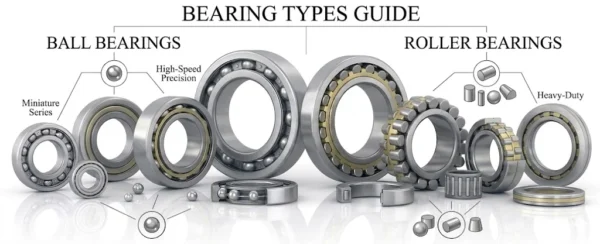
Understanding bearing types seems complex, but it is necessary for mechanical design. If you pick the wrong bearing, the machine will fail fast. Read on to discover exactly how each of these 14 bearing types functions and where they belong, so you avoid costly mechanical errors entirely.
1.Contact Ball Bearings
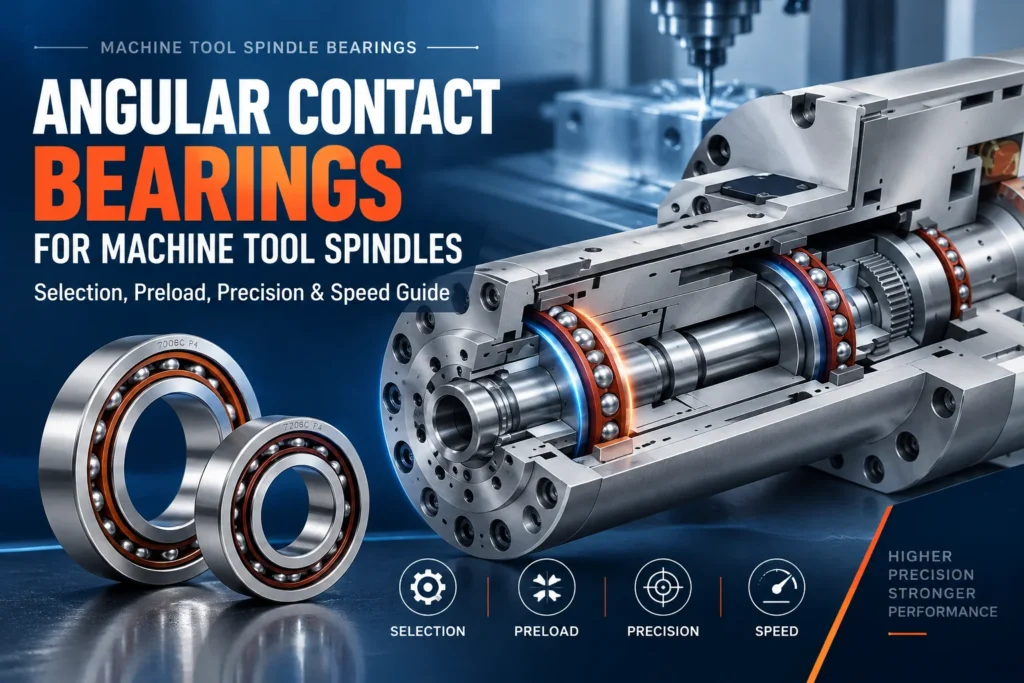
High-speed machines face severe radial and axial forces simultaneously. Standard bearings fail quickly under these combined loads. Angular contact ball bearings solve this by handling both forces safely.
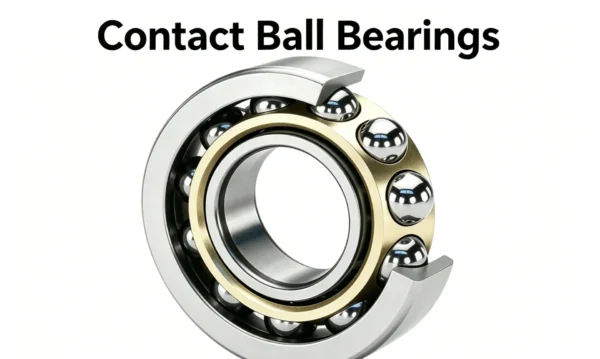
Angular contact ball bearings feature a specific contact angle between the rings and balls. Standard angles are 15°, 30°, and 40°. A larger angle handles higher axial loads. A smaller angle allows faster rotation. They fit machine tool spindles and high-frequency motors perfectly.
Structural Design and Load Capacity
The design of these bearings is unique. The steel balls meet the inner and outer rings at a specific angle. This angle dictates how the bearing behaves under stress. Single-row designs only take an axial load from one direction. Therefore, engineers often pair two single-row bearings back-to-back. This creates a stronger unit. It takes pushing forces from both directions. It also handles radial forces very well. Double-row designs look exactly like two single-row bearings joined together. They share the same inner and outer rings. This saves physical space. It also makes the installation much easier for technicians.
Common Industrial Applications
Different designs serve different machines. You must choose based on the exact load.
| Bearing Design | Load Capability | Typical Applications |
|---|---|---|
| Single-Row | Unidirectional axial, radial | Machine tool spindles, centrifuges |
| Double-Row | Bidirectional axial, radial | Oil pumps, air compressors, blowers |
You need a large contact angle for heavy pushing forces. You need a small contact angle for high-speed spinning. This simple rule guides the entire selection process.
2.Self-Aligning Ball Bearings
Long shafts often bend under heavy weight. Misalignment destroys rigid bearings fast. Self-aligning ball bearings adjust automatically to prevent this fatal mechanical damage entirely.
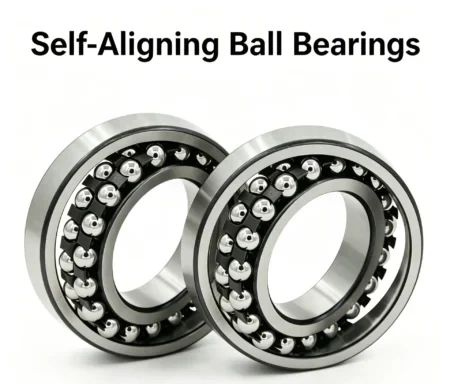
Self-aligning ball bearings feature two rows of steel balls and a spherical outer raceway. This design automatically corrects misalignment caused by shaft bending. They primarily carry radial loads and mount easily onto shafts using basic fasteners.
How Automatic Alignment Works
Machine shafts do not always stay perfectly straight. Heavy loads make them bend. Manufacturing errors cause slight angles. Rigid bearings crack under these difficult conditions. Self-aligning ball bearings survive because the outer ring raceway forms a smooth curve. The balls roll freely across this curve. The inner ring and the shaft can tilt. The bearing still functions smoothly without breaking. This bearing mostly supports radial loads. It cannot take heavy axial pushing forces. Engineers use tapered bore adapters to mount them onto straight shafts quickly.
Key Uses in Industry
These bearings operate in machines where shaft alignment is difficult to guarantee.
| Feature | Specification | Industrial Use |
|---|---|---|
| Alignment | Automatic tilt correction | Woodworking machinery |
| Load Type | High radial, low axial | Textile machine drive shafts |
| Mounting | Tapered bore adapters | Vertical self-aligning units |
The dual-row ball design reduces internal friction. The machine uses less electrical power. The metal parts last much longer. Routine maintenance costs drop significantly as a result.
3.Spherical Roller Bearings
Heavy industrial equipment generates massive shock loads and severe shaft deflections. Standard ball bearings shatter here. Spherical roller bearings absorb these extreme shocks while correcting alignment.
Spherical roller bearings use barrel-shaped rollers between a double-groove inner ring and a spherical outer ring. The design corrects shaft misalignment automatically. They carry massive radial loads and bidirectional axial loads. Internal designs include R, RH, RHA, and SR types.
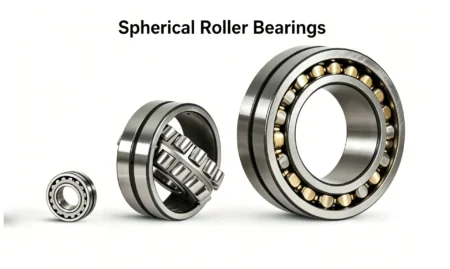
Handling Heavy Loads and Misalignment
This bearing belongs in brutal environments. Instead of round balls, it uses thick, barrel-shaped steel rollers. Rollers provide a much larger contact area than balls. This large area carries much heavier loads. The outer ring is completely spherical inside. The rollers shift and tilt inside it freely. This means the bearing corrects shaft misalignment just like a self-aligning ball bearing. However, it handles significantly more weight. It takes very strong radial loads. It also takes axial pushing loads from both directions. The specific internal parts vary slightly. Factories label these variations as R, RH, RHA, and SR types.
Major Industrial Deployments
These bearings dominate heavy manufacturing industries. They survive where other bearings fail.
| Internal Type | Best Performance For | Typical Equipment |
|---|---|---|
| R / RH | High load capacity | Paper-making machines, crushers |
| RHA / SR | Extreme shock loads | Railway axles, rolling mills |
Vibrating screens and large industrial gearboxes rely entirely on these specific bearings. The thick metal rollers absorb constant pounding. The machine keeps running without any sudden catastrophic failures.
4.Spherical Roller Thrust Bearings
Vertical shafts face crushing downward weight. Standard thrust bearings cannot handle slight shaft tilts. Spherical roller thrust bearings carry enormous vertical loads while allowing safe shaft angles.
Spherical roller thrust bearings arrange barrel rollers at an angle. The spherical housing washer allows the bearing to align itself and tolerate shaft tilt. They support massive axial loads and minor radial loads simultaneously. They require oil lubrication.
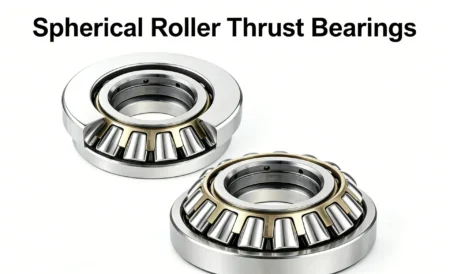
Managing Massive Downward Forces
Some heavy machines push massive loads straight down a vertical shaft. This setup requires a thrust bearing. This specific bearing uses tilted, barrel-shaped steel rollers. The rollers sit on a curved base plate. This base plate is called the housing washer. Because the washer is spherical, the entire inner assembly can tilt slightly. The heavy shaft does not need to be perfectly straight. This design holds extreme axial downward loads. It is one of the strongest thrust bearings available today. It also takes a small amount of side-to-side radial load at the exact same time.
Lubrication and Equipment Use
These bearings generate significant friction during operation. Standard grease is usually not enough. Engineers must use liquid oil to keep them cool.
| Load Type | Capability | Equipment Examples |
|---|---|---|
| Axial Load | Extremely High | Hydroelectric generators, large cranes |
| Radial Load | Moderate | Marine propeller shafts, coal mills |
| Alignment | High tolerance | Vertical motors, heavy extruders |
The oil flows continuously through the moving parts. It carries dangerous heat away. This prevents the thick rollers from melting or locking up under extreme pressure.
5.Tapered Roller Bearings
Vehicle wheels endure heavy impacts and side forces simultaneously. Ordinary bearings break under this stress. Tapered roller bearings lock these combined forces down to keep vehicles moving safely.
Tapered roller bearings use cone-shaped rollers guided by an inner ring rib. All rolling surfaces intersect at a single point on the center axis. Single-row types take radial and single-direction axial loads. Double-row types handle both directions.
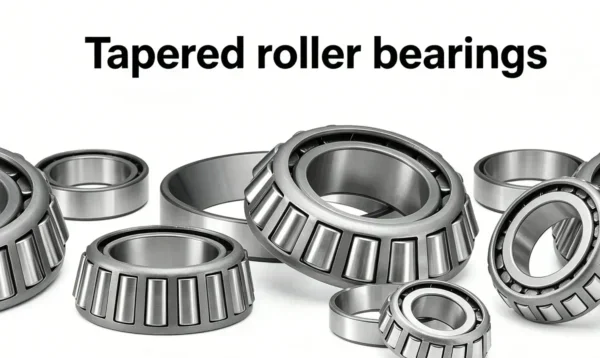
Geometry for Heavy Impact
This specific bearing relies on precise geometric math. The rollers look exactly like cut cones. The inner and outer rings have perfectly angled tracks. If you draw straight lines along all these angled surfaces, the lines meet at one exact point on the center axis. This perfect alignment means the rollers roll smoothly without sliding. The large raised edge of the inner ring stops the rollers from slipping out. They are built specifically for heavy physical shocks. A single-row version takes radial weight and a pushing force from one side. A double-row version takes pushing forces from both sides.
Automotive and Heavy Machinery Uses
You will find these bearings in almost every heavy vehicle in the world.
| Bearing Row | Force Direction | Common Placements |
|---|---|---|
| Single-row | Unidirectional | Car front wheels, pinions |
| Double-row | Bidirectional | Heavy transmissions, rear wheels |
Heavy tractors and construction machines also depend on them entirely. The unique cone shape distributes the mechanical stress evenly. The bearing survives deep road potholes and heavy cargo loads without shattering.
6.Deep Groove Ball Bearings
High friction limits machine speed and wastes electricity. Complex bearings are too expensive for simple tasks. Deep groove ball bearings provide a fast, cheap, and low-friction solution.
Deep groove ball bearings have continuous raceway grooves. The groove cross-section equals about one-third of the ball's equator. They mainly carry radial loads but tolerate some axial loads. They offer low friction, high speed, and high precision.
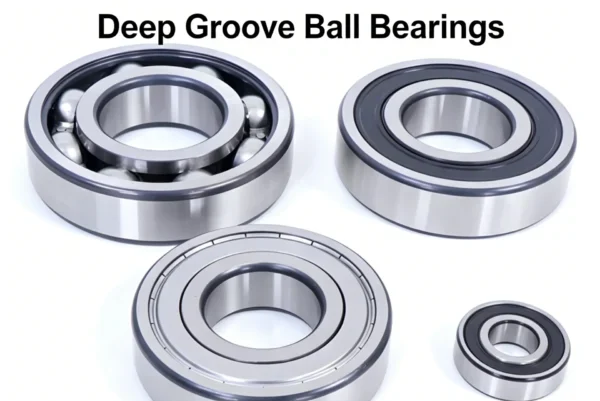
Simple Design and High Efficiency
This is the most common bearing in the industrial world. The physical design is very simple. The inner and outer metal rings have deep, circular grooves. The steel balls sit inside these grooves securely. The balls fit perfectly. This simple internal fit creates very little friction. The bearing spins extremely fast without overheating at all. It mostly carries standard radial weight. However, it also holds some axial pushing force. If you increase the internal space slightly, it acts almost like an angular contact bearing. This lets it take alternating axial forces smoothly.
Universal Industrial Applications
Because it spins fast and costs little, it goes into almost everything.
| Feature Advantage | Resulting Benefit | Typical Machine Use |
|---|---|---|
| Low Friction | High Speed | Electric motors, water pumps |
| Simple Structure | Low Cost | Tractors, agricultural tools |
| High Precision | Smooth Operation | Machine tools, textile machines |
Engineers always look at this specific bearing first. If the deep groove ball bearing handles the required weight, they choose it over more complex and expensive options.
7.Thrust Ball Bearings
Pure axial pushing forces easily destroy standard radial bearings. Internal components slide completely out of place. Thrust ball bearings catch these exact pushing forces and keep the shaft secured.
Thrust ball bearings consist of balls, cages, and flat raceway washers. The shaft washer attaches to the shaft. The housing washer attaches to the housing. They manage strict axial loads but cannot tolerate any radial loads whatsoever.
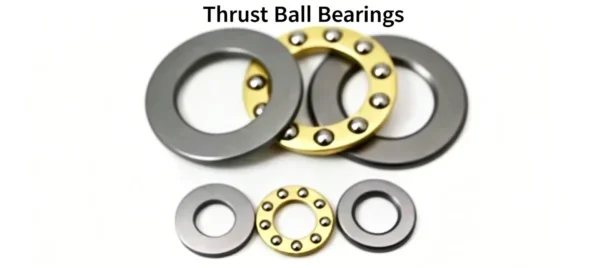
Managing Pure Axial Loads
This bearing looks exactly like a flat metal sandwich. The round steel balls sit completely between two flat metal plates. These plates are called washers. One washer connects tightly to the moving shaft. The other washer rests firmly against the static machine frame. When the shaft pushes straight down, the balls roll smoothly between the plates. This design has a very strict mechanical limitation. It cannot take any side-to-side radial forces. A radial load pulls the bearing apart instantly. A single-direction bearing takes a push from one side. A double-direction bearing uses three washers to take pushes from both sides.
Specific Mechanical Uses
Engineers use these only when the machine force pushes straight down the shaft axis.
| Bearing Type | Load Capability | Common Use Cases |
|---|---|---|
| Single-direction | Axial load (one way) | Automotive steering pins |
| Double-direction | Axial load (two ways) | Machine tool spindles |
The balls must always roll freely. Extreme speeds push the balls outward uncontrollably. Therefore, these bearings work best in low to medium-speed applications where pure pushing force exists continuously.
8.Thrust Roller Bearings
Heavy downward loads crush standard thrust ball bearings. High friction causes rapid metal wear. Thrust roller bearings carry enormous weight with lower friction, keeping massive structures rotating safely.
Thrust roller bearings support heavy axial loads and minor radial loads. The radial load must stay below 55% of the axial load. The 29000-type uses long, asymmetrical spherical rollers to maximize load capacity, reduce sliding, and provide alignment.
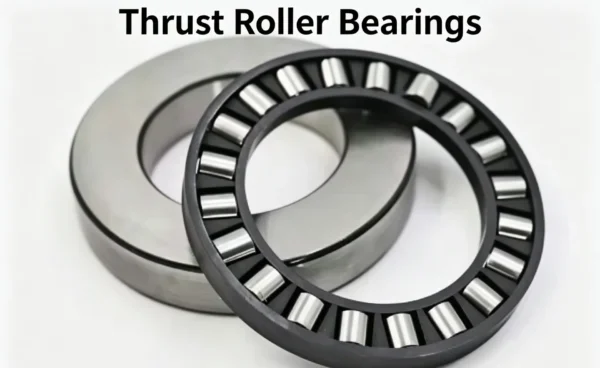
High Capacity and Low Friction
When heavy machines need a powerful thrust bearing, steel balls are too weak. Rollers provide the needed structural strength. This bearing uses long rollers with very large diameters. More rollers fit into the bearing assembly. This creates a massive load capacity. The Type 29000 uses special asymmetrical spherical rollers. This unique shape stops the rollers from sliding sideways during operation. They roll smoothly, which lowers the heat and friction significantly. It mostly takes heavy axial weight. It also takes some radial weight safely. The radial weight must never exceed 55% of the axial weight.
Heavy Duty Applications
Because the physical load is so large, these bearings need thick oil to stay cool. Standard grease is only used for very slow speeds.
| Roller Design | Performance Benefit | Heavy Equipment Use |
|---|---|---|
| Long diameter | High load limit | Hydroelectric generators |
| Asymmetrical | Reduced sliding | Crane hooks, heavy lifting |
The liquid oil layer prevents the heavy metal parts from grinding together. This bearing keeps giant industrial machines spinning easily under thousands of pounds of pressure.
9.Cylindrical Roller Bearings
Installing bearings in tight, heavy-duty assemblies is difficult. Solid bearings often get stuck. Cylindrical roller bearings separate easily, making machine assembly and heavy load management much faster.
Cylindrical roller bearings use straight rollers guided by ring ribs. The cage and rollers form a unit that separates from the other ring. This makes installation easy. They carry heavy radial loads. Only single-row types with ribs take minor axial loads.
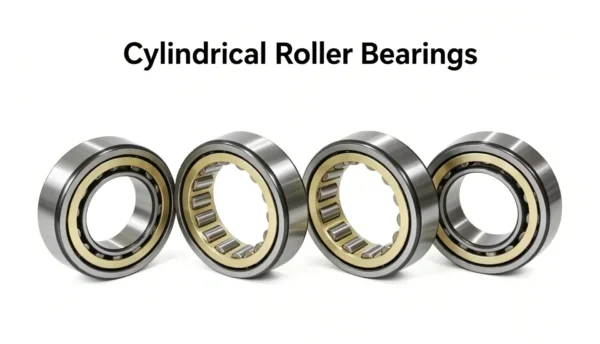
Separable Design for Easy Assembly
This bearing provides convenience and strength. It uses straight cylinder rollers instead of round balls. These straight rollers touch the metal raceway along a wide line. This wide line contact carries very heavy radial loads safely. The best feature is the separable design. The rollers and cage stay perfectly attached to one ring. The other ring remains loose. You install the inner ring on the shaft first. You install the outer ring in the housing next. Then, you simply slide them together. This helps immensely when both rings require a very tight interference fit.
Large Motors and Transmissions
This bearing works strictly for radial force. It does not handle heavy pushing forces well.
| Structural Feature | Practical Benefit | Typical Machines |
|---|---|---|
| Separable rings | Easy maintenance | Large electric motors |
| Straight rollers | High radial load | Machine tool spindles |
| Ribbed variants | Minor axial load | Diesel engine crankshafts |
Heavy car gearboxes and railway axle boxes use these bearings frequently. The easy removal saves many hours of mechanical labor during routine maintenance and parts replacement.
10.Four-Point Contact Ball Bearings
Limited space forces engineers to use fewer parts. Using two separate bearings wastes room. Four-point contact ball bearings replace two bearings, handling heavy loads in both directions perfectly.
Four-point contact ball bearings carry radial loads and bidirectional axial loads. One bearing replaces a pair of angular contact bearings. They suit pure axial loads or combined loads with high axial forces. The balls touch the raceways at exactly two points.
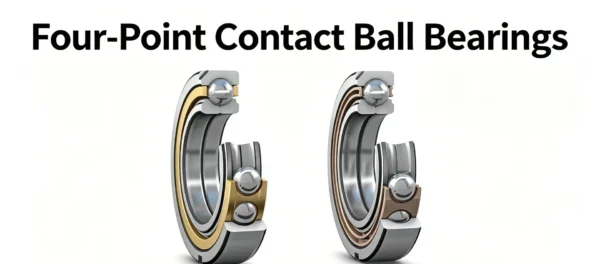
Space-Saving Internal Mechanics
Physical space is often tight in advanced machinery. Engineers cannot always fit two separate angular contact bearings. This single bearing solves the space problem entirely. The inner and outer raceways have a unique internal shape. When a load pushes from either direction, the ball forms a specific contact angle. The balls touch the metal rings exactly at two points on the load line. This means one single bearing takes heavy pushing forces from the left and from the right. It acts exactly like two bearings joined together. It handles pure axial loads perfectly.
Aerospace and High-Speed Uses
These bearings operate in the most demanding physical environments on earth.
| Load Type Managed | Design Advantage | Advanced Applications |
|---|---|---|
| Bidirectional Axial | Replaces two parts | Jet engine turbines |
| Heavy Combined | Saves system weight | Gas turbines |
Aircraft engines require very lightweight and compact designs. This bearing cuts the required mechanical space in half. It keeps the turbine spinning safely under extreme thrust pressures continuously.
11.Cylindrical Roller Thrust Bearings
Heavy downward pressure bends and breaks weak bearing parts. Metal fatigue destroys the machine completely. Cylindrical roller thrust bearings distribute extreme pressure evenly to prevent structural failure.
Cylindrical roller thrust bearings contain flat washers, cylindrical rollers, and cages. The rollers have convex machined surfaces to distribute pressure evenly. They offer immense axial load capacity and strong axial rigidity. They handle single-direction axial loads exclusively.
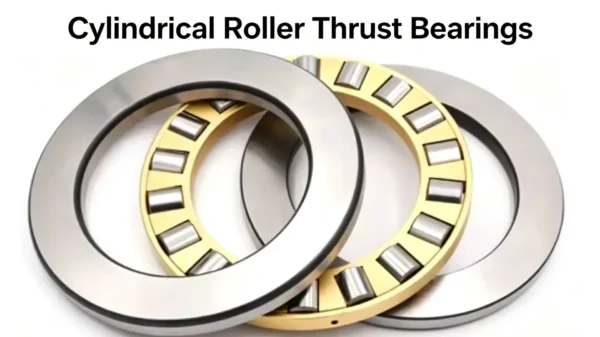
Rigidity and Even Pressure Distribution
This bearing manages extreme pushing forces safely. It uses flat metal washers and straight cylinder rollers. Straight rollers usually create high stress at their sharp edges. To fix this, factories machine a slight curve onto the roller surface. This is called a convex profile. This specific shape spreads the heavy load evenly across the entire roller. The edges do not crack under pressure. The bearing provides very high axial rigidity. This means it does not compress or bend when heavy weight pushes down. It keeps the steel shaft in the exact correct position.
Oil Drilling and Steel Production
These bearings belong exclusively in massive industrial equipment.
| Component Feature | Mechanical Benefit | Heavy Industry Use |
|---|---|---|
| Convex rollers | Prevents edge cracking | Oil drilling rigs |
| Flat washer design | High axial stiffness | Iron and steel machines |
When a steel mill crushes hot metal, the vertical force is huge. This flat bearing absorbs that massive force. The machine maintains its precise accuracy and avoids catastrophic breakdowns completely.
12.Needle Roller Thrust Bearings
Compact gearboxes leave almost no room for internal parts. Thick bearings do not fit. Needle roller thrust bearings provide massive thrust support within extremely tight, narrow spaces.
Needle roller thrust bearings use extremely thin needle rollers. They come in separable types with thin or thick washers, and non-separable complete units. They handle single-direction axial loads and save maximum space. Sometimes, the shaft itself serves as the raceway.
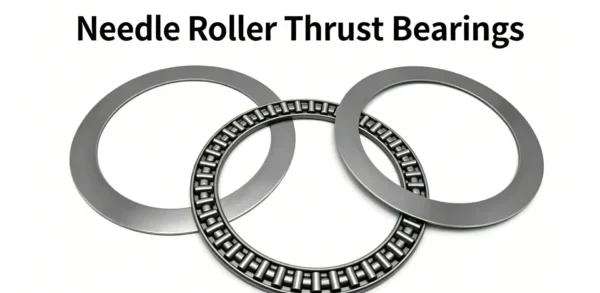
Extreme Space Efficiency
Machines keep getting smaller every year. Engineers need thinner internal parts. This bearing uses rollers that look exactly like long metal needles. The diameter of the roller is very small. This makes the entire bearing extremely flat. It saves a massive amount of vertical space. You buy them in different styles. The separable style lets you mix the needle cage with thin stamped plates or thick machined plates. To save the maximum amount of space, you remove the plates entirely. You just place the needle cage directly against a hardened machine shaft.
Automotive and Compact Gears
These bearings fit easily where nothing else will. They take strong single-direction thrust loads.
| Bearing Configuration | Space Saving | Common Use Cases |
|---|---|---|
| With stamped washers | Moderate space | Cultivator transmissions |
| With machined washers | Standard space | Machine tool gearboxes |
| Cage assembly only | Maximum space | Automotive transmissions |
Car gearboxes rely on these precise parts completely. They allow engineers to pack more gears into a smaller metal box without losing any thrust strength.
13.Tapered Roller Thrust Bearings
Extreme pushing forces combined with high friction tear machines apart. Standard flat bearings slide and fail. Tapered roller thrust bearings align forces perfectly for smooth, heavy-duty rotation.
Tapered roller thrust bearings use cone-shaped rollers with spherical large ends. The washer ribs guide the rollers precisely. The angles of the rollers and washers intersect at the bearing center. Single-direction types handle one-way loads. Double-direction types manage two-way loads.
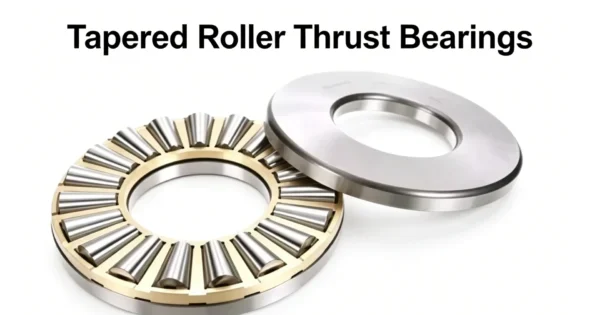
Precise Alignment for Maximum Thrust
This bearing combines the cone shape with a flat thrust design. The thick rollers look like chopped cones. The large end of each cone has a rounded, spherical shape. The metal washers have strong ridges called ribs. These ribs push tightly against the rounded ends to keep the rollers perfectly straight. The geometry is completely exact. The angled lines of the rollers and the washers all point to one single spot on the center axis. This perfect math stops the rollers from sliding sideways. They roll with true circular motion.
Lifting and Rolling Equipment
Heavy industries use both single and double-direction versions of this bearing.
| Direction Type | Load Management | Typical Heavy Machines |
|---|---|---|
| Single-direction | One-way pushing | Crane hooks, oil rig swivels |
| Double-direction | Two-way pushing | Rolling mill roll necks |
A large crane hook spins constantly while carrying massive weight. The single-direction bearing lets the heavy hook turn smoothly. The steel cable does not twist and snap.
14. Pillow Block Bearing Unit
Dust and dirt destroy internal bearing parts quickly. Misaligned frames create grinding friction. Outer spherical ball bearings with housings block contamination and adjust automatically to uneven mounting surfaces.
These units combine a sealed outer spherical ball bearing with a cast iron housing. The internal structure matches a deep groove ball bearing. The inner ring is wider. The outer ring is completely spherical and matches the housing to provide automatic self-alignment.
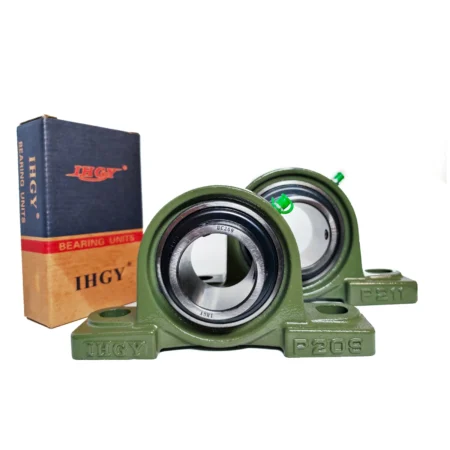
Sealing and Automatic Adjustment
Factories call these pillow block bearings or insert bearings. They are complete, ready-to-use mechanical units. The internal part acts exactly like a standard deep groove ball bearing. However, the inner metal ring is much wider to attach easily to the shaft. The outer ring is curved like a ball. It sits directly inside a metal housing block that has a matching curved hole. This curved fit lets the inner bearing tilt. If the machine frame is uneven, the bearing shifts to fix the exact angle. The bearing also features heavy-duty seals on both sides.
Harsh Environment Applications
These units bolt directly onto flat machine frames. They survive in very dirty conditions easily.
| Component | Functionality | Industry Applications |
|---|---|---|
| Heavy Seals | Blocks dirt and water | Mining, agriculture |
| Wide Inner Ring | Quick shaft mounting | Textile, chemical plants |
| Spherical Housing | Corrects frame errors | Conveyor belt systems |
Conveyor belts in mines rely on these heavy housings. The dirt cannot enter the moving internal parts. The automatic alignment keeps the belt rolling smoothly even if the metal frame bends.
Conclusion
Selecting the correct bearing prevents mechanical failure. Whether handling high speeds, heavy loads, or tight spaces, these 14 bearing types ensure industrial machinery operates efficiently and safely.