Identifying the next big growth markets can be tough. If you miss a trend, you risk falling behind your competitors and losing valuable business. This article continues our guide to the future.
The top bearing markets for 2026 are semiconductor equipment, smart logistics, construction machinery, consumer electronics, and smart home robotics. These sectors are booming due to technological advances, the rise of e-commerce, ongoing infrastructure projects, and the growing demand for intelligent devices in our daily lives.
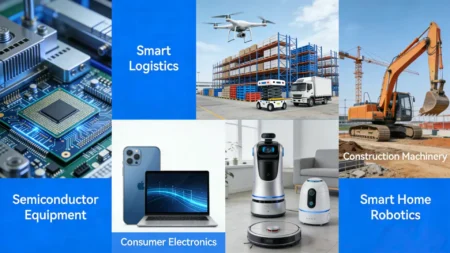
In our last post, we explored the first five major growth markets for bearings. We saw huge potential in renewable energy and electric vehicles. Now, let's dive into the next five sectors that are showing incredible promise. These are the areas where I see purchase orders growing and where you should focus your attention.
Is Semiconductor Equipment the Next High-Precision Bearing Frontier?
Chip manufacturing demands almost impossible levels of precision. Standard bearings simply cannot perform at the nanoscale required, causing critical failures. Ultra-high-precision bearings are the only solution for this advanced industry.
Yes, it absolutely is. The semiconductor industry's equipment, like lithography and etching machines, needs bearings with extreme accuracy and ultra-low friction. These specialized bearings are essential for making the microchips that power our modern world, creating a high-value, strategic market for advanced manufacturers.
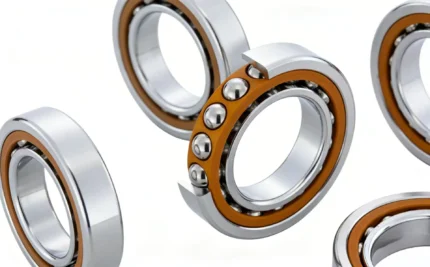
I call the bearings in this sector the "nano-level dancers." If you follow technology, you know how vital semiconductors are. The machines that make these chips are miracles of precision. Key equipment like lithography machines, which print circuits onto silicon wafers, and etching machines, which carve them out, require bearings that operate flawlessly in extreme conditions. The technical barrier to entry is very high. We're talking about bearings that can handle vacuum environments, extreme temperatures, and offer rotational accuracy measured in nanometers. For my company, this has meant investing in new materials and manufacturing processes. The specifications from clients in this area are the most demanding I have ever seen. But once you can meet these standards, the market value and strategic importance are huge. It's a market where quality and technology trump price every single time.
| Feature | Standard Industrial Bearings | Semiconductor-Grade Bearings |
|---|---|---|
| Precision | Standard (Micron level) | Ultra-High (Nanometer level) |
| Environment | Normal factory conditions | Cleanroom, Vacuum, High-Temp |
| Friction | Low | Extremely Low & Consistent |
| Materials | Chrome Steel | Ceramic, Specialized Alloys, Coatings |
Are Smart Logistics the Secret to Massive Bearing Demand?
The incredible growth of e-commerce is creating huge logistics bottlenecks. Slow, inefficient warehouses lose customers and bleed money. Automated systems, powered by reliable bearings, are the clear solution.
Absolutely. The e-commerce boom is fueling a massive expansion of automated warehouses. Systems like Automated Guided Vehicles (AGVs) and conveyors run 24/7. They require enormous quantities of high-load, low-maintenance bearings, representing a huge and sustained demand for durable bearing solutions.
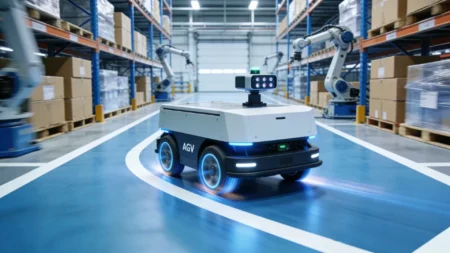
I see these automated systems as "efficiency accelerators." The rise of online shopping has completely changed warehousing. I recently visited a customer's new distribution center. It was amazing. There were very few people. Instead, hundreds of AGVs, or automated robot carts, moved silently and efficiently, carrying goods. These robots are the legs and feet of the modern warehouse, and their wheels and joints depend entirely on high-performance bearings. If a bearing fails, a robot stops. When a robot stops, a part of the supply chain breaks. That's why these customers are obsessed with reliability. They need bearings that can handle constant start-stop motion, carry heavy loads, and run for years with zero maintenance. We have seen a huge increase in orders for sealed deep groove ball bearings and robust pillow block bearings for conveyor systems from this sector. It is a market that demands both high volume and high quality.
Why is Construction Machinery Still a Goldmine for Bearings?
Construction sites are brutal environments for any machine. A breakdown caused by a cheap bearing can halt an entire project. This costs enormous amounts of time and money.
Because global infrastructure development never stops. Heavy machines like excavators and cranes work in extremely harsh conditions and handle immense loads. They demand incredibly durable and wear-resistant bearings. The reliability of these parts directly impacts project safety and efficiency, ensuring constant, strong demand.
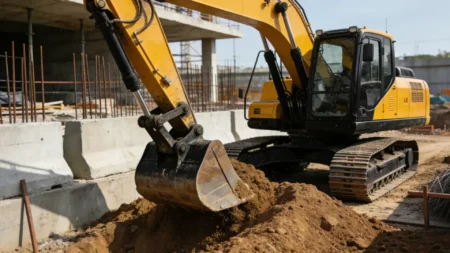
This sector represents eternal value. We started our company, Yuanguang Bearing, back in 1992, and we have been supplying bearings to construction machinery manufacturers from the very beginning. The machines have become more advanced, but the fundamental need for strength has never changed. These are the "big guys" of the bearing world. The bearings in a large excavator or a crane must withstand constant shock, heavy loads, dirt, mud, and water. There is no room for error. I remember a story from a client who had a crane fail on a major bridge construction project. The cause was a faulty bearing from a different supplier. The delay cost them tens of thousands of dollars each day. After that incident, they became our loyal customer because they needed a guarantee of toughness. As long as we continue to build our cities and infrastructure, the need for these high-quality, rugged bearings will never go away.
Can Tiny Bearings in Gadgets Create a Huge Market?
We expect our personal electronics to work smoothly and quietly. A noisy phone vibration or a jerky camera focus is annoying. Miniature, high-precision bearings are what make these tiny, perfect movements possible.
Yes, they create an absolutely massive market. While each bearing is small and costs very little, the total volume is astronomical. Billions of devices like smartphones, cameras, drones, and gaming consoles need miniature bearings for vibration motors, autofocus systems, and cooling fans. This market demands miniaturization in massive quantities.
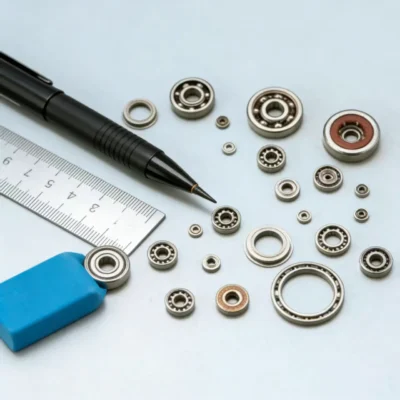
This is a market where "micro" is mighty. It's the complete opposite of the construction machinery world. We are not talking about heavy cast iron housings here. We are talking about tiny steel balls, sometimes smaller than the head of a pin, assembled into a miniature bearing. I had a client in the mobile phone industry who needed a bearing for a new haptic feedback motor. The most important requirements were not load capacity, but the noise level and energy consumption. The bearing had to be almost perfectly silent and spin with the lowest possible friction to help save the phone's battery life. The scale of production is also hard to comprehend. A typical order is not for a few hundred or a few thousand units. It is for millions. The profit on each individual bearing is small, but the total value of the contract is enormous. It is a market completely driven by high-precision engineering on a massive scale.
Is the Smart Home the Next Big Boom for Bearing Makers?
Smart devices need to move smoothly, reliably, and quietly. A loud robot vacuum or a clunky smart door lock ruins the user experience. High-quality bearings are the hidden key to success.
It is definitely poised to be. As smart home devices and service robots become a normal part of life, the need for bearings grows with them. Robot vacuums, smart locks, and robotic arms all require small, quiet, and reliable bearings. This market is on the verge of explosive growth.

This market feels new and full of potential. We are getting inquiries for projects that I could not have imagined just a few years ago. For example, one company is developing a robotic assistant for the kitchen. They needed a custom set of bearings for its articulated arm. These bearings had to be made from food-grade materials, be nearly silent in operation, and allow for very precise, repeatable movements. Another customer needed an extremely thin bearing for a new smart door lock they were designing. Each new smart device presents a unique engineering challenge and a new opportunity. This is not about selling a standard part from a catalog. It is about working with innovators to design custom solutions. The bearing companies that are flexible and creative will be the ones who capture this future "big cake" as it grows.
Conclusion
From giant machines to tiny smart devices, the future is full of opportunity. By focusing on these growing markets, we can ensure our business thrives in the years ahead.