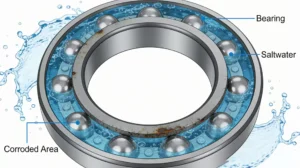
Are your bearings rusting out in saltwater? Your equipment stops working, and the repair costs add up quickly. It's a frustrating cycle of replacement, only to see them fail again.
Yes, standard bearings rust quickly in saltwater. To prevent this, choose corrosion-resistant options like 316L stainless steel, full ceramic, or PEEK plastic bearings. Also, ensure proper sealing and installation to avoid common failure points and extend the bearing's life significantly.
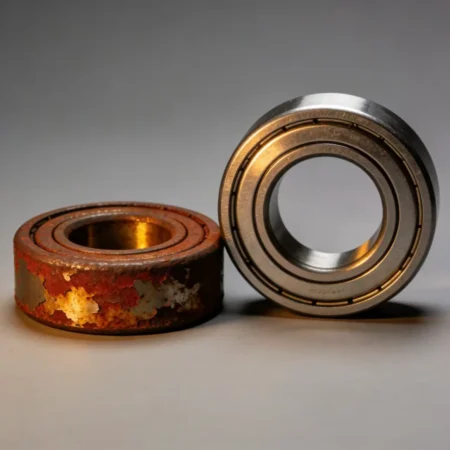
I've been in the bearing business since 1992, and I've seen so many companies waste money on the wrong parts for marine environments. It’s usually not about bad quality; it's about bad selection. You don't have to make the same mistake. Let's break down exactly why this happens and what you can do about it, so you can pick the right bearing and get back to work.
Why Do Bearings Rust or Fail in Saltwater Environments?
Ever wondered why a perfectly good bearing turns into a rusty mess so fast in the sea? It seems to defy logic. The metal is strong, but saltwater wins, causing costly downtime. The reason is a triple-threat attack from the saltwater itself.
Bearings fail in saltwater due to three main factors. Chloride ions in salt attack the bearing's surface, causing rust. Abrasive sand and microbes get inside, damaging raceways. Plus, temperature and pressure changes1 deform seals, allowing corrosive seawater to flood the bearing's internal components.
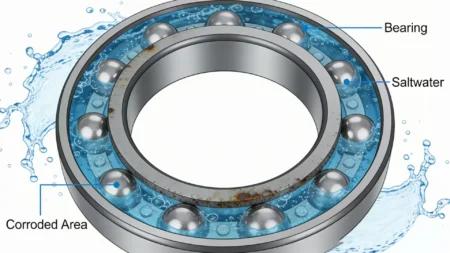
A standard bearing doesn't stand a chance in saltwater. It faces a constant battle on three fronts. First, you have the chemical attack. Saltwater is full of chloride ions2. These ions are extremely aggressive and break down the passive protective layer found on standard chromium steel. I've seen a brand-new steel bearing develop rust pits in less than two weeks of exposure. Second, there's the physical attack. Seawater contains sand, silt, and even tiny microorganisms. These particles act like sandpaper inside the bearing. They get between the balls and the raceway, grinding away at the smooth surfaces. This causes wear, increases friction, and can eventually cause the bearing to seize completely. Finally, the seals fail. The ocean is a dynamic place. Temperature changes from day to night, and tidal pressure fluctuates. These forces cause standard rubber seals to warp, crack, or lose their tight fit. Once there's a gap, seawater rushes in, washing out the protective grease and starting a rapid corrosion process from the inside out.
| Threat | Description | Impact on Bearing |
|---|---|---|
| Chloride Ions | Aggressive chemical ions in salt that break down protective metal oxides. | Causes pitting, rust, and rapid surface decay. |
| Abrasives | Sand, silt, and marine organisms suspended in the water. | Wears down raceways and rolling elements, causes seizure. |
| Pressure/Temp | Fluctuations from tides and weather that stress bearing seals. | Deforms seals, allows water entry, washes out grease. |
What Are the Common Signs of Saltwater Bearing Corrosion?
Do you know how to spot a bearing that's failing from saltwater before it breaks down completely? Ignoring the early signs means you're risking a sudden, catastrophic failure that could damage other parts of your equipment. I'll show you the tell-tale signs so you can catch the problem early.
The most common signs of saltwater bearing corrosion are visible rust spots and pitting on the surfaces. You may also hear unusual grinding or screeching noises during operation. Increased vibration, higher operating temperatures, and leakage of rusty grease are also clear indicators of internal corrosion and failure.
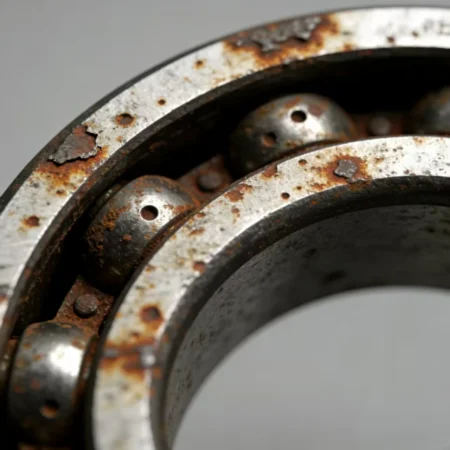
You need to know what to look for before a small problem becomes a big one. The first thing you'll probably notice is the visual evidence. Look for red or brown rust stains on the bearing or the housing around it. If you can see the bearing surfaces, check for tiny holes or craters, which we call pitting. These are sure signs that chloride ions2 are eating away at the metal. Next, use your ears. A healthy bearing is quiet. A dying one makes noise. A grinding or rumbling sound often means sand or rust particles are being crushed inside. A high-pitched squeal or screech usually points to a lack of lubrication because seawater has washed the grease away. Finally, pay attention to how the machine feels and runs. A corroded bearing won't be smooth. It will create excess vibration that you can often feel. This increased friction also generates heat. If the bearing housing feels unusually hot to the touch, it's a major red flag that failure is imminent.
What Are the 3 Types of Corrosion-Resistant Bearings for Saltwater Applications?
Are you tired of guessing which bearing will survive in your marine equipment? Choosing the wrong one means you'll be back to square one in a few weeks, replacing it all over again. Stop the guesswork. I'll show you the three main types of "workhorse" bearings used in the industry.
For saltwater, you have three primary corrosion-resistant bearing options. 316L stainless steel bearings are a cost-effective choice for general use. Full ceramic bearings offer the best corrosion resistance for demanding, high-speed applications. And PEEK plastic bearings are ideal for light-load, non-metallic requirements.
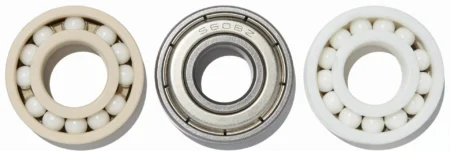
Choosing the right material is the most important step. Here are your top three choices, based on what we see working for our customers in marine applications.
1. 316L Stainless Steel Bearings: The Cost-Effective King
This is your go-to option for many applications. The "L" stands for low carbon, and the 316 grade contains molybdenum, which gives it excellent resistance to chloride corrosion. It’s perfect for equipment like desalination pumps, deck motors, and aquaculture gear. It handles medium-low loads and speeds under 5,000 rpm well. The key is to get it with the right seal. You must use fluoro-rubber (FKM) seals, often marked with an "RS" suffix. Standard rubber will rot in saltwater. Just be aware of its temperature limit, which is around 80°C.
2. Silicon Nitride (Si3N4) Ceramic Bearings: The Durability Ceiling
When performance is critical and failure is not an option, you choose full ceramic. These bearings are completely immune to rust. Their lifespan can be two to three times longer than stainless steel in the same environment. They are also lighter and have less friction, so they can run at very high speeds—up to 10,000 rpm—with less lubrication. They are perfect for underwater robots, ship propellers, and high-speed seawater pumps. The initial cost is higher, but when you factor in zero maintenance and no downtime, they often save you money in the long run.
3. PEEK Plastic Bearings: The Light-Load Specialist
Sometimes, you need a completely non-metallic solution. PEEK (Polyetheretherketone) is a high-performance polymer that is impervious to corrosion and many chemicals. These bearings are great for light-load applications like ocean buoys, sensors, and seawater filters. They are self-lubricating, so they are essentially maintenance-free3. However, they are not for heavy lifting. They work best with loads under 5kN and speeds below 3,000 rpm, as they can deform under high stress.
| Bearing Type | Best For | Key Advantage | Main Limitation |
|---|---|---|---|
| 316L Stainless Steel | General marine equipment, pumps, deck gear | Good corrosion resistance at a moderate cost. | Can still corrode; limited to 80°C. |
| Full Ceramic (Si3N4) | High-speed, high-corrosion, critical applications | Completely rust-proof, very long life. | Higher initial purchase price. |
| PEEK Plastic | Light-load, low-speed, non-metallic needs | Zero corrosion, self-lubricating. | Cannot handle high loads or speeds. |
Are Ceramic or Stainless Steel Bearings Better in Saltwater?
Stuck choosing between stainless steel and ceramic bearings for your saltwater application? Making the wrong choice can mean either overspending on a bearing you don't need or dealing with a premature failure. Let's compare them side-by-side so you can make the smart, cost-effective decision for your equipment.
The choice between ceramic and stainless steel bearings depends on your application's demands. Stainless steel is a great, cost-effective option for moderate loads and speeds. Ceramic bearings cost more initially but offer superior performance, longer life, and zero corrosion in high-speed or hard-to-maintain applications.
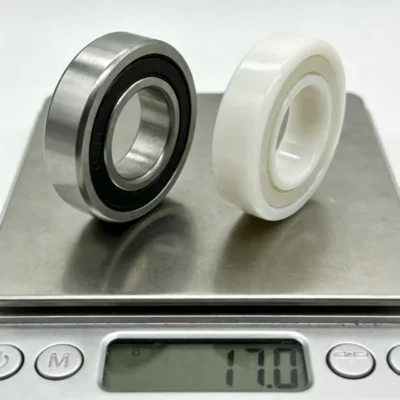
This is a common question I get from equipment manufacturers. The answer always comes down to your specific needs and budget. Let’s break it down. 316L stainless steel4 is "corrosion-resistant." It does an excellent job for its price, but it is not completely immune. In very harsh conditions or if its surface gets scratched, it can still rust. A full ceramic bearing, on the other hand, is "corrosion-proof." It is chemically inert and simply cannot rust in saltwater.
For performance, stainless steel is a workhorse for low to medium speeds and loads. Ceramic is the high-performer. Because it's about 60% lighter than steel and has a lower friction coefficient, it excels at high speeds and generates less heat. When it comes to cost, stainless steel has a lower upfront price. Ceramic bearings cost more to buy. However, you have to think about the total cost of ownership. A ceramic bearing might last three times as long and require no re-lubrication, saving you huge amounts in labor, downtime, and replacement parts over the life of the machine.
| Feature | 316L Stainless Steel | Full Ceramic (Si3N4) |
|---|---|---|
| Corrosion Resistance | Resistant, but not immune. | Proof. It cannot rust. |
| Performance | Good for low to medium speeds/loads. | Excellent for high speeds, lighter weight. |
| Lubrication | Requires water-resistant grease and good seals. | Can run with minimal or no lubrication. |
| Initial Cost | Lower. | Higher. |
| Total Cost | Moderate, includes potential replacement/maintenance. | Often lower over time due to extreme longevity. |
What Are the 4 Common Mistakes That Cause Bearings to Rust in Marine Equipment?
Have you ever chosen a corrosion-resistant bearing, only to have it fail quickly anyway? It's incredibly frustrating. You thought you solved the problem, but your equipment is down again, costing you time and money. The problem might not be the bearing, but these four common mistakes.
Even corrosion-resistant bearings can fail prematurely due to four common mistakes. These include guessing the application requirements, using inadequate single seals, skipping protective surface treatments, and using the wrong tools or clearance during installation, which introduces contaminants or stress.
I’ve seen it happen many times. A customer buys the right type of bearing but it still fails. The issue isn't the part; it's the process. Here are the four details you must get right.
1. Guessing on Application Specs
Don't just guess. You need to know the exact load, speed, and operating temperature of your equipment. A 316L stainless bearing is great, but it will fail if you put it in a high-load machine that requires a different material. The seawater itself can range from -2°C to 35°C, and this temperature affects material performance and lubricant viscosity.
2. Using Inadequate Sealing
A single seal is not enough for the ocean. I always recommend "double insurance." This means using a bearing with double-lip seals5 (designated as 2RS). You can even add an outer metal shield (ZZ) for extra physical protection. Just as important is the grease inside. Use a high-quality, polyurea-based grease that is extremely resistant to water washout.
3. Skipping Surface Treatments
Don't try to save a few dollars here. For stainless steel bearings, an extra process like passivation6 or a Teflon (PTFE) coating7 can dramatically improve its corrosion resistance. Passivation enhances the natural protective oxide layer, while a Teflon coating creates a non-stick, waterproof barrier. This small upfront cost can easily double the bearing's service life.
4. Using the Wrong Installation Practices
This is a critical mistake. If you use standard carbon steel tools (like a hammer or punch) to install a stainless steel bearing, you can transfer tiny iron particles onto the bearing surface. Those particles will rust, and that rust will spread. Always use stainless steel or plastic tools. Also, you should specify a slightly larger internal clearance (like C3 or C4) than in a normal environment. This gives the bearing more room to expand and contract with temperature changes without seizing.
How Can You Extend Bearing Life in Saltwater Applications?
Do you want to get the absolute maximum life out of your bearings in a saltwater environment? Replacing bearings is a hassle. It costs money for the part, the labor, and the downtime. I'll share some pro tips, combining proper selection and maintenance, to help you make your bearings last much longer.
To extend bearing life in saltwater, start by selecting the right material (stainless steel, ceramic, or PEEK) for your load and speed. Then, prioritize sealing with double-lip seals (2RS) and water-resistant polyurea grease. Finally, implement a regular inspection and re-lubrication schedule.
Making a bearing last in the ocean is a system, not a single action. I remember a client with a fleet of fishing boats who was replacing deck winch bearings every two months. It was a constant headache. We switched them from standard bearings to our 316L stainless steel bearings with 2RS seals and a polyurea grease fill. They now only inspect them during their annual overhaul. The savings were huge. You can achieve similar results by focusing on three areas. First, the foundation is correct selection. Match the material to the job. Second, build a strong shield with sealing and lubrication. Sealing is your first line of defense. A 2RS double-lip seal is non-negotiable. Lubrication is your second line of defense. Polyurea grease will not wash away easily. If your design allows for it, a regular re-lubrication schedule flushes out any contaminants that might have gotten in. Third is smart maintenance. Keep new bearings in their packaging until installation to keep them clean. And don't forget the housing. A corrosion-resistant pillow block housing is just as important as the bearing inside it.
Conclusion
To beat saltwater corrosion, choose the right bearing material—stainless, ceramic, or plastic—and focus on robust sealing. Avoid common installation mistakes, and you will drastically reduce failures and save money.
Learn about the effects of environmental changes on bearing seals and how to choose the right ones. ↩
Understand the impact of chloride ions on bearing materials and how to mitigate their effects. ↩
Discover the benefits of maintenance-free bearings and how they can simplify your operations. ↩
Learn why 316L stainless steel is a popular choice for marine bearings and how it can save you money in the long run. ↩
Understand the importance of double-lip seals in protecting bearings from saltwater intrusion. ↩
Learn how passivation can enhance the corrosion resistance of stainless steel bearings. ↩
Discover how Teflon coatings can provide an extra layer of protection for bearings. ↩