

Is your machinery suffering from shaft misalignment? This common problem causes vibration and premature failure1. A simple, effective solution is needed to keep your equipment running smoothly and reliably.
A pillow block bearing is a pre-assembled unit that includes an insert bearing inside a housing. It is designed to support a rotating shaft on a mounting surface parallel to the shaft's axis, simplifying installation and accommodating initial misalignment.
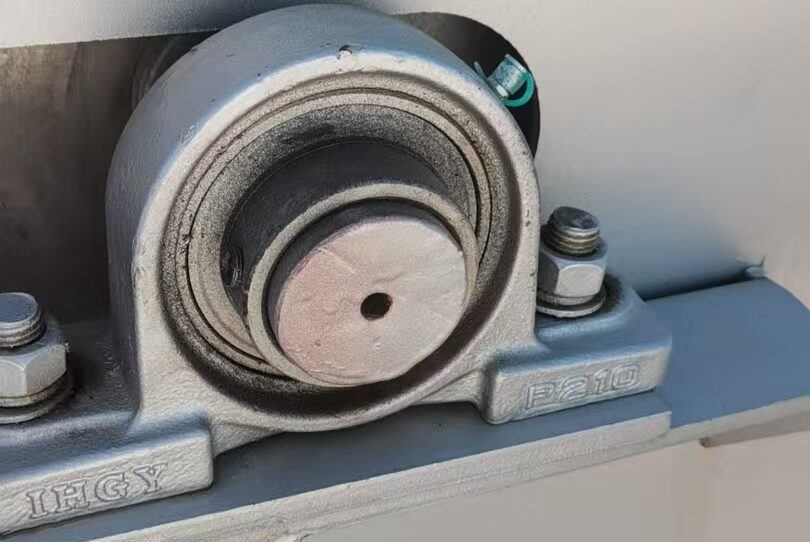
I've been in the bearing business for over 30 years, running a factory that has seen it all. From massive industrial machines to small agricultural equipment, one component consistently proves its worth: the pillow block bearing. Its simple design solves so many complex problems for engineers and mechanics. But what makes it so special, and how do you make sure you're using it correctly? Let's dive into the details. This guide will walk you through everything you need to know about these essential parts, from their basic function to installation and maintenance. By the end, you'll see why they are a go-to choice for so many applications.
What Exactly Is a Pillow Block Bearing?
Confused by all the different bearing names? It can be overwhelming when you're just trying to find the right part. Let's clear things up and define what a pillow block is.
A pillow block bearing is not just a bearing; it's a complete unit. It consists of a self-aligning insert bearing, which is a type of deep groove ball bearing, pre-fitted into a solid cast iron or pressed steel housing. This unit is ready to be bolted onto a flat surface.
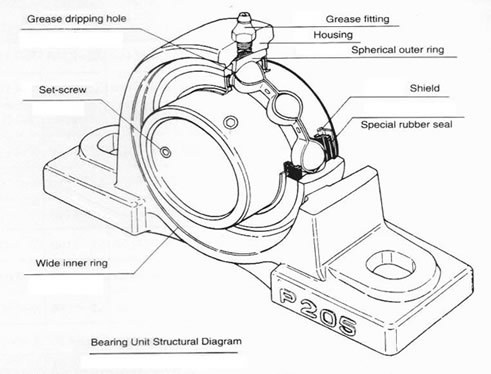
At my factory, Yuanguang Bearing, we see a pillow block as a problem-solver. Think of it in two main parts. First, you have the "insert bearing." This looks a lot like a standard ball bearing, but with one key difference: its outer ring is spherical, like the outside of a ball. Second, you have the "housing," which is the block part. This housing has a matching concave sphere on the inside. When you put the insert bearing into the housing, the two spherical surfaces meet. This connection acts like a ball-and-socket joint, allowing the inner bearing to tilt and correct for any misalignment of the shaft. This self-aligning feature2 is the magic of the pillow block. It means you don't need perfect alignment during installation, which saves a huge amount of time and prevents stress on the bearing, leading to a much longer life.
How Do Pillow Block Bearings Differ from Other Types of Bearings?
Choosing the wrong bearing type can wreck your machine. With so many options, it is hard to know which one is right. Let's look at what makes pillow blocks unique.
Pillow block bearings differ from standard bearings because they come with their own housing. This integrated design allows for easy mounting on a flat surface and automatic correction for shaft misalignment. Standard ball bearings require a precision-machined housing to be built into the machine itself.
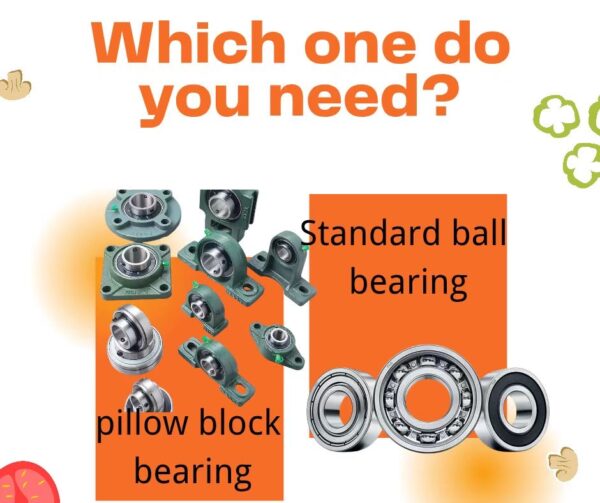
The main difference is convenience and function. A standard deep groove ball bearing is just the ring of steel with balls inside. You have to design and machine a perfectly aligned bore in your machine's frame to press it into. This is expensive and time-consuming. A pillow block bearing solves this. Since we manufacture the housing and the bearing together, we ensure they are a perfect match. You just need a flat surface and two or four bolt holes. This is a huge advantage. Flange bearings are similar, as they also come in a housing, but they are designed to be mounted on a surface perpendicular to the shaft. Pillow blocks are for parallel mounting. This fundamental difference in mounting style and the built-in self-alignment sets them apart.
| Feature | Pillow Block Bearing | Standard Ball Bearing | Flange Bearing Unit |
|---|---|---|---|
| Housing | Included, for parallel mounting | Not included, requires custom housing | Included, for perpendicular mounting |
| Installation | Simple, bolt-on to a flat surface | Complex, press-fit into a bore | Simple, bolt-on to a flat surface |
| Alignment | Self-aligning | Requires precise alignment | Self-aligning |
| Typical Use | Conveyor systems, fans, farm equipment | Electric motors, gearboxes, wheels | End of conveyor rolls, machine guards |
What Are the Key Components of a Pillow Block Bearing?
To use something well, you must understand it. All the parts can seem complex. Let's break down a pillow block bearing into its simple, core components.
A pillow block bearing has two main components: the housing, which is the outer casing that mounts to a surface, and the insert bearing, which fits inside the housing and supports the rotating shaft. The insert bearing itself contains rings, balls, a cage, and seals.
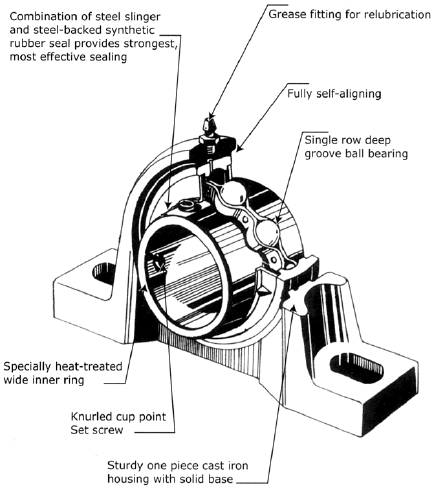
Let's look closer at these two parts. As a manufacturer with our own foundry, we pay a lot of attention to the housing.
The Housing
This is typically made from gray cast iron because it's strong and absorbs vibration well. For food processing or corrosive environments, we also make them from stainless steel or thermoplastic. The key features are the flat base with bolt holes for mounting and the spherical cup on the inside where the bearing sits.
The Insert Bearing
This is the heart of the unit. It has several parts:
- Outer Ring: The outside surface is spherical to allow for self-alignment within the housing.
- Inner Ring: This has a hole for the shaft and extends on one side to accommodate a locking mechanism, usually two set screws or an eccentric locking collar.
- Balls and Cage: These are the rolling elements that carry the load, held in place by a cage.
- Seals: Crucial for keeping lubricant in and contaminants out. We often use strong seals to protect the bearing in dirty environments like farms or mines.
What Are the Primary Applications of Pillow Block Bearings?
Need to support a shaft in your new machine design? Finding the right part is critical for success. Pillow blocks are used everywhere for very good reasons.
Pillow block bearings are primarily used in applications where a rotating shaft needs to be supported simply and economically. Their main applications are in agricultural machinery, conveyor systems, construction equipment, mining equipment, and HVAC systems due to their robustness and ease of installation.
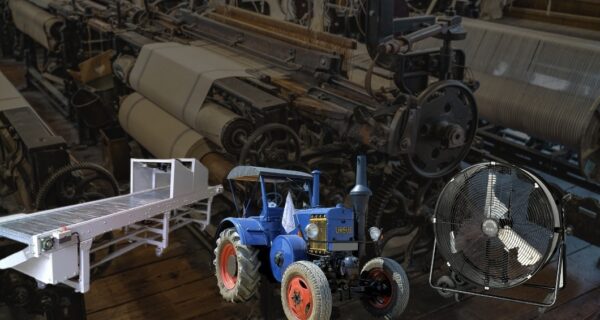
Over the past three decades, I've supplied pillow block bearings to nearly every industry imaginable. Their versatility is amazing. In agriculture, you'll find them on combines, balers, and seeders. The machines operate on uneven ground, so the self-aligning feature is essential. The robust seals also protect against dust and dirt. In conveyor systems, from factory assembly lines to massive belts at mining sites, pillow blocks support the long shafts that turn the rollers. Their easy installation makes building and maintaining these long systems much more manageable. For construction equipment like concrete mixers, their ability to handle heavy radial loads and operate in harsh, dirty conditions makes them a perfect choice. Even in HVAC systems, large fans and blowers use pillow blocks to support the main shaft, where their vibration-dampening cast iron housings help ensure quiet operation. They are truly the workhorses of the mechanical world.
How Do You Choose the Right Pillow Block Bearing for Your Project?
Picking the wrong bearing leads to early failure and downtime. The number of options can be confusing. Let's simplify the selection process to help you find the perfect fit.
To choose the right pillow block bearing, you must consider four key factors: the shaft diameter, the load and speed requirements, the operating environment, and the shaft locking method. Matching these factors to the bearing's specifications ensures optimal performance and longevity.

As an OEM supplier, I guide customers through this process daily. It's a systematic check.
1. Shaft Size
This is the first step. You need to know the diameter of the shaft the bearing will be mounted on. This determines the bore size of the bearing.
2. Load and Speed
How much weight will the bearing support (radial load)? Will there be any side forces (axial load)? How fast will the shaft spin (RPM)? These factors determine the size and series of the bearing needed. A heavier load or higher speed requires a more robust bearing.
3. Operating Environment
Where will the bearing be used? Is it clean and dry, or is it wet, dusty, or exposed to chemicals? This is critical. A dusty farm needs a bearing with excellent seals. A food processing plant needs a stainless steel or thermoplastic housing that won't rust.
4. Locking Mechanism
How will the bearing be secured to the shaft? The most common is the set screw type, which is simple and effective. An eccentric locking collar is another option, good for shafts that rotate in one direction.
What Are the Most Common Problems with Pillow Block Bearings and How to Solve Them?
Your machine just stopped working. A failed bearing is often the culprit. Let's look at the most common problems so you can avoid them in the future.
The most common problems with pillow block bearings are contamination from dirt or moisture, improper lubrication, installation errors causing misalignment, and overloading. These can be solved with proper sealing, a regular lubrication schedule, careful installation, and correct bearing selection.
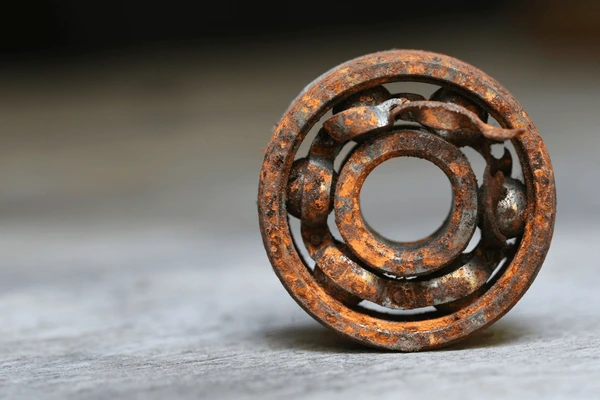
In my experience, almost all early bearing failures come down to a few root causes. If you can control these, your bearings will last a very long time.
Contamination
This is the number one killer of bearings. Dirt, dust, and water get past the seals and destroy the smooth surfaces inside.
- Solution: Choose a bearing with the right type of seal for your environment. For very dirty places, use bearings with triple-lip seals. You can also add external covers, called end caps, for extra protection.
Lubrication Failure
This can be too little grease, too much grease, or the wrong kind of grease.
- Solution: Follow the manufacturer's guide. Don't just pump grease in randomly. Too much can blow out the seals and cause overheating. Use the recommended type of grease for the operating speed and temperature.
Overloading
Every bearing has a load rating. If you exceed it, the bearing will fail quickly.
- Solution: Before you install a bearing, double-check your load calculations. If a bearing is failing repeatedly in the same spot, it's likely undersized for the job. You need to upgrade to a stronger series.
How Do You Install a Pillow Block Bearing? Step-by-Step Guide?
Installing a bearing the wrong way can damage it before it even starts working. It can seem complicated, but it's not. Here's a simple guide to get it right.
To install a pillow block bearing, first clean the shaft and mounting surface. Slide the unit onto the shaft, loosely bolt the housing in place, lock the bearing's inner ring to the shaft using the set screws, and then fully tighten the mounting bolts.
Doing this correctly is crucial for long life. A small mistake here can cause vibration and failure down the line. Follow these steps carefully.
- Prepare the Shaft and Surface: Make sure the shaft is clean, smooth, and free of any burrs or old paint. Wipe down the mounting surface so the housing can sit perfectly flat.
- Mount the Unit: Gently slide the pillow block unit onto the shaft. Move it to its final position. Insert the mounting bolts through the housing base, but only tighten them finger-tight for now. This allows for small adjustments.
- Lock the Bearing to the Shaft: This is the most important step. If you are using a set screw type, tighten the two set screws. It's best to tighten them a little at a time, alternating between them to ensure the inner ring clamps down evenly on the shaft.
- Align and Tighten the Housing: With the bearing locked to the shaft, the housing will now be perfectly aligned. You can now fully tighten the mounting bolts. Use a torque wrench if you have the specifications.
- Final Check: Rotate the shaft by hand. It should turn smoothly without any binding or rough spots. If it feels tight, loosen everything and check your alignment again.
What Are the Maintenance Tips for Extending the Life of Your Pillow Block Bearing?
Replacing bearings costs time and money. You want your equipment to last as long as possible. A few simple maintenance habits are the key to a long bearing life.
To extend the life of your pillow block bearing, follow a regular lubrication schedule, keep the bearing and surrounding area clean, and periodically inspect for unusual noise, vibration, or heat. Also, check that the mounting bolts and locking mechanism remain tight.
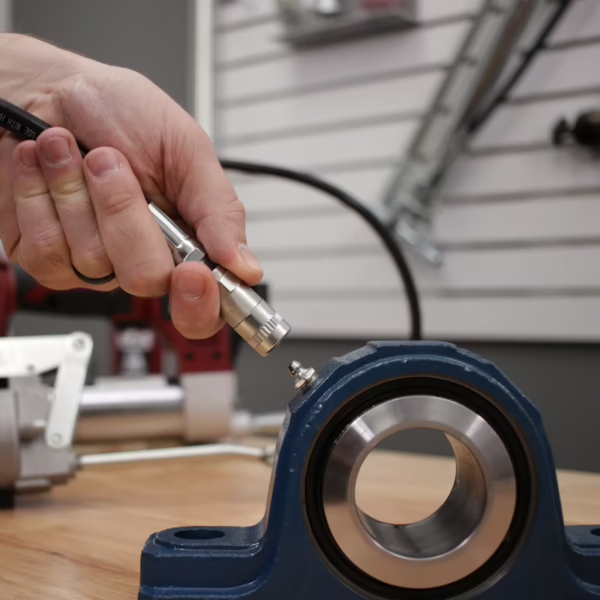
Bearings don't need a lot of attention, but they do need the right kind of attention. I tell all my customers to focus on three things:
1. Proper Lubrication
This is everything. Most pillow blocks have a grease fitting for relubrication. Create a schedule based on the operating conditions—more frequent for hot, wet, or dirty environments. Clean the grease fitting before adding new grease to avoid pushing dirt inside. Add grease slowly while rotating the shaft until you see a small amount of fresh grease pushing out of the seal. This purges the old, contaminated grease.
2. Regular Inspections
Make looking at and listening to your bearings a part of your routine.
- Look: Check for cracked housings or damaged seals. Make sure the mounting bolts are still tight.
- Listen: A healthy bearing is quiet. If you hear grinding, squeaking, or rattling, it's an early warning sign that something is wrong.
- Feel: Carefully touch the housing after it's been running. It might be warm, but if it's too hot to touch comfortably, there's a problem with lubrication or overload.
Conclusion
Pillow block bearings are simple, robust, and versatile. Understanding how they work, how to choose them, and how to maintain them ensures your machinery runs smoothly for years.